
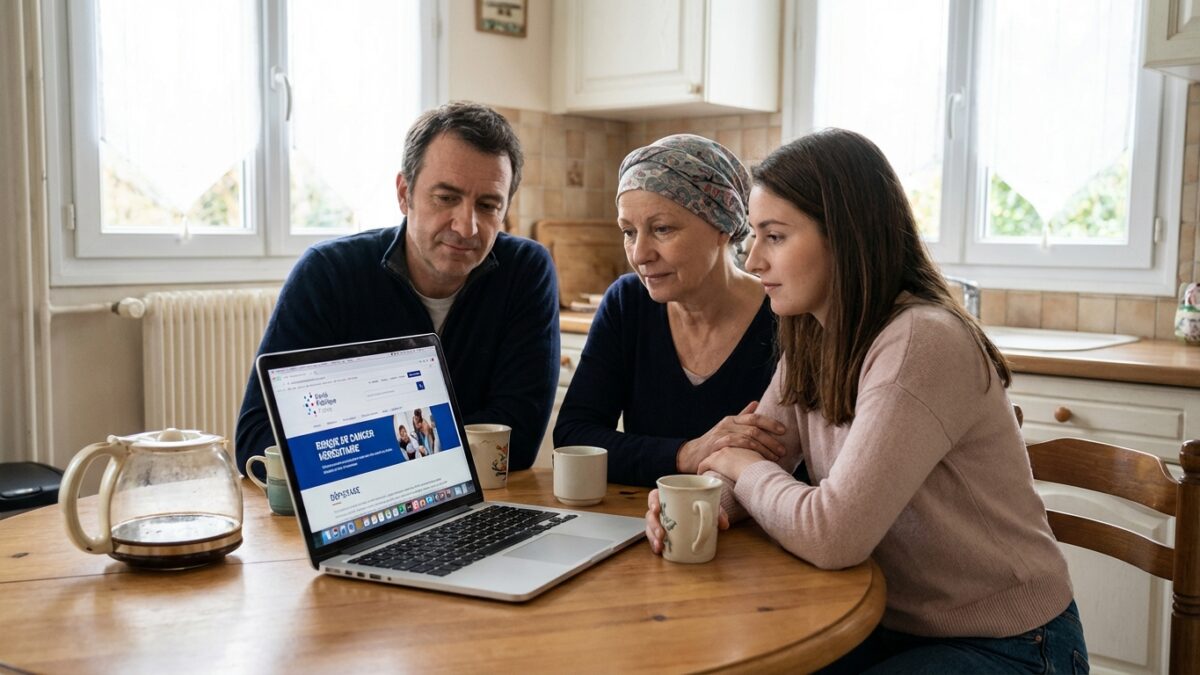
Learning that you carry a gene that increases the risk of cancer is not only upsetting to the sick person. This result immediately raises another question: how to prevent parents, brothers, sisters or children, without worrying or missing a chance of prevention.
Researchers at the Rogel Cancer Center at the University of Michigan have designed a online tool, which helps patients transmit their genetic results to their loved ones and organize a cascade genetic testing in the family.
An online tool to share the genetic risk of cancer with family
When a genetic test reveals a pathogenic variant, it guides treatment but also signals risk to others. “Few medical tests have implications for people other than the patient. But with germline genetic testing, the results can be very important for the health of those around you“, explained Steven J. Katz, a researcher at the Rogel Cancer Center at the University of Michigan.
Sharing genetic test results with loved ones can allow family members to better understand their own risk, choose whether they want to be tested, and potentially adjust their cancer screening or prevention methods accordingly. However, creating these family connections remains a challenge.
To address this, Steven Katz and his team have developed a digital platform intended to raise awareness among cancer patients about the impact of genetic variations on their families. This tool, called GIFT (Genetic Information and Family Testing), offers educational resources and support to help patients calmly share the results of their genetic tests with their loved ones. The platform also allows patients to invite their first and second degree relatives. They receive information about genetic risk, tools to help them decide whether they want to take a genetic test, as well as access to this test.
GIFT trial: how families used the platform in practice
In the essay published in 2026 in the Journal of Clinical Oncology414 cancer survivors carrying a pathogenic variant, diagnosed in 2018-2019, were included. The intervention randomized two factors: access exclusively online or support from a health professional, and free or $50 test (around 46 euros).
Results :
- About one in five patients in the trial invited relatives to enroll, and about a third of the invited relatives participated in the trial;
- Nine out of ten relatives who participated in the trial requested a genetic test.
- The intervention of a human advisor did not increase the number of registrations, which suggests that an exclusively online tool could be sufficient;
- People who received a free test were twice as likely to get tested, but the total number of tests remained low.
“Our online intervention represents a promising model to address this critical need for cascaded genetic education and testing.”said Steven Katz, lead author of the study.
A great need for help in talking about genetics within families
Professor of Medicine and Epidemiology and Population Health at Stanford University School of Medicine and lead author of the study, Allison Kurian explains: “This is a great unmet need. While patients are supported during their genetic testing, they receive little clinical advice on how to talk about it with their family. Our goal is to offer all clinicians a family referral service so that patients can create this bond with their loved ones. The results of our pilot study suggest that patients want it and that families want it too“.
A new version of the tool will integrate an artificial intelligence assistant to personalize genetic risk information and improve communication between patients and their families.
Study co-author Lawrence C. An, associate professor of internal medicine at Michigan Medicine, adds in the same article: “This study showed that many cancer patients and their families are comfortable with using a virtual tool to share and learn information about genetic risk. “Participants told us our site was easy to use and that they could follow the program and access services without using a browser,” he continued:
“This is an example of how evolving communications technologies can personalize engagement and fill the gap in cascade genetic testing“.
In France, if a genetic test showed that you were the carrier of a genetic alteration associated with an increased risk of developing cancer, the law has required you since 2013 to inform your loved ones who may be affected by this same predisposition (parents, brothers or sisters, children, etc.). The indirect route of informing relatives via the geneticist is also possible.