
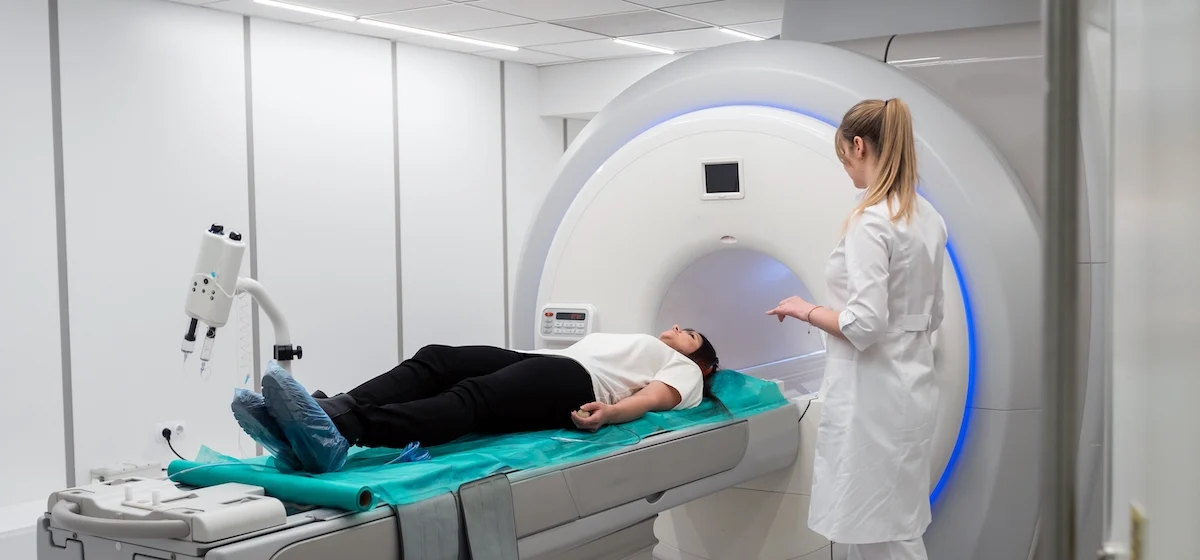
Lying in a narrow tunnel, subjected to a very powerful magnetic field and surrounded by sometimes impressive noises, the patient can easily understand an MRI. However, this examination does not rely on X-rays and is prepared with a few simple reflexes. Understanding what is really going on can already make this meeting much less intimidating.
Find out how an MRI works and stay calm despite claustrophobia
An MRI (Magnetic Resonance Imaging) exam is often a source of questions and sometimes anxiety, especially for claustrophobic people. This advanced medical imaging technique, which does not use any ionizing radiation, is explained in an informative video by Dr Alexandre Mensier, aka @thefrench_chirurgien.
How is an MRI exam performed?
MRI uses a very powerful magnetic field and radio waves to create detailed images of the body’s organs and tissues. As described in the video, “Basically, it works like a big magnet that will try to align and stimulate the hydrogen atoms present in the water, in our body.. When these hydrogen atoms return to their normal state, they emit signals that are converted into detailed images by computer equipment. These images are then used by doctors to assess health status and diagnose various medical conditions.
It is crucial not to carry any metal objects during an MRI exam, as the strong magnetic field can pose a risk of accident. As the incident reported in the video mentions, “a patient who had an MRI with a dildo still in place in her rectum, except there was metal inside. And so, he propelled himself like a rocket”. This extreme case highlights the importance of scrupulously following safety instructions.
Managing the anxiety of claustrophobia during an MRI
Claustrophobia, or fear of confined spaces, can make the experience of having an MRI particularly stressful. To help manage this anxiety, it is recommended to notify the medical team of this condition. Measures can then be put in place, such as using medication to calm anxiety or adapting equipment to make the experience less oppressive.
Many facilities also have MRIs with a more open design, which can greatly help those suffering from claustrophobia. These alternatives, although not always available, may be an option to consider for those who are apprehensive about this exam.
In conclusion, although the idea of having an MRI can be intimidating, especially for those who are claustrophobic, understanding the process and communicating with medical staff can go a long way in reducing anxiety. The exam itself is a non-invasive and radiation-safe procedure, providing valuable images for the diagnosis and treatment of many medical conditions.