
Reading “My child has lice” on the class WhatsApp group is often enough to cause parents to panic. THE
head liceOr Pediculus humanus capitismainly infest children in daycare or primary school. Having lice does not mean that the child is dirty and the infestation does not transmit any other disease, but the shame, the remarks and sometimes exclusion from school are very real.
For pediatrician Emily JC Wong, also a mother of two children, “having lice does not indicate poor hygiene, despite a stubborn preconception maintained by stigma, and lice do not transmit other diseases“, she explains in the media The Conversation. Its advice is consistent with that of the American Academy of Pediatrics, Health Insurance and the Government of Quebec: treat without feeling guilty and keep the child in school.
Treating head lice: a clear protocol at home
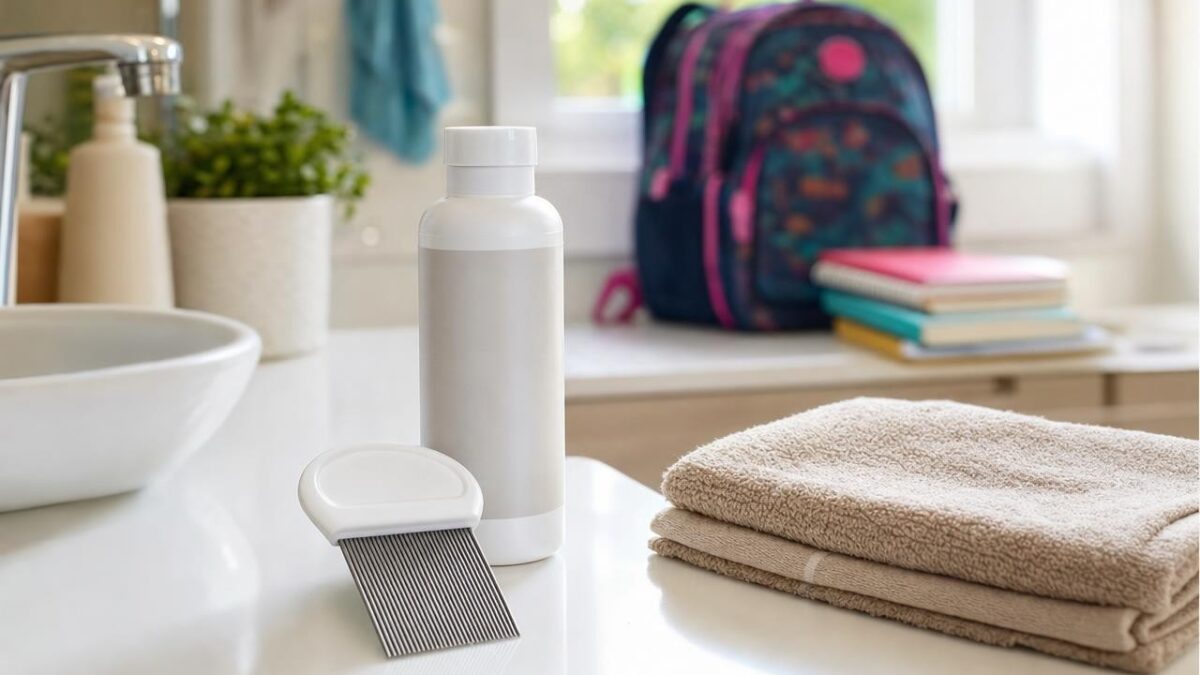
First reflex: check, not treat “just in case”. Emily JC Wong recalls that adult lice measure 2 to 3 millimeters, gray-brown color, and that the nits stuck near the scalp hatch in 8 to 9 days. Itching often appears 4 to 6 weeks after infestation. We therefore look for live lice, especially behind the ears and on the back of the neck, using a
fine comb on damp hair.
When lice are present, the American Academy of Pediatrics recommends treating all infested people and relatives who share the child’s bed. Lotions with 1% permethrin, shampoos based on pyrethrins plus piperonyl butoxide or ivermectin 0.5% lotion, approved by the American authorities, remain effective if a second application is followed around D+9 or D+10. In France, the French Society of Dermatology often recommends dimethiconecombined with careful combing.
Limiting the stigma around head lice
To reduce shame, you need to remind the child and those around them of simple facts. Emily JC Wong writes that “head lice have been unwanted companions of humans since ancient times“, which shows that everyone can be affected. Studies cited by the Canadian Pediatric Society and the Government of Quebec observe no difference depending on the type of hair: lice infest frizzy, smooth, long or short hair in the same way.
Health Insurance, the Canadian Pediatric Society, the American Academy of Pediatrics and the CDC go in the same direction: no systematic exclusion from school. So-called “no nits” policies, which appeared in the 1980s, are considered useless and stigmatizing, because empty nits can remain hanging for weeks without risk. It is better to notify the teacher, start treatment and teach the child to avoid face-to-face contact and sharing caps or brushes.
Cleaning, treatment failures: when to consult for lice
Lice do not survive more than 48 hours outside the scalp: washing at high temperature laundry and sheets worn the last two days, plus vacuuming, is generally sufficient. Finally, recipes based on oil, mayonnaise or electronic combs have not proven their effectiveness, recalls Emily JC Wong.