
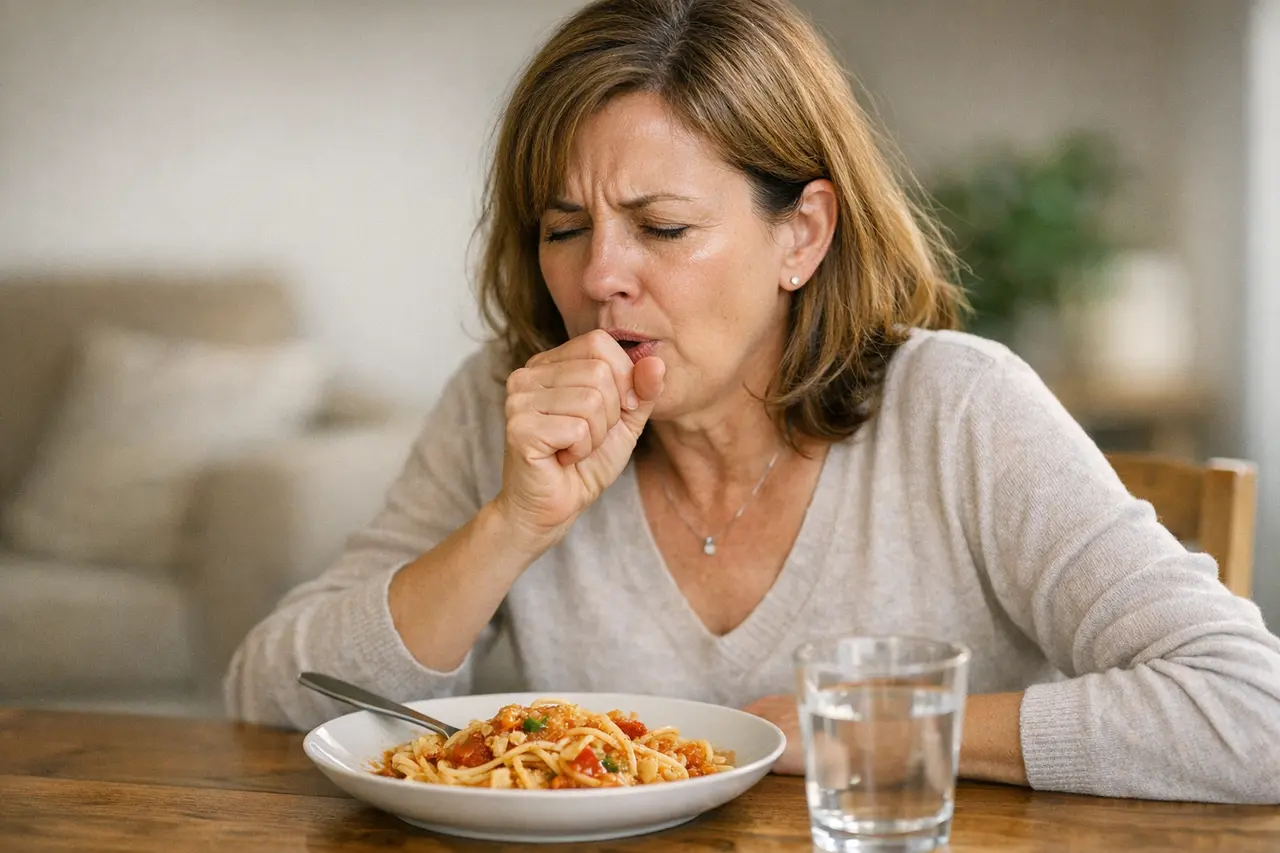
Swallowing wrongly is scary, but coughing is most often a useful reflex. On Instagram, Dr Sermed Mezher reminds us, with the example of a boba pearl (a marble for Bubble tea), that a foreign body in the respiratory tract generally triggers a very clear reaction.
Coughing primarily serves to protect the respiratory tract
Swallowing crooked means that a food, liquid or foreign body passes through the airways instead of the esophagus. This is what makes the episode impressive: the throat becomes irritated, the eyes can water, and a coughing fit can suddenly occur.
The important point is there: in many false paths,
coughing is a defense reflex. It is used to expel what obstructs or irritates the respiratory tract. In other words, coughing hard after drinking or eating does not necessarily mean that the situation is getting worse; it can also indicate that the body is reacting.
The doctor takes the example of a bubble tea ball which “attempts” to enter the respiratory tract. He explains that in a young, healthy person with no known neurological or vocal cord disorder, one would often expect a very intense coughing fit if an object of this type really passed the wrong way. This idea is generally consistent with the protective role of cough.
But it must remain nuanced. Quiet vacuuming is not impossibleeven if it is less expected in a young adult without a known disorder. The risk is higher in certain contexts: swallowing disorders, history of stroke, neurological disease, altered consciousness, sedation, aging or certain ENT situations. The absence of cough is therefore not enough, in itself, to formally exclude a false path.
After a bout, throat irritation may persist briefly. You should not try to systematically suppress this reflex: coughing is a natural defense reflex. On the other hand, certain signs must provoke a reaction.
- Call 15 or 112 if the person is no longer able to speak or cough, breathes very difficult, seems to be choking or turns blue;
- Seek medical advice if difficulty breathing, severe cough, fever, shortness of breath, chest pain or unusual sputum appear or persist after the episode;
- Be particularly vigilant if the person is elderly, has swallowing disorders, a neurological disease, altered consciousness or a context of sedation.
How to calm the fear of suffocation without denying the risk
The fear that follows a wrong path is understandable. The sensation is very unpleasant, sometimes spectacular, and the brain can then anticipate danger when drinking or eating. In this case, the most useful reminder is simple:
cough is not the enemy. It is part of the mechanisms that protect the respiratory tract.
This explanation can help put a one-off worry into perspective, especially if the episode was brief and everything quickly returned to normal. However, it should not become an absolute promise such as “if I cough, everything is fine” or “if I don’t cough, nothing happened”. The right indicator is rather the evolution: breathing, persistent discomfort, fever, cough which worsens or unusual symptoms.
When anxiety takes over, the subject changes. If
the fear of swallowing becomes overwhelmingleads to avoidance of certain foods, weight loss, anxiety attacks or daily repercussions, it is best to talk to a doctor, psychologist or psychiatrist. This is not “exaggerating”: it is preventing the fear of choking from gradually reducing eating and social life.
In the event of increased anxiety after a wrong turn, it can also be useful to identify what is fear and what is a real respiratory sign. To better recognize and soothe an anxiety attack, appropriate support can make the difference, without replacing medical advice if physical symptoms persist.