
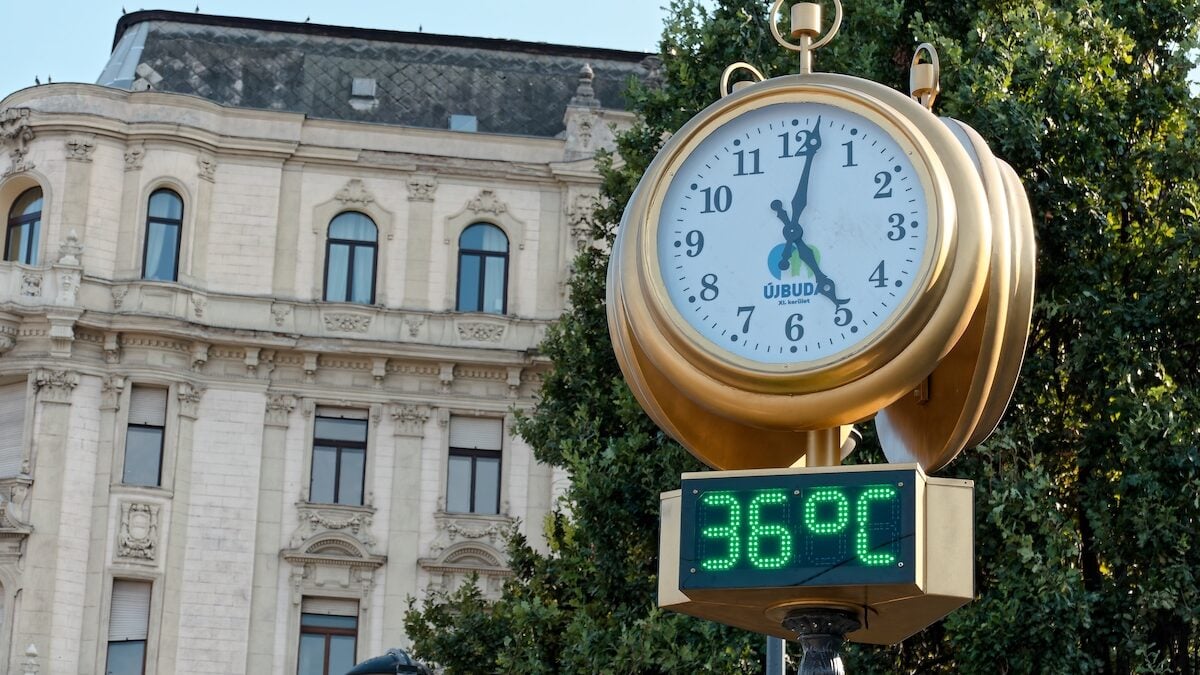
Spring is barely coming to an end, but France is already suffocating. For May 28, Météo-France placed 17 departments on orange heatwave vigilance, an episode deemed “early” and intense enough to require “particular vigilance”. An exceptional phenomenon for the end of May, marked by temperatures which are already breaking historical records.
These departments which will be the hottest
On Wednesday, this orange vigilance concerns the following departments: Charente, Charente-Maritime, Gironde, Côtes-d’Armor, Finistère, Ille-et-Vilaine, Loire-Atlantique, Maine-et-Loire, Manche, Mayenne, Morbihan, Deux-Sèvres and Vendée. From Thursday, Paris and the inner suburbs will join the other departments already in orange, mainly in the west of the country.
In these territories, the heat sets in for a long time, with maximums between 30 and 35°C, locally up to 38°C in Poitou-Charentes or Gironde. Bordeaux should reach 36°C, Nantes and Paris 33°C, while Toulouse climbs to 34°C. Even more worrying: the nights are almost no longer cool. This Wednesday morning, some areas were already showing 22 to 23°C when they woke up.
According to Météo-France, Tuesday was the hottest day ever recorded in France for the month of May since weather records began. A situation which could further worsen in the south of the country, particularly in Languedoc-Roussillon from tomorrow.
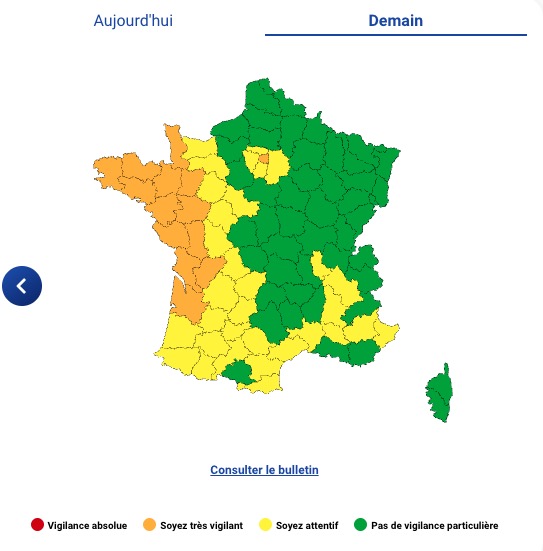 © MeteoFrance
What do awareness colors really mean?
Heatwave vigilance is based on a four-color system intended to alert the population of the level of danger.
- Green : no particular vigilance;
- YELLOW : a heat peak limited in time or lasting heat which can already weaken certain sensitive people;
- Orange : the heatwave has set in. This is intense heat which lasts at least three consecutive days and three nights and which presents a health risk for the entire population;
- Red : maximum level. The heatwave becomes exceptional in its intensity, its duration or its geographical extent, with major health and societal consequences.
In other words, orange alert does not only concern the elderly: everyone can be affected by dehydration, discomfort or heatstroke.
How do we decide that a department is placed on orange alert?
Contrary to popular belief, there is not a single temperature that automatically triggers the alert.
Each department has its own thresholds, defined with health authorities such as Public Health France. These criteria take into account the history of local heatwaves, the usual climate of the region and the adaptation capacity of the population.
To make their decision, forecasters rely on an indicator called the “biometeorological index” (BMI). This crosses the minimum and maximum temperatures forecast over three rolling days with health data observed during previous heat waves.
A 33°C in Brest, for example, can have more serious health consequences than a 35°C in Marseille, where the population is more accustomed to these temperatures.
Why is this heatwave particularly worrying?
This episode is problematic for several reasons, as described by Dr. Gérald Kierzek, medical director of True Medical.
Firstly because it occurs very early in the season. At the end of May, organisms are not yet acclimatized to such heat. Housing, schools, transport or workplaces are not necessarily prepared either.
Then because the heat sets in over time. Temperatures remain high even at night, preventing the body from recovering properly.
Finally, because certain affected regions – notably Brittany or the west of the country – rarely experience such extreme temperatures during this period.
Dr Gérald Kierzek also insists on this point: “You must protect yourself from the first strong heat, even in May, as in the middle of summer.”
Cautionary actions to take now
Even though we are still in spring, the reflexes must be those of mid-summer.
Health authorities recommend in particular:
- Drink water regularly without waiting to feel thirsty;
- Avoid alcohol, which accentuates dehydration;
- Stay in the coolest rooms in the home;
- Close shutters and windows during the day then ventilate at night;
- Limit physical exertion and sport to hot weather;
- Wear loose, light-colored clothing;
- Protect your head with a hat or cap;
- Avoid leaving a child or a fragile person in a car, even for a few minutes.
Infants, the elderly, the chronically ill and exposed workers are particularly at risk.
Symptoms that should alert
Headache, dizziness, nausea, unusual tiredness, feeling weak, confusion or fever may be the first signs of heat stroke or severe dehydration.
In this case, you should immediately cool down, drink water and seek medical advice if symptoms persist.
Because this heat wave is no longer a simple foretaste of summer: it already constitutes a real heatwave, exceptionally early for the season.