
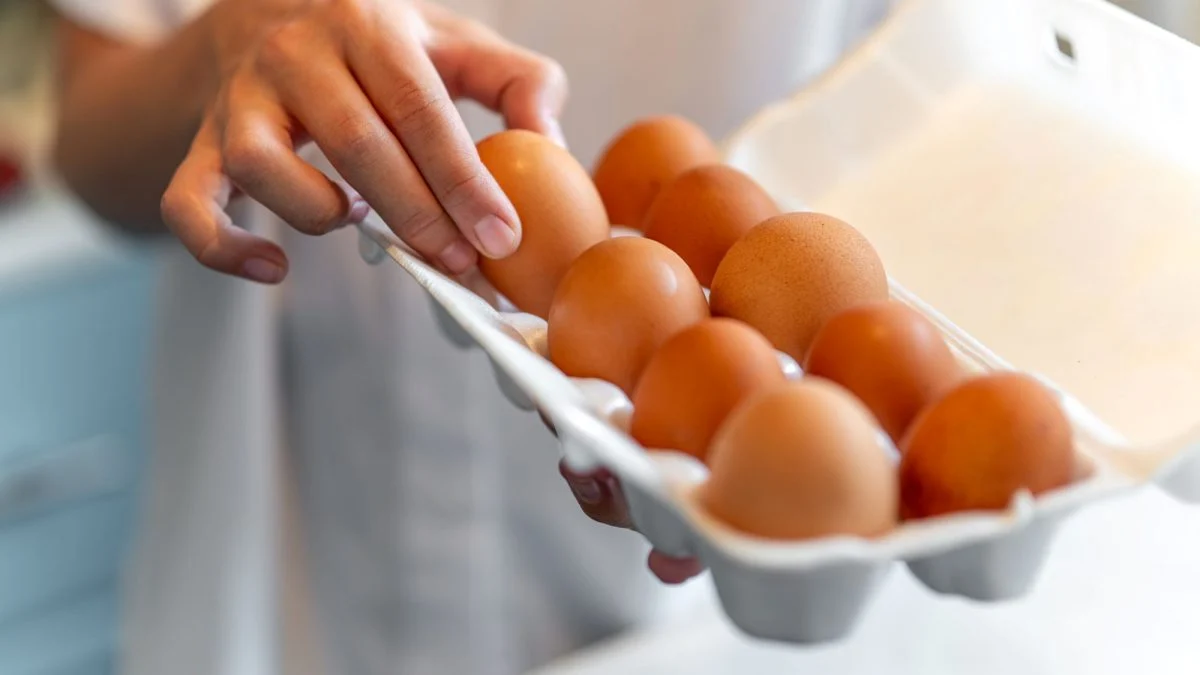
With the return of hot weather, the question of egg conservation comes to the forefront. Although protected by their shell, eggs are not immune to the risks associated with high temperatures. Dietitian Julie Boët enlightens us on the right reflexes to adopt.
A fragile food to monitor closely
Eggs are often sold at room temperature in supermarkets, which can be confusing. Some consumers wrongly conclude that it is safe to keep them out of the refrigerator once at home.
“You should know that eggs are sensitive products, and their conservation largely depends on ambient conditions.“, recalls dietitian Julie Boët.
Heat and bacteria: a cocktail to avoid
The egg shell, although it appears solid, is only a limited barrier against external aggressions, particularly high heat. However, when temperatures exceed a certain threshold, the health risk increases.
“When the temperature exceeds 25°C, storing eggs out of the refrigerator increases the risk of bacterial development, particularly salmonella.“, warns the expert.
This bacteria, responsible for sometimes serious food poisoning, proliferates easily at room temperature. Eggs, especially when eaten raw or undercooked, constitute a breeding ground for its spread.
Good storage practices in hot weather
To limit any risk, the good reflex is to place the eggs in the refrigerator as soon as you return from shopping. And this, even if their presentation on the shelves does not suggest it.
“It is therefore strongly recommended to place eggs in the refrigerator upon purchase, especially if the internal temperature exceeds 20–22°C.“, insists Julie Boët.
But be careful, not all fridge locations are equal. The door, although equipped with pockets intended for this purpose, should be avoided.
“Store them in their original box and not in the compartment provided on the door, which is too exposed to temperature variations“, specifies the specialist. Indeed, frequent openings of the refrigerator, particularly in summer, cause repeated increases in temperature.
Another piece of advice not to be overlooked: how to use the eggs after storage.
“Avoid sudden temperature changes: only take the eggs out at the last moment before using them“, recommends Julie Boët. Early removal from the fridge can create a thermal shock, promoting condensation on the shell — an ideal environment for bacterial development.
This advice applies both to eggs intended for cooking and to those used in cold preparations, such as homemade mayonnaise.