
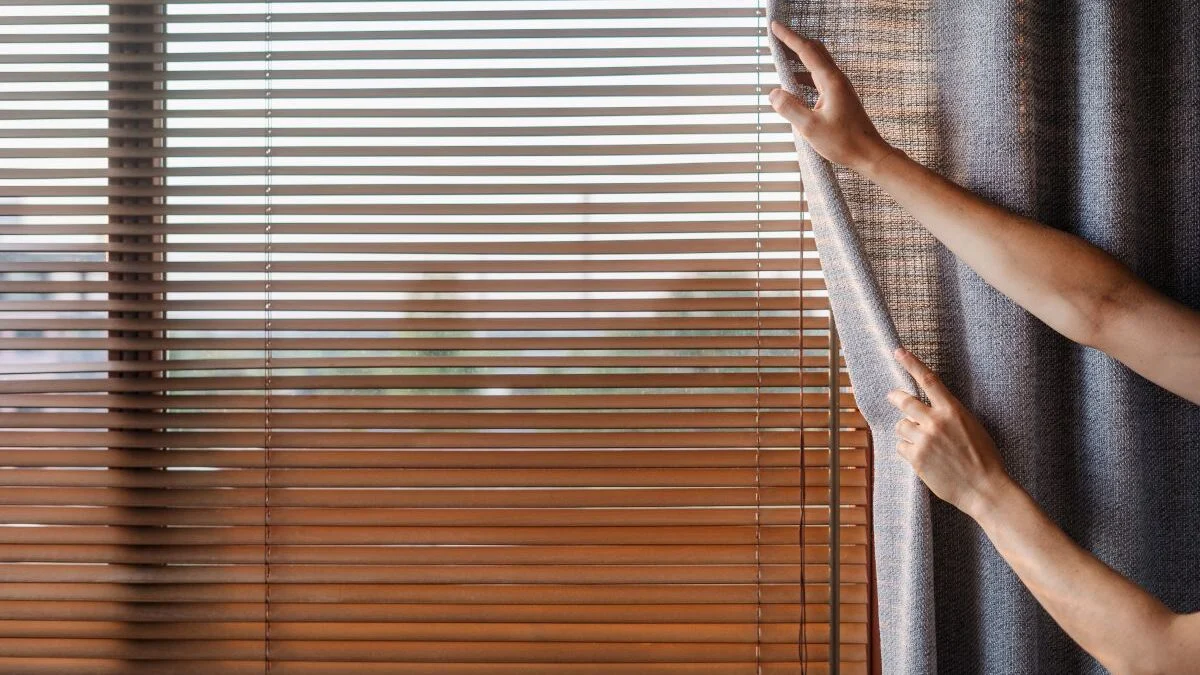
During episodes of high heat, homes that are poorly insulated or very exposed to the sun quickly turn into real ovens. To try to keep a little cool inside, many people draw their curtains in the early hours of the morning.
Although this gesture comes from a good feeling, it does not block the sun’s rays once they have passed through the windows. To limit overheating and preserve your health, you should adopt much more powerful thermal barrier measures.
Why interior curtains are not enough against the heat
Drawing your blackout curtains is an intuitive gesture, but its effectiveness remains minimal during a prolonged heatwave. “Closing the curtains during a heatwave is a necessary but not sufficient action, as it does not prevent heat from passing through the windows and warming the air, walls and furniture inside. The curtains are placed on the interior side: once the solar radiation has passed through the window, the heat has already entered the home. first explains Dr Gérald Kierzek, emergency doctor and medical director of True Medical
According to data from ADEME (Ecological Transition Agency), opaque curtains only lower the temperature by 2 to 3°C at most, which quickly proves insufficient when the thermometer panics outside.
Exterior shutters and blinds: the real barrier against overheating
To prevent a home from turning into a furnace, the golden rule is to stop the sun’s rays before they reach the window glass.
Dr. Gérald Kierzek specifies: “External protection, such as shutters or blinds, are much more effective because they block the radiation before it reaches the window. Closing well-adjusted shutters can reduce solar gain by 60 to 80% and lower the indoor temperature by 3 to 5°C, or even more in very exposed homes. Exterior blinds (awnings, roller shutters, slatted blinds) work on the same principle: they intercept the heat before the window, thus limiting overheating of the glass and walls. In the absence of shutters, solar films or exterior blinds remain significantly more efficient than curtains alone.
The winning strategy: combine exterior protection and night ventilation
Blacking out the windows during the day is only half the battle. To renew the air and evacuate the calories stored by the building structures, strategic ventilation is essential.
“To really cool the home, you must combine these protections with good night ventilation: open the windows wide late in the evening, at night and early in the morning to create drafts, then close the windows, shutters and curtains as soon as the outside temperature exceeds that of the inside.
insists Dr Gérald Kierzek. “This strategy helps evacuate accumulated heat and maintain freshness during the day, thus reducing the risk of discomfort and heat stroke, particularly in fragile people.”
Heat stroke: spot the warning signs and react quickly
When the internal temperature remains high day and night, the body struggles to regulate its internal temperature. Hyperthermia and heat stroke then become major risks.
Warning signs in adults and children:
- Very high body temperature (often > 40°C if measured);
- Hot, red and dry skin (or very little sweating despite the heat);
-
Severe headache, dizziness, confusion, behavioral disturbances, agitation or abnormal drowsiness;
- Nausea, vomiting;
- Significant weakness, difficulty walking, malaise or loss of consciousness;
- Rapid breathing, rapid and strong pulse.
In the elderly: sudden worsening of a state of fatigue, disorientation, falls.
Signs in infants and young children:
- Very soft child or on the contrary very agitated, weak crying;
- Very hot, red, sometimes dry skin;
- Refusal to drink, vomiting;
- Rapid breathing, high fever.
What should you do in an emergency?
In case of emergency, Dr. Gérald Kierzek recommends proceeding according to the following steps:
- Immediately call 15 (SAMU) or 112;
- Place the person in a cooler place (cooler room, in the shade);
- Cool down gradually: remove unnecessary clothing, apply cool damp cloths to the forehead, neck, armpits, folds, use a fan if possible;
- Have the person drink small sips of cool water if the person is conscious and not vomiting;
- Never leave a confused or drowsy person alone, and do not give them anything to drink if there is a risk of choking.
In summary, combating overheating in a kettle home requires intercepting solar radiation as early as possible, that is to say from outside the home.
If curtains reduce the light, only shutters, exterior blinds and disciplined night ventilation guarantee a real drop in temperature. Adopting these simple reflexes helps prevent heat exhaustion and ensures the safety of the most vulnerable people throughout the summer.