
What was supposed to be a simple trip to the end of the world almost turned into an absolute tragedy. At 19, Giada returned from vacation in Lapland with what looked like the flu like so many others. Fever, severe fatigue, seemingly banal symptoms. However, in just a few days, his condition changed.
Fulminant myocarditis then coma, followed by cardiac arrest
On November 26, the young Italian was urgently admitted to Palermo hospital. When she arrived, she was in a coma. His vital constants collapse. The doctors quickly understood that the situation was critical: his vital prognosis was in jeopardy.
The diagnosis falls: Giada suffers from fulminant myocarditis, a sudden inflammation of the heart muscle, a rare but formidable complication of certain viral infections such as the flu. His heart, literally exhausted by the inflammation, can no longer pump blood. He finally stops.
Then begins a race against time.
1h47 of cardiac massage to maintain life
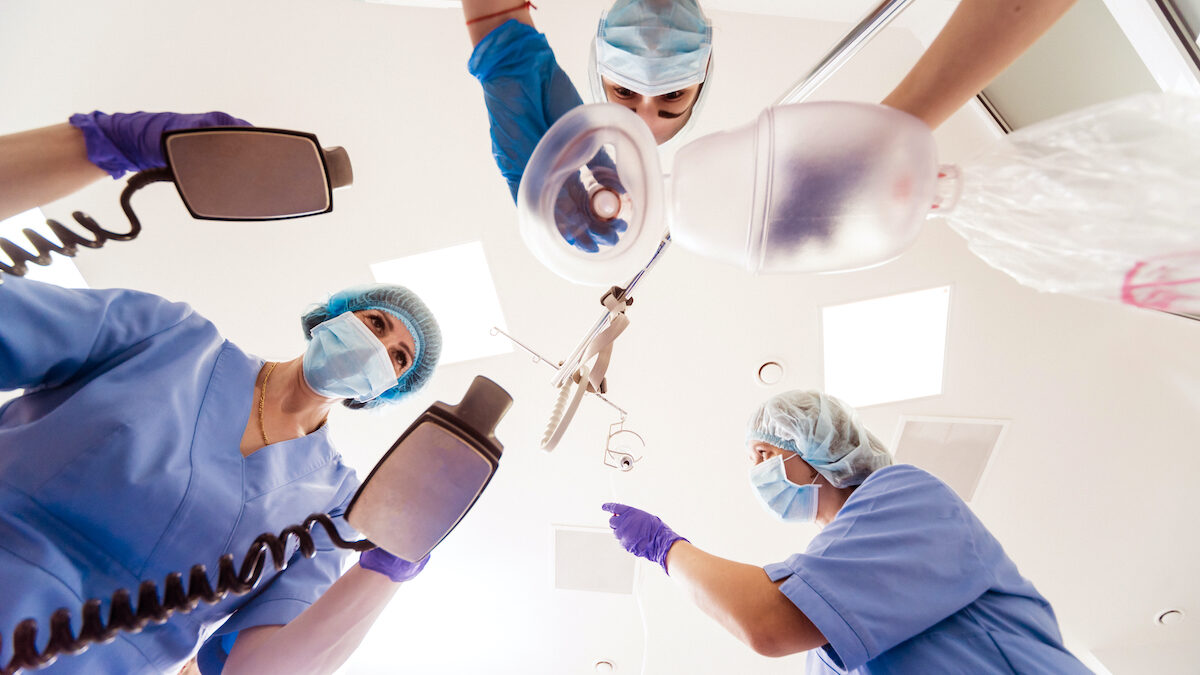
In the emergency room, teams mobilize immediately. Around Giada, doctors, nurses, anesthesiologists and cardiologists take turns without interruption. Everyone knows that prolonged cardiac arrest generally leaves very little chance of survival. But this time, no one gives up.
For 1 hour and 47 minutes, a cardiac massage is therefore practiced without pause. An exceptional duration, almost unimaginable in a classic context. Twelve caregivers physically follow one another around the stretcher, while others monitor each vital parameter.
“There were twelve of us around her. Our hearts were about to give out. We had to believe it and continue”Dr. Vincenzo Mazzarese, head of the anesthesia-resuscitation department, would later tell.
Why persist for so long? Why continue when, usually, resuscitation is stopped much earlier?
What an “extraordinary” cardiac massage changes, explained by Dr. Gérald Kierzek
For Dr Gérald Kierzek, emergency doctor, this type of situation follows a very particular logic.
“A cardiac massage lasting almost two hours is exceptional in “classical” medicine, but it becomes understandable in a context of advanced resuscitation with a specific project: the establishment of an ECMO, extracorporeal oxygenation”he explains.
Usually, after 20 to 30 minutes of cardiac massage without recovery of the heart, the prognosis is extremely poor and cessation of the maneuvers is often considered. But in Giada’s case, the strategy is different.
“The objective is not to restart the heart at all costs, but to maintain minimal circulation of blood, in particular to the brain, while waiting for a machine capable of taking over,” specifies the doctor.
ECMO, a machine that replaces the heart and lungs
ECMO (extracorporeal oxygenation) acts like an artificial heart and lungs. Blood is collected, oxygenated by the machine, then reinjected into the body. The heart can thus “rest” and, sometimes, recover.
In Giada’s case, several elements pushed the doctors not to give up. “She is young, with no known illness, and above all the cause is potentially reversible“, underlines Dr Gérald Kierzek. 3 effective conditions for us to push logic as long as possible.
Unlike a massive heart attack, myocarditis can be cured if we give the heart time, provided that its function is temporarily supplemented.
Another key element: Giada was already in the hospital when her heart stopped. “The length of time his brain was deprived of oxygen is almost zero, which completely changes the neurological prognosis,” insists the doctor.
As long as the cardiac massage is effective – which the teams constantly check using monitoring tools – it “buys time” until the ECMO is installed.
Significant risks, despite everything
Such long resuscitation, associated with ECMO, is however never trivial, explains Dr Kierzek. Doctors fear above all the neurological after-effects, linked to a prolonged lack of oxygen to the brain, which can range from simple memory problems to much more serious damage.
“Cardiac massage can also lead to injuries, such as fractured ribs or internal contusions. As for ECMO, it exposes you to specific complications: risk of bleeding linked to anticoagulants, clots, infections, kidney damage or, sometimes, persistent cardiac after-effects”.
Although recovery after myocarditis can be complete, it can also leave the heart with lasting fragility, requiring long-term medical monitoring.
A medical… and human bet
When ECMO is finally placed, the machine takes over. Giada’s heart, relieved, can gradually regain strength. His condition is stabilizing. The teams are finally breathing.
“It’s a miracle”, recognizes Dr. Mazzarese, aware of the exceptional nature of this survival after such a prolonged cardiac arrest.
A miracle made possible by technology, but above all by a collective decision: that of not giving up. A month later, Giada was able to return home. His convalescence continues, surrounded by his loved ones.
“She’s doing much better,” confides his father, still upset.
This story reminds us of an essential thing: behind the machines and protocols, medicine also remains a human adventure, made of difficult choices, perseverance… and sometimes, unexpected victories.