
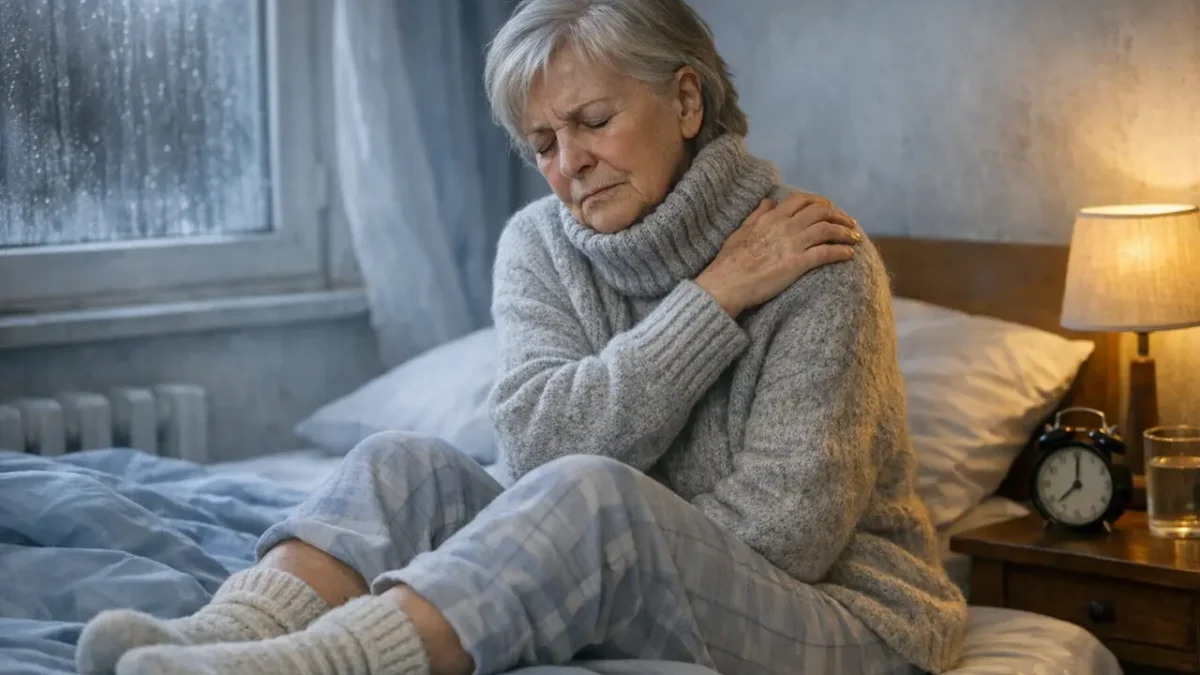
Are you cold at home and you hesitate to turn the heating back on? In the show “It’s going to be much better” on RTL, on November 6, 2026, Dr Jimmy Mohamed, doctor and presenter, recalls the essentials: there is no universal ideal temperaturebut housing that is too cold, humid or poorly ventilated can be detrimental to your health.
There is not an ideal temperature for all homes
The first contribution of Dr Jimmy Mohamed is to come away from a single answer. The right temperature depends, according to him, on the activity, the room, age and state of health. We do not feel the cold in the same way when sleeping, working seated or caring for an infant.
The health benchmarks point in this direction. The World Health Organization notes in particular 18°C as a minimum protective temperature for healthy, adequately clothed adultswith greater vigilance for vulnerable people. This figure is therefore not a prescription valid for all, but a threshold of prudence.
In his column, Jimmy Mohamed emphasizes two audiences:
older people and infants regulate their body temperature less well. The former may be more sensitive to the effects of cold, and certain treatments may complicate the body’s adaptation. This never justifies changing a medication alone: if in doubt, you should speak to a healthcare professional.
In infants, the doctor recalls that they lose heat and depend on adults to be properly protected. Here again, the idea is not to overheat, but to avoid prolonged exposure to a cold interior, especially when the home is damp or poorly insulated.
Domestic cold is not just about the fear of “catching a cold” either. Jimmy Mohamed presents it as a stress for the body. The available data indeed suggest that
low indoor temperatures are associated with higher blood pressureparticularly in the elderly or already fragile people. This is an association, not an individual equation: each drop felt in a room does not predict the tension of a given person.
The doctor adds another, less visible aspect: mental stress linked to fuel poverty. Wondering how to pay the bill, deciding between fuel and heating, or no longer daring to entertain at home can lead to isolation. These situations must be understood as a social determinant of health, not as a lack of individual effort.
Humidity, ventilation and sleep: actions that change feelings
Cold becomes more problematic when accompanied by humidity. Jimmy Mohamed describes a frequent chain: poorly heated, poorly insulated, insufficiently ventilated housing, then condensation and mold. Gold mold can worsen respiratory symptoms and contribute to asthmaespecially in children or people who are already sensitive. To go further, True Medical details the effects of mold in the home on respiratory health.
The actions cited in the program are simple, but they must remain compatible with the security of the home, the quality of the outside air and the installed ventilation system:
- Air out for 5 to 10 minutes morning and eveningopening widely, even when it is cold;
- Do not obstruct the ventilation grilles, as they serve to renew the air and limit humidity;
- Watch for condensation and traces of mold, especially in bedrooms, bathrooms and poorly ventilated areas.
Ventilating for a few minutes does not amount to lastingly cooling the entire home: the objective is above all to evacuate humidity and some of the pollutants from the indoor air. The same reflexes are among the good reflexes to adopt during episodes of extreme cold.
The sleep sequence finally provides very concrete advice. Jimmy Mohamed recommends keeping your feet warm at bedtime if you often have cold feet. His reasoning: warming the extremities promotes comfort and can help the body dissipate heat better, which accompanies falling asleep.
To present without excess: wearing socks in the evening may help some people fall asleep more easilybut it is not a treatment for insomnia. Clean, loose socks can be one gesture of comfort among others; True Medical also explains why wearing clean socks to make it easier to fall asleep can work for some people.