
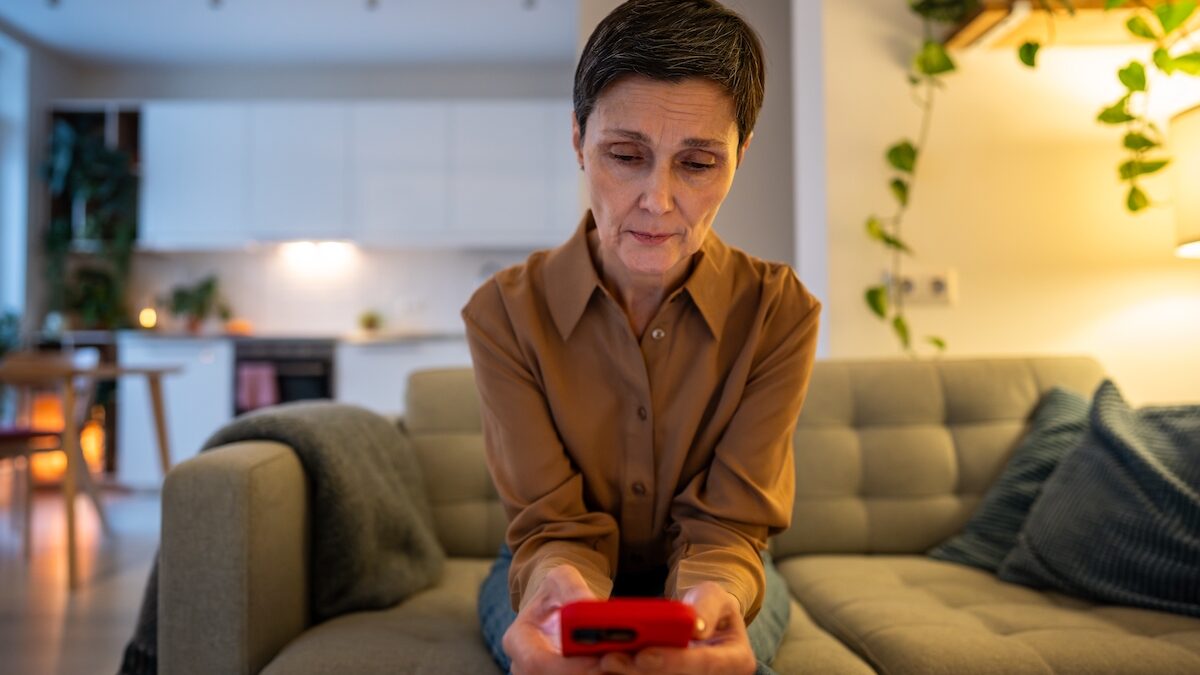
You open Instagram or TikTok to watch a funny video. A few seconds later, you come across an alert concerning a catastrophe, a tragedy or particularly anxiety-provoking news. Then comes a meme, an advertisement… before a new tragedy.
This permanent succession of contradictory emotions has become our daily life. And if it exhausts us so much, it’s not just an impression: science shows that our brain was never designed to absorb so much negative information in such a short time.
A brain programmed to spot threats
As recalled by a recent analysis published in The Conversationour brain still functions with mechanisms inherited from prehistory. Back then, spotting danger quickly increased our chances of survival. This phenomenon now has a name: negativity bias. We naturally pay more attention to bad news than to good news.
The problem is that our environment has changed radically.
“For most of human history, threats were local: a sick neighbor, a drought, a nearby danger. Today, our nervous system receives information about a war, a climate catastrophe, an economic crisis or a dramatic news story even before lunchtime“, summarizes the American psychotherapist Ben Mushlin to the media Real Simple.
Our brain does not always differentiate between a threat that concerns us directly and an event that is taking place several thousand kilometers away.
Why bad news exhausts us
This gap between our biology and our current way of consuming information largely explains this feeling of being constantly under tension.
In short, we are not made to manage so many crises from all over the world simultaneously. By scrolling through anxiety-provoking content, our body remains on alert. Stress increases, anxiety sets in, thoughts race and it becomes more difficult to stop.
Several studies also show that a growing number of people now voluntarily avoid the news. According to the
Reuters Institute Digital News Report 2025nearly four in ten people worldwide say they sometimes avoid the news precisely because they find it too emotionally taxing.
Our empathy also works against us
If certain news affects us so much, it is also because they awaken our empathy.
It’s difficult to remain unmoved by the aftermath of the Lyhanna affair when you have children, for example. For Ben Mushlin, this reaction is not a sign of fragility.
“If this information upsets us, it’s because we care about others. Our nervous system is simply trying to protect what matters to us. The problem is that it can’t do anything about most of the events we see on our screens.”
It is precisely this helplessness that ends up becoming exhausting.
How to stay informed without getting overwhelmed?
However, it is possible to preserve your mental health without living cut off from the world. Dr. Gérald Kierzek, emergency physician and medical director of True Medical, recommended several simple reflexes in a recent article.
Set real time slots to check the news
Constantly consulting information maintains a state of hypervigilance.
“Choose one or two specific times during the day, for example in the morning and late afternoon, to take stock of the news. Outside of these times, turn off notifications and avoid consulting news sites. You stay informed without letting the news invade your entire day“, advises Dr Gérald Kierzek.
Experts also recommend avoiding the first twenty minutes after waking up and the last twenty minutes before going to bed.
Establish a digital evening curfew
The doctor advises stopping any news consultation at least an hour and a half before going to sleep.
“Anxiogenic content activates our nervous system and slows down the production of melatonin, the hormone essential for good sleep. The brain needs a period of calm before falling asleep.”
Sort through your news feed
Not all content is equal. Specialists recommend favoring a few reliable media rather than multiplying sources and endlessly scrolling through social networks.
“A feature article informs much better than fifty emotional publications taken out of context”recalls Ben Mushlin.
Dr. Gérald Kierzek also advises unsubscribing from accounts, or blocking those that constantly fuel stress, or even hiding certain particularly anxiety-provoking keywords. Meticulous work, but ultimately beneficial.
Be wary of content designed to provoke
On social networks, certain content seeks more to arouse anger or indignation than to inform.
Alarmist headlines, shocking videos, lack of context: all signs that should encourage you to take a step back before sharing or even continuing reading.
Turn your worry into action
When certain news particularly affects you, psychologists recommend taking action at your level.
Making a donation, supporting an association, participating in a local action or simply helping someone close to you allows you to regain a feeling of control, where passively scrolling through bad news mainly maintains helplessness.
Learn to listen to your body
If you feel your heart racing, your shoulders tensing, or your breathing getting shallower after checking the news, take a break.
Dr Gérald Kierzek recommends cardiac coherence in particular: inhale for five seconds, exhale for five seconds, for five minutes. This breathing helps activate the parasympathetic nervous system, which promotes a return to calm.
Start working on yourself
Finally, if certain information continues to run through your head, write it down in a notebook. “Externalizing your worries helps the brain temporarily put them aside for the night“, recalled Dr. Kierzek.
And if the anxiety disorder persists, talk to your doctor. An anxiety disorder or severe insomnia may require personalized support (behavioral and cognitive therapy, assessment, etc.). All to get back on your feet a little more calmly.