
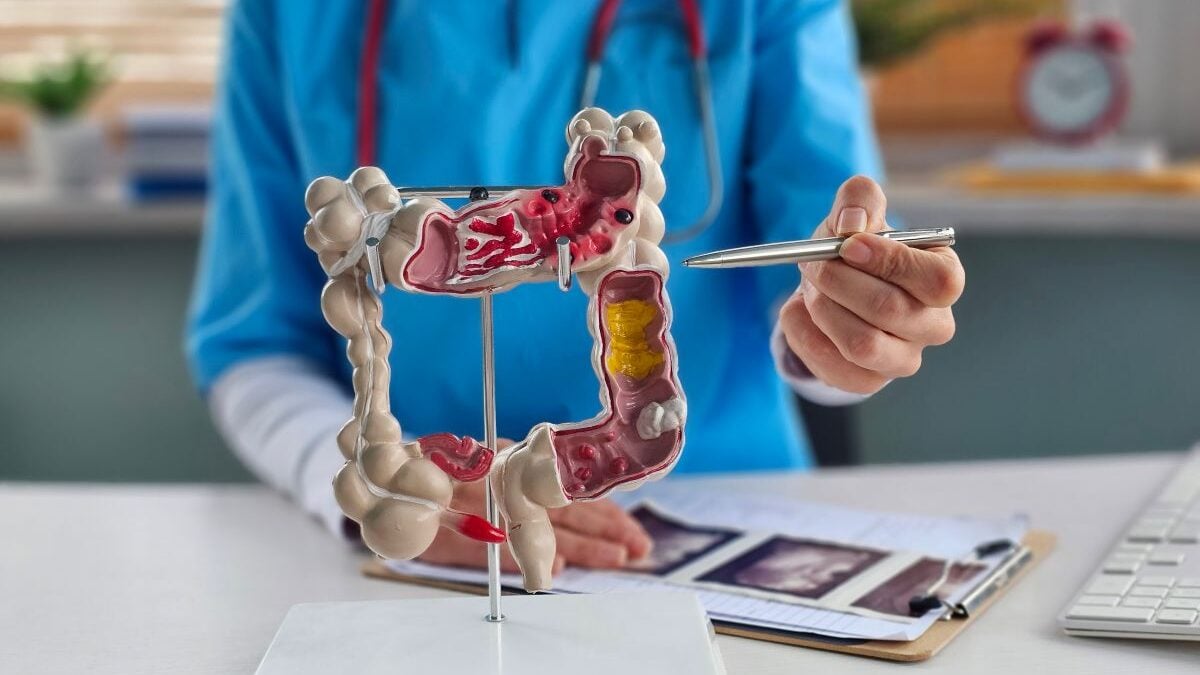
Colorectal cancer is still too often diagnosed late. The reason? It evolves at first without giving foreign signs. However, his prognosis is closely linked to his stage of development at the time of diagnosis. To alert to the situation, Dr. Karen Zaghiyan, American digestive surgeon, published a video on Instagram. She recalls that even without family history, no one is immune. “”I am happy that you feel good and that you do not have a family history (of the disease), but you can always have colorectal cancer“.
She highlights the importance of following these six essential tips to avoid the worst.
Make a colonoscopy
Dr. Zaghiyan is categorical: “Pass a colonoscopy. “ This examination is to explore the colon with a flexible camera to detect and remove polyps before they become cancer. In the United States, it is recommended from the age of 45 every ten years for average risks.
In France, 50-74 year olds benefit from testing by home test and depending on the result, colonoscopy may be indicated. But Dr. Zaghiyan insists on the superiority of colonoscopy, which remains precise at more than 95 % to identify advanced polyps.
Do not accept a too fast diagnosis
The specialist advises always seeking a second opinion if symptoms persist. “”If you have gone to your doctor with rectal bleeding and told you that it is hemorrhoids without ever examining you, you need a new doctor“.
She recalls that signs like blood in stool, abdominal pain, bloating, unexplained weight loss or disturbed transit must alert and justify in -depth examinations.
Do not delay treatment
Dr. Zaghiyan insists on another crucial point. “”Delaying a decision is a decision“. And underlines how it”Feel so bad for patients who had a chance to heal, but who delayed and delayed until cancer spreads. “
Taking charge of the disease from its appearance radically changes the prognosis: 90 % of patients diagnosed at the early stage survive more than five years, against only 10 % in the metastatic stage.
Beware of false advice
“Cancer diagnoses are scary, but the pseudo” nutritionist “who gives you online advice on the healing of your cancer with sage and coffee enemas, you have to stop with that!”, slice the expert.
She encourages to consult dieticians specializing in cancer, capable of associating nutrition and validated treatments, rather than turning to dangerous pseudo-drug methods.
Avoid the “Dr Google”
“” “Stop with Dr. Google. Get 10 reviews if you need it. Go find the best expert in the world and consult it “. And if “You want something new and innovative, iDo you enter a clinical trial that benefits from rigorous control and monitoring“.
Pay attention to early signals
Finally, she recalls that colorectal cancer is progressing in those under 50, including young and healthy people. The causes remain unclear, but ultra -processed food, obesity, sedentary lifestyle or certain environmental factors are suspected.
What are the most common symptoms of colorectal cancer?
In general, it is essential to remain vigilant in the face of the most common symptoms of the disease. Among them, we find:
- Blood in the stool, bright or dark red;
- Chronic abdominal pain, in the form of cramps or persistent discomfort;
- An unexplained weight loss, often important and without apparent cause;
- A modification of intestinal habits, such as constipation or unusual diarrhea.
Be aware, however, that certain colorectal cancers remain asymptomatic, hence the importance of screening. In France, it concerns women and men aged 50 to 74 and has been resting since 2015 on a simpler and more sensitive immunological test, designed to detect the presence of blood in the stool.