
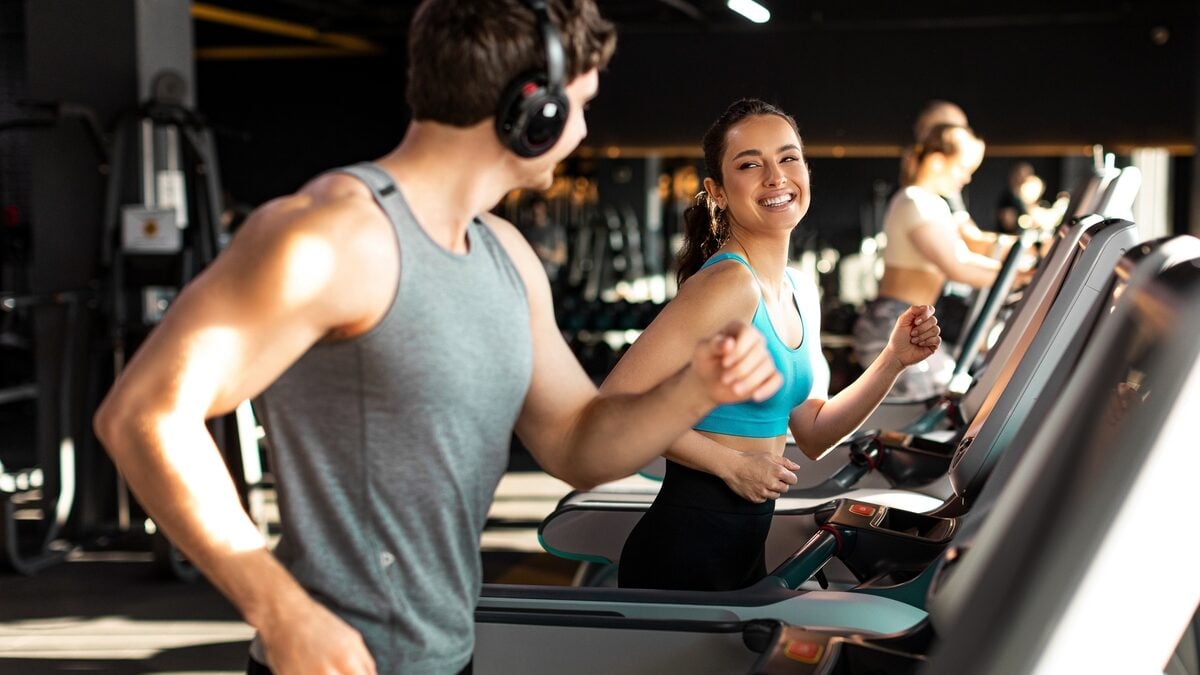
Have the French become great sportsmen? Yes, according to the latest Sport-Health Barometer carried out by the French Federation of Physical Education and Voluntary Gymnastics (FFEPGV) and Ipsos bva. At a time when mental health has been established as a “Great National Cause”, the majority of French people recognize the concrete effects of sport on their physical and psychological well-being. An awareness that translates into action: 72% say they practice regular sporting activity, to which they devote an average of four hours per week.
Nearly 3 in 4 French people said they would practice physical activity in 2025
According to the latest “Sport-Health” Barometer conducted among 2,000 people, the French have almost doubled the time they devote to sport in 10 years. Indeed, the proportion of athletes in the population has seen a clear increase since 2012 (+18 points in 13 years) and nearly 3 out of 4 French people declared practicing physical activity in 2025 (72%, +1 point vs. 2024).
Last year, 2 out of 5 French people also practiced more than 3 hours of sport per week (41%, -1 point vs. 2024). They devote on average a little more than 4 hours per week, a level which remains high. These results confirm the lasting anchoring of physical activity in the lifestyles of the French, an activity which, although it takes varied forms, stabilizes over time:
- More than half of athletes practice individually (61%, +1 point vs. 2024). Only 33% of athletes practice collectively (+2 points vs. 2024);
- Outdoor practice still appeals to athletes (61%, +1 point vs. 2024). Nearly one in two athletes practice at home or online (46%, stable vs. 2024), while gyms are frequented by a third of athletes (33%, +2 points vs. 2024).
“Sports practice has never been so high, excluding the lockdown period in 2020“, confirms the Sport-Health Barometer. “The French are acutely aware of the benefits of sport on their physical and mental health, but also on social bonds, and many of them experience these benefits.”
Sport, good for the body and mind
Another interesting observation revealed in this survey: French people’s sporting activity is above all motivated by considerations of health and well-being. In other words, they do sports above all to stay in shape and feel good. The desire to stay in good health and not get sick is also clearly expressed by 44% of athletes (stable vs. 2024).
Motivations also vary depending on age:
- Those aged 60 and over mainly do sport for health (68% to keep fit, 60% to avoid illness);
- Those under 35 are more motivated by physical appearance (building muscle, becoming slimmer) and surpassing themselves.
An essential activity for morale
Sport doesn’t just do the body good. 9 out of 10 French people think it is important for mental well-being. Among athletes, this observation is almost unanimous (96%), compared to 73% among those who do not do sport. And when you stop or reduce sport, the negative effects are quickly felt.
Less good physical shape (73%), lower energy (66%), lower morale (63%), poorer quality sleep (49%)…”86% of athletes notice an impact when they move less than usual”confirms the barometer.
These effects are even stronger among those under 35: 93% of them feel a negative impact when they do less sport. Worrying figures, especially for a generation that is already morally fragile.
Recognized benefits for social life
Beyond the benefits for the body and mind, sport plays a central role in creating and strengthening social bonds. This collective dimension constitutes a major motivation driver for practitioners: 72% consider that practicing a sporting activity is an opportunity to “share a passion”, 67% to “create lasting friendships” and 67% to “develop mutual aid”. 58% also cite the feeling of belonging to a group. Young people are particularly sensitive to the social dimension of sport.
However, despite all these advantages, many obstacles to practicing sports persist. More than 2 in 3 French people encounter at least one obstacle in their municipality (68%). Cost appears to be the main obstacle to this (32%). Schedules (18%), the diversity of the offer (16%), the lack of infrastructure (14%) or the distance (13%) are also cited.
Finally, 79% of French people believe that raising awareness about the benefits of sport would be useful. They say they are ready to practice more physical activity if their doctor recommended it, whether for their physical health (74%) or for their mental health (also 74%).