
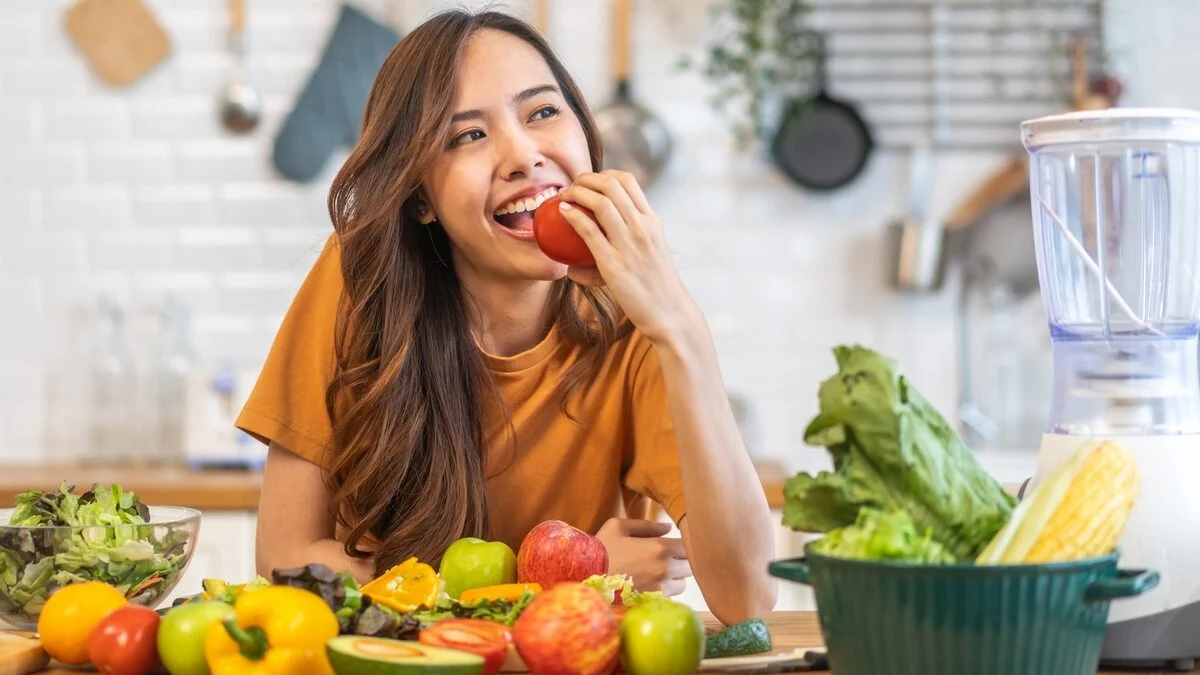
In the kitchen, a scenario repeats itself day after day: we keep what we eat and throw away the rest. However, these peelings, stems and tops that are too often neglected can (also) have their place on your plate.
Peelings, stems, zest and tops: the big forgotten ones
In cooking, the skin of a fruit or vegetable is often the first thing we remove: we think it is useless, or even bad for our health. However, this is a big mistake, according to our nutrition expert, Alexandra Murcier.
“Using these parts reduces food waste and saves money. But it also allows you to vary recipes and textures in cooking. Then, from a health point of view, the skin of many fruits and vegetables concentrates a large part of the nutrients (fiber, vitamins and minerals). From a nutritional point of view, it can therefore be interesting”, indicates the dietitian-nutritionist.
The good news? These pieces that usually end up in the trash turn out to be very easy to cook. In a tabbouleh, a soup, a sauce, a salad: they all have a role to play.
“We can thus use lemon and orange zest to prepare flavored water, infusions, a marinade… The skin of apples can also be used to make chips. Radish and carrot tops can be used in soup or pesto. Parsley or coriander stems can, for their part, find their place in a tabbouleh”,
explains the nutritionist.
Overripe fruits are also worth saving
Same logic with very ripe fruits: rather than throwing them away as soon as they become too soft, they can be transformed into compote.
A black banana, a slightly crumpled apple or a pear that is starting to deteriorate.can therefore still be used“, confirms the expert.
Fruits and vegetables: be careful to clean them well
Limiting waste does not mean that everything is good to eat. Certain parts of fruits and vegetables can even cause problems and should therefore be avoided.
“Certain pieces are toxic if consumed in large quantities – this is the case with cherry stones for example. Then, there are microbiological risks: certain plants can be soiled by animal urine,” warns Alexandra Murcier.
Finally, this “rehabilitated waste” deserves to be washed thoroughly before being eaten, to avoid too much exposure to pesticides.
“The skin also concentrates pesticide residues. If you eat a fruit with the skin, you must clean it well and, if possible, choose it organic,” the dietician further specifies.
Grapes, whose skin is very thin, is particularly affected: it absorbs and retains more chemical substances. A good rinse with water is therefore essential before eating them.
The right reflex: look differently at what you are about to throw away
The next time you peel a potato or prepare a bunch of radishes, don’t automatically throw away what’s left on your work surface. These parts can still be used, provided you know how to use them.
Ultimately, a concrete way to maximize your food, while rediscovering your fruits and vegetables from another angle!