
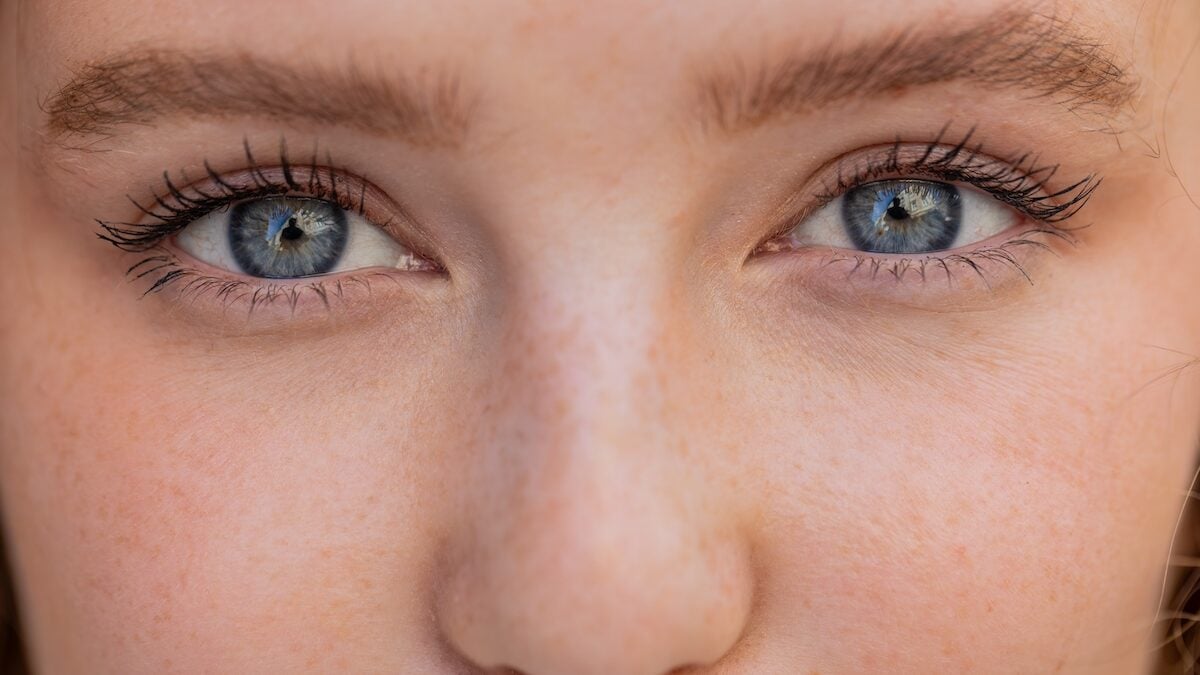
This is not new, people with brown eyes (80% of the world’s population) envy those who have green or blue eyes, colors deemed more “aesthetic”. It is obviously possible to adopt the color both desired for an evening or a day, wearing colorful lenses. But it is now possible to change the color of your eyes permanently. The surgical technique used is keratopigmentation. It consists in inserting a pigment into the cornea. Carried by sharing on social networks of videos of Internet users who have taken the plunge, this surgery is on the rise.
What is keratopigmentation?
This intervention, originally used to correct unsightly sequelae after a trauma of the eye, is carried out in an operating room of surgery by an ophthalmologist. After pouring a few drops of an anesthetic eye drops, the specialist creates a tunnel in the thickness of the cornea using a laser. The pigment chosen by the patient is then injected into this tunnel. The ophthalmologist institutes antibiotic eye drops to prevent infections and asks the patient to avoid receiving water in the eyes for a month.
Ocular drought, vision loss, impossibility of making a cataract
In a press release published on June 18, 2025, the National Academy of Medicine wanted to recall the risks to which people who use keratopigmentation with aesthetic purposes are exposed. “”There is, as after any corneal surgery, a risk of ocular drought and dazzling after the intervention. A loss of endothelial cells that can promote a loss of transparency of the cornea with age has been described “can be read in the press release.
But that’s not all, the Academy indicates that this operation can subsequently hinder, or even prevent certain examinations and ophthalmological treatments. Contacted by True Medical in January 2024 to comment on the success of keratopigmentation following the dissemination of a prohibited zone report, Professor Antoine Brézin, ophthalmologist, had explained: “The cornea is the transparent structure of the eye, the porthole. It is she who allows us to see inside the eye. If you inject pigment into a structure that does not have it naturally, the day you need that you are watching things in your eye, we can no longer, the same thing to operate a cataract “.
In the most serious cases, keratopigmentation can cause vision loss. This is what happened to the model Nadinne Bruna. The young woman lost part of her vision after having transformed the hazelnut color of her iris into bright gray. For this, it benefited from a keratopigmentation via the insertion of a silicone implant within the eye (operation prohibited in the countries of the European Union and in the United States). The young woman lost 80 % of her vision with the right eye and 50 % in the left eye.
A result not so natural …
In addition to the risks to eye health, keratopigmentation does not guarantee a natural result, according to the National Academy of Medicine: “made too uniform of the color obtained; color of the pigments that can fade over time; Color of the eye does not appear natural, because of its too homogeneous appearance and the persistence of the initial shade of the eye around the cornea “.
Finally, the presence of metallic compounds in certain pigments can expose a risk when carrying out a medical imaging examination using magnetic resonance.
Beware of the attractive prices offered by foreign practitioners
Faced with the boom in keratopigmentation, the National Academy of Medicine advises against patients to go to another country to benefit from this operation. It warns on attractive prices, which assure no “Guarantee of the skills of practitioners, with an increased possibility of complications “.
The Academy also invites ophthalmologists who practice this intervention with aesthetic purposes to inform their patients about the consequences and the risks it involves.