
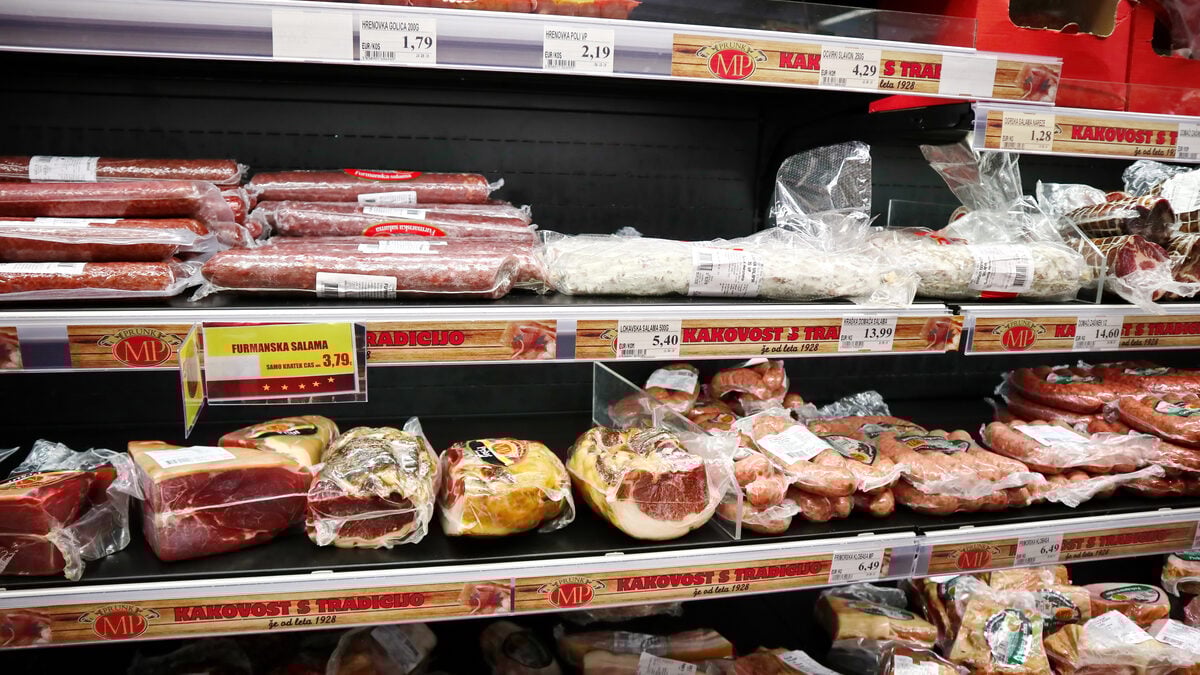
Recalled products, sometimes late symptoms, populations at risk… While the health investigation continues around the Drôme Ardèche Tradition company, the authorities detail the signs that should alert you and the reflexes to adopt in the event of suspected poisoning.
Contaminated pâté
If the factory’s cold meats “Drôme Ardèche Tradition”based in Bourg-de-Péage, are usually very popular with locals, it is better to avoid them for a while: the company is the subject of a prefectural suspension order after the discovery of twelve cases of listeriosis. In detail, 7 women and 5 men aged 34 to 93 were contaminated by consuming pâté en croute – one of the company’s specialties sold in supermarkets.
The problem ? If some individuals survived this poisoning, others, more fragile, lost their lives. Two patients over 75 died.
“All cases required hospitalization for various clinical forms: 8 bacteremias, 3 neuromeningeal forms and 1 maternal-neonatal form”, specifies Public Health France, in a press release.
And if the population says they are surprised by these massive contaminations, the company ensures that it scrupulously respects the measures imposed by the prefectural decree. “Drôme Ardèche Tradition fully cooperates with the health authorities. Stopping production, complete cleaning/decontamination of the site (…), updating of hygiene procedures.”
As a safety measure, all products manufactured on site and likely to have been contaminated by the bacteria
Listeria were removed. The withdrawal was launched on March 5, 2026. The list of affected products can also be consulted on the Rappel Conso website, in the section dedicated to alerts concerning meat.
A prolonged incubation period and varied symptoms
According to Dr. Gérald Kierzek, emergency physician, “listeriosis is a serious infection that can go unnoticed in its mild forms, but become severe in certain individuals“.
After consuming contaminated food, the first symptoms can appear between two days and up to eight weeks later. This variability often makes diagnosis difficult. Additionally, symptoms may appear suddenly or develop gradually.
In mild forms, we generally observe a moderate fever around 38°C, muscle pain similar to that of flu, as well as digestive problems such as nausea, diarrhea or vomiting.
However, certain signs should alert you immediately: intense headaches accompanied by stiff neck (which may indicate meningitis), confusion, difficulty concentrating or persistent fever despite taking paracetamol.
Increased risks for vulnerable people
For pregnant women, a simple fever after consuming a potentially dangerous product should prompt them to consult without delay.
“Flu symptoms in a pregnant woman should always be taken seriously, as listeriosis can cause miscarriage or infect the fetus“, emphasizes Dr. Kierzek.
Infants, the elderly or immunocompromised people are also at greater risk: the bacteria can cause sepsis, a generalized infection requiring urgent hospitalization.
How to react and protect yourself?
In case of suspicion (presence of fever and recent consumption of a recalled product, for example, or in the event of neurological symptoms), it is imperative to consult immediately.
The diagnosis is based on a blood test and, if necessary, a lumbar puncture if meningitis is suspected. “Treatment will be based on antibiotics, with possible hospitalization for severe forms,” specifies Dr. Kierzek.
Finally, “prevention remains the best defense“, reminds our specialist.
“Avoid foods at risk for fragile people (raw milk cheeses, cold meats, smoked fish, raw sprouted seeds), cook animal products and leftovers well, and clean your refrigerator regularly, because Listeria is resistant to cold.“, he concludes.
Rare but formidable, listeriosis can remain discreet for several weeks before suddenly manifesting itself. Faced with this bacteria capable of resisting the cold, specialists point out that the best protection remains prevention: avoid risky foods, respect hygiene rules and consult quickly if there is the slightest doubt after consuming a product concerned.