
Do you wake up tired, do a lot of workouts in the afternoon and cramps ruin your nights? This common picture often remains without a clear explanation. What if the culprit was a discreet but essential nutrient: magnesium?
This mineral participates in more than 300 reactions in the body — energy production, muscle and nerve functioning, regulation of blood pressure, metabolism, bone health. Result: when intake is insufficient, fatigue, headaches, nervousness or sleep problems quickly set in. In France, ANSES places the needs around 300 mg per day for women and 380 mg for men, but many do not achieve this.
Lack of magnesium: why rely on diet
According to dietician Angie Asche, the recommended magnesium intake is between 310 and 420 mg per day, a figure that climbs quickly among athletes and pregnant women. Foods remain the safest way to achieve this, since they cause very few side effects, unlike some supplements.
For her part, nutritionist Samantha Dieras would like to point out that this mineral participates in protein synthesis, supports muscle contraction and helps manage inflammation and blood sugar levels. A sufficient intake often results in more energy, fewer cramps and more stable sleep. The good news? Some foods rich in magnesium are easy to incorporate into your meals.
The 10 foods richest in magnesium to urgently add to your plate
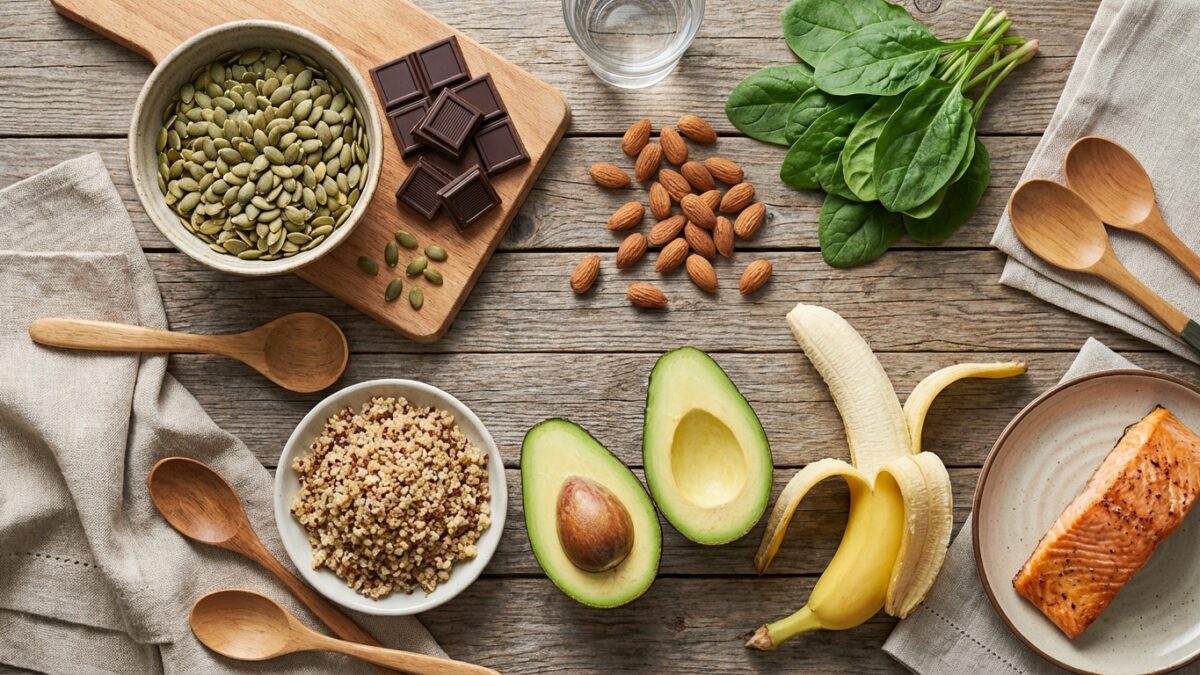
Leading the way are pumpkin seeds (around 535 mg per 100 g) and other chia or flax seeds: as a topping on yogurt or a salad, they offer a real boost. Angie Asche calls these seeds “real”nutritional powerhouses“, she told Vogue. Dark chocolate rich in cocoa (400 to 500 mg per 100 g) is also a perfect anti-stress snack, at the rate of a few squares daily. Almonds, for their part, provide nearly 260 mg of magnesium per 100 g, or around 20% of the needs per small handful, and complement other nuts well.
On the starchy side, quinoa, buckwheat or wholemeal bread advantageously replace “white” starchy foods (with too fast carbohydrates), while legumes (chickpeas, lentils, black beans, edamame) provide us with long-lasting energy.
As for avocado, it supports blood pressure, cholesterol and blood sugar levels, while providing quality fats. Green leafy vegetables (cooked spinach around 80 mg per 100 g, kale, collard greens) provide magnesium and fiber, and are easy to prepare. A banana or a few slices of dried banana are also a practical snack before or after a sports session.
Finally, salmon, which provides around 30 mg of magnesium, also has omega-3, and is easily included in a dinner with green vegetables.
Boost your daily energy: instructions for use
A day rich in magnesium can be kept very simple: for breakfast, whole grain oatmeal porridge with seeds and banana; at lunchtime, quinoa salad, chickpeas, avocado and spinach; for snack, square of dark chocolate and handful of almonds; in the evening, salmon or legumes with green vegetables and brown rice. This type of menu already covers a large part of the recommended intakes and helps reduce fatigue and muscle tension.
For Angie Asche, supplements are only justified in cases of confirmed deficiency or special need, because certain forms have a laxative effect and can cause diarrhea and digestive pain.
“Not all supplements contain the active ingredients listed on their container and the amount of active ingredients varies from low to very high“, warns Samantha Dieras. “It is therefore important to carefully check the formulation chosen because the different types of magnesium have different targeted benefits.”
In the event of persistent fatigue or repeated cramps, medical advice accompanied by a blood test and/or urine analysis helps to adjust your diet.