

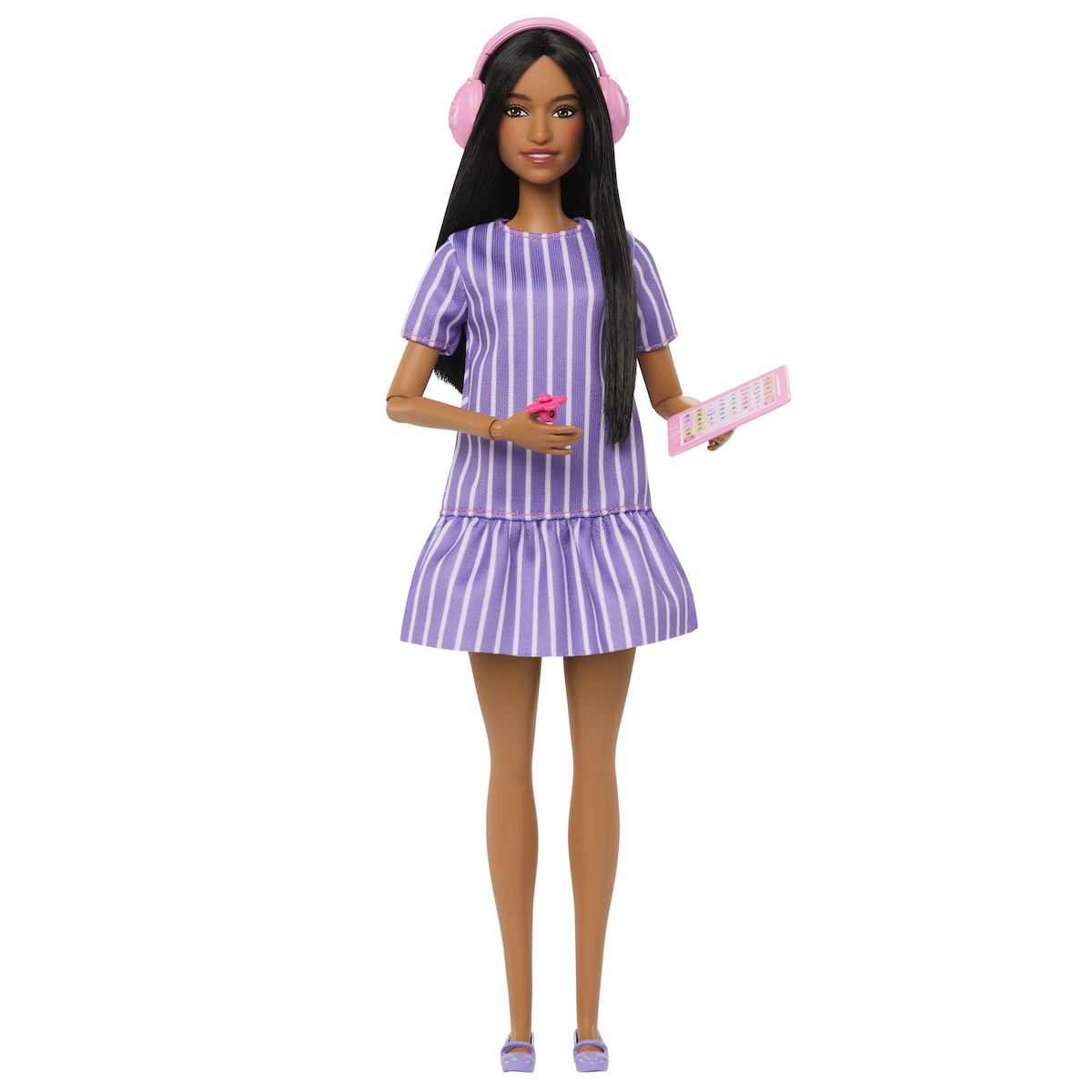
Designed in close collaboration with concerned people and specialist associations, Mattel hits a big blow this month. Their new fashionista Barbie has autism spectrum disorder. A doll that marks a further step in the toy giant’s desire to make diversity a norm.
A launch eagerly awaited by families
After having already shaken up the codes with Barbies in wheelchairs, diabetics or those with Down syndrome, Mattel is continuing its inclusive shift. 18 months of development were necessary to design a model faithful to the realities of autism spectrum disorder (ASD). For this, Mattel has surrounded itself with leading partners: the Autistic Self Advocacy Network (ASAN), an organization run by and for autistic people, as well as Rofrane Bambara, a French content creator known as Mumofquad and mother of autistic quadruplets. Her two daughters, Hajar and Noor, even served as inspiration silhouettes for the doll.
For Colin Killick, executive director of ASAN, this Barbie allows autistic people to “see themselves represented in an authentic and joyful way”a breakthrough that is still too rare in the world of toys.
This Barbie joins the Barbie Fashionistas line, which already has more than 175 models reflecting a wide diversity of bodies, skin tones, disabilities and styles.
How disability is represented: the details that make the difference
This new doll stands out for the depth of its creation process: Jamie Cygielman, global head of dolls at Mattel, sums up the ambition:
“Every child deserves to see themselves in Barbie. This doll helps broaden the vision of inclusion, in the toy world and beyond.”
One of the great challenges was therefore to make visible a handicap often described as “invisible”. Mattel therefore worked on physical, behavioral and sensory details.
A suitable body and face
- Rounder face and softened features;
- Joints at the elbows and wrists, allowing repetitive movements such as hand clapping or self-stimming gestures, often used by autistic people to manage emotions and sensations;
- Slightly shifted gaze, reflecting the fact that some autistic people avoid direct eye contact.
Meaningful accessories
The doll comes with three key items:
- A hand spinner (fidget), which actually spins and helps to channel stress or improve concentration;
- Noise-canceling headphones, to limit sensory overload;
- An alternative and augmented communication tablet (AAC), based on pictograms, to facilitate communication.
Clothing designed for sensoriality
Barbie wears a purple trapeze dress, loose and flowing, designed to limit unpleasant sensations linked to fabric-skin contact, as well as flat shoes, promoting stability and comfort.
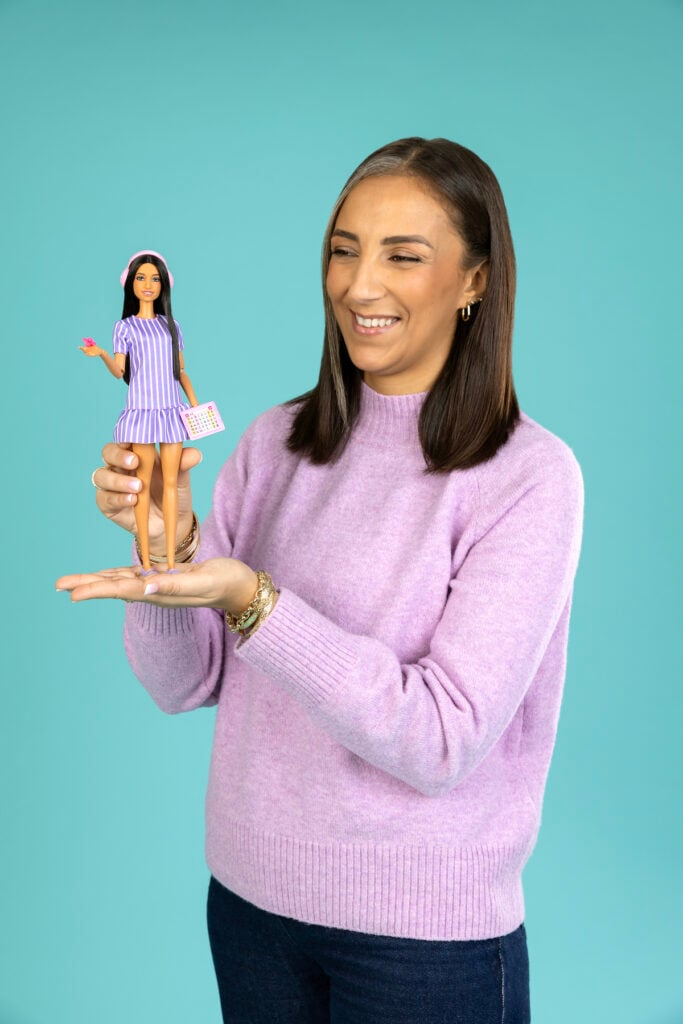
For Rofrane Bambara, this attention to detail is essential: “This doll normalizes a little bit all the traits that our children can present. Children will be able to feel represented, even if autism is different from one person to another.”
 ©Mattel
Why it matters for little girls…and all children
Representation is never trivial, especially in play. Dolls are often the first mirrors in which children project themselves: doctor, veterinarian, mother, adventurer… or simply themselves.
For autistic children, seeing a Barbie who looks like them, who wears noise-canceling headphones or uses a tablet to communicate, is a strong message: “You have your place in the world”. For other children, it is a wonderful gateway to understanding difference. Rofrane Bambara sums it up aptly:
“When we immerse a child, from a very young age, in diversity and difference, it inevitably makes a more inclusive adult later.”
A first step that does not go far enough for SOS Autisme
However, this launch does not only make people happy. On the side of French associations, we fear a marketing advantage more than real progress. “I was extremely shocked by this, it’s still a serious disorder,” reacted the president of SOS Autisme, Olivia Cattan at the microphone of France Info.
“It’s really completely reducing this syndrome into something of marketing,” she regrets. SOS Autisme intends to send a letter to Mattel, to demand a real information campaign around autism. “Since it (the group) claims to want to raise awareness among children and their parents about this subject with this Barbie.”
As a reminder, in France, nearly 1 in 100 people are affected by autism. Or approximately 700,000 to one million people, of whom 100,000 are under 20 years old