
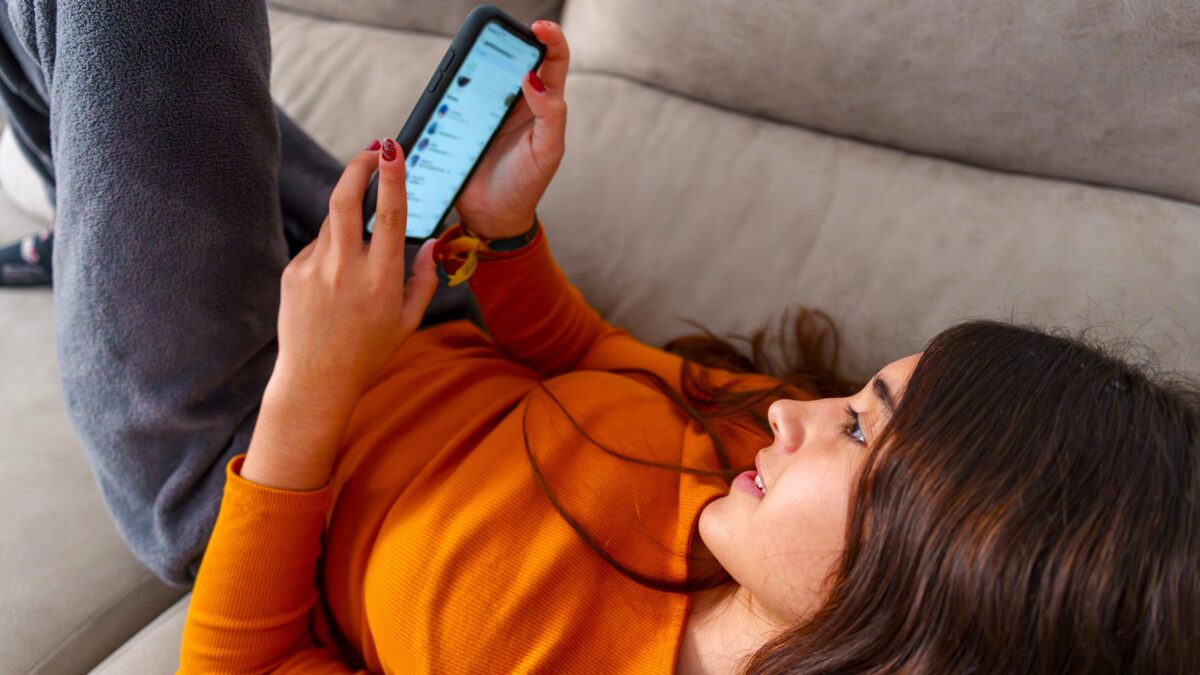
Nearly 90% of 12-17 year olds use a smartphone daily in France. If these tools meet a vital need for communication, their health impact is worrying. After five years of expertise, ANSES delivers a clear diagnosis: the economic model of the digital giants threatens the psychological balance of the youngest.
“Manipulative interfaces” to capture attention
The report points to the design of the platforms, designed to maximize connection time. For Thomas Bayeux, project manager at Anses, social networks rely on “attention-grabbing strategies aimed at keeping users engaged for as long as possible.
These tools, described as “manipulative interfaces”, exploit adolescents’ cognitive flaws. “This involves design, such as notifications, infinite scrolling, automatic sequence of videos, likes” lists the expert. By locking young people into algorithms, platforms create a sounding board that can expose minors to extreme content.
Sleep and depression: warning signs
The most immediate impact concerns lifestyle. By snacking while resting, nighttime use causes drowsiness and irritability. But the risk is deeper: ANSES designates social networks “as contributing factors to anxiety-depressive disorders.
Dr Elena Bozzola, national advisor of the Italian Society of Pediatrics – whose remarks were reported by True Medical in a previous article – underlines the urgency of the situation.
“The symptoms that surprised us the most in relation to the use of social networks were those of anxiety and depression.”
She also notes that these virtual contacts end up replacing real interactions. “Depression is linked to the rapid increase in digital communication and virtual spaces that replace face-to-face contact..
Girls and vulnerable populations on the front lines
Expertise also shows that girls constitute a particularly at-risk population. Consuming more visual content, they face the full brunt of the pressures linked to gender stereotypes. Cyberharassment also affects adolescent girls and young LGBTQIA+ people more. Anonymity and virality act here as an amplifier of violence, creating a permanent feeling of insecurity.
Advice for parents: how to act in the face of danger?
Faced with these risks, ANSES and child psychiatrists emphasize the crucial role of family support. This involves:
- Limit screens and diversify activities. For Dr Stéphane Clerget, child psychiatrist, the priority is clear: “They must absolutely limit screen time for their children and encourage them to practice other activities, not necessarily in contact with others, this could be reading, but away from screens.“. He recalls that more screen time means “less parental time or with friends”, which promotes isolation;
- Identify changes in behavior. Parents should remain alert to weak signals. Dr. Elena Bozzola advises watching for the following behaviors. “If they start to refuse certain foods, if they become more withdrawn and irritable, if they don’t want to go out with their friends and spend more time in front of screens“. According to her, “spotting the signs in time helps prevent the situation from getting out of control”;
- Establish an open dialogue. ANSES recommends supervision “in cooperation with adolescents”. Expert Olivia Roth-Delgado, cited by the Figaro states that ““Studies show that supportive, open parents who try to understand teenagers’ motivations”
promote better support, particularly through exchanges around shared content.
Towards strict regulation of platforms
ANSES concludes that we must “act at the source” so that minors only access social networks designed and configured to protect their health. This involves banning persuasive interface techniques and strengthening age control (GDPR) and the safety of minors.
For Olivier Merckel, head of the physical agent risk assessment unit, “the numerous negative effects on the health of adolescents highlighted and documented by this ANSES expertise require the adoption of a social media governance framework that meets public health challenges.”