
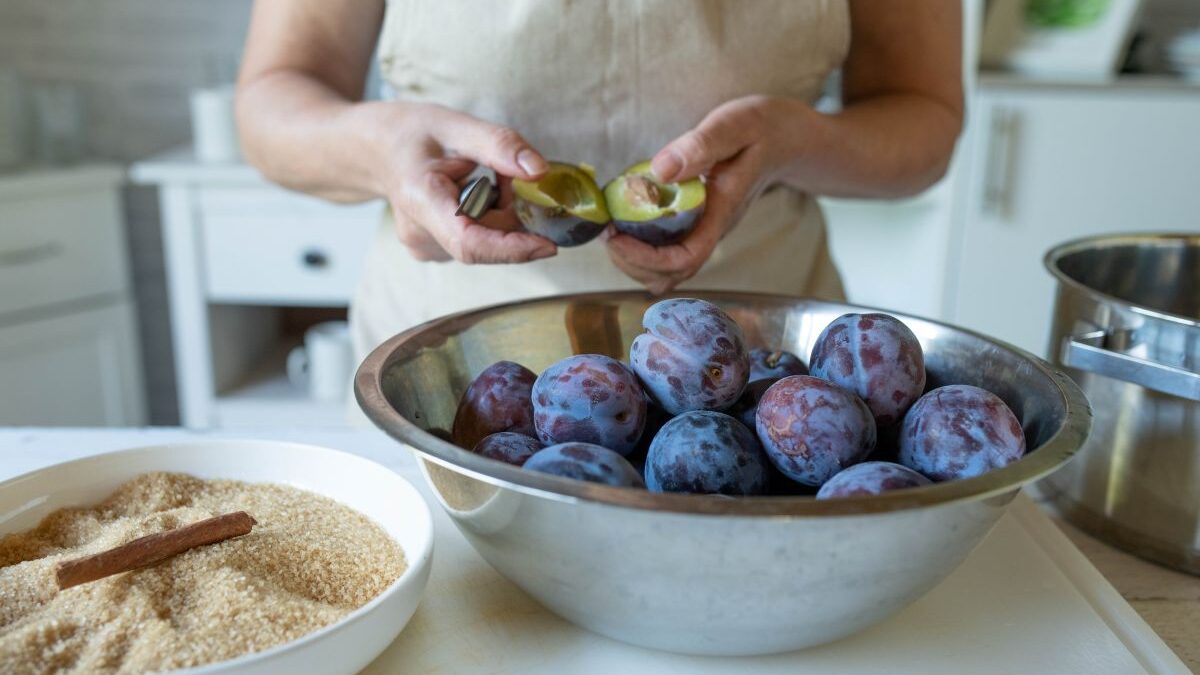
Round, elongated, yellow, green or purplish, plums light up the stalls from July until the beginning of autumn. Whether it is mirabelle plum, greengage or damson, this seasonal fruit combines taste pleasure and health benefits.
With more than 80% water, plum contributes to daily hydration while providing little fat and a moderate energy intake. A fruit of great simplicity in appearance, but whose nutritional density makes it an essential part of our plates.
A concentrate of vitamins, minerals and antioxidants
Behind its juicy flesh, the plum contains a range of precious micronutrients for the proper functioning of the body. In particular, it provides potassium – essential for muscle contraction, nerve function and the regulation of blood pressure – but also magnesium, copper and small amounts of iron.
Its other strength lies in its richness in protective compounds.
“Plums are particularly rich in vitamins C and E, as well as antioxidants. These nutrients play an essential role in protecting the body against oxidative stress” first explains dietitian Pauline Pied.
These phenolic compounds and pigments (like beta-carotene) help fight against free radicals responsible for cellular aging. Varying the types of plums also allows you to maximize these intakes over the weeks.
Transit and digestion: a laxative effect to monitor
This is the best-known benefit of plum: its ability to stimulate intestinal transit. Thanks to an effective combination of soluble (like pectin) and insoluble fibers, it increases the volume of stools and facilitates their elimination.
However, the fruit also contains sorbitol, a natural sugar with mild laxative power. If this property is sought after in cases of constipation – particularly in its dried form, prune – it requires a certain vigilance.
The expert qualifies as follows: “However, a reservation must be made regarding its laxative effect. Plum is rich in sorbitol, a FODMAP which tends to accelerate transit and can cause bloating. People with sensitive digestion must therefore remain vigilant, even if those who do not suffer from digestive discomfort will be able to consume it without difficulty.
For people suffering from irritable bowel syndrome or digestive sensitivity, excessive consumption can therefore cause inconvenience.
Cardiovascular and bone health: little-known virtues
Consumed regularly as part of a balanced diet, plum supports heart health. Its soluble fiber helps regulate the absorption of dietary cholesterol, while its potassium helps maintain stable blood pressure.
Furthermore, prunes are the subject of promising scientific work concerning the prevention of bone loss, particularly in postmenopausal women. The joint presence of potassium, vitamin K and antioxidants supports bone remodeling mechanisms. An interesting idea which complements – without ever replacing – the usual pillars of bone health, which are physical activity and intake of calcium, proteins and vitamin D.
Portions and recipe ideas: how to enjoy it properly?
To benefit from the benefits of plum without risking discomfort or excess sugar, moderation remains essential. “From a nutritional point of view, an equivalent portion represents around 100 grams, or around ten plums depending on their size“, says Pauline Pied. “It is recommended to consume three portions of fruit per day, making sure to vary them. As long as it’s plum season, you might as well take full advantage of it!” she recalls.
In the kitchen, the plum lends itself to many preparations, raw or cooked:
- Natural. Simply washed and chewed with its bloom (this thin natural whitish film guaranteeing its freshness), or cut in half and incorporated into yogurt.
- Express in the microwave. “A very simple method is to cut them in half and heat them for two minutes in the microwave with a pinch of cinnamon, before adding them to a fromage blanc.“, advises the dietician.
- In baking without added sugar : Tarts, clafoutis or crumbles go perfectly with this fruit. The expert shares her culinary tip. “The advantage of plum is its great natural sweetness. When I prepare clafoutis or small cakes, I do not add sugar, because the fruit is enough to sweeten the preparation“.
A thirst-quenching and delicious fruit par excellence, the plum deserves to appear on the end-of-summer menu. Whether you are looking for it for its action on transit, its antioxidants or its natural sweetness in dessert, you just need to adapt the quantities to your own digestive sensitivity to get the best out of it on a daily basis.