
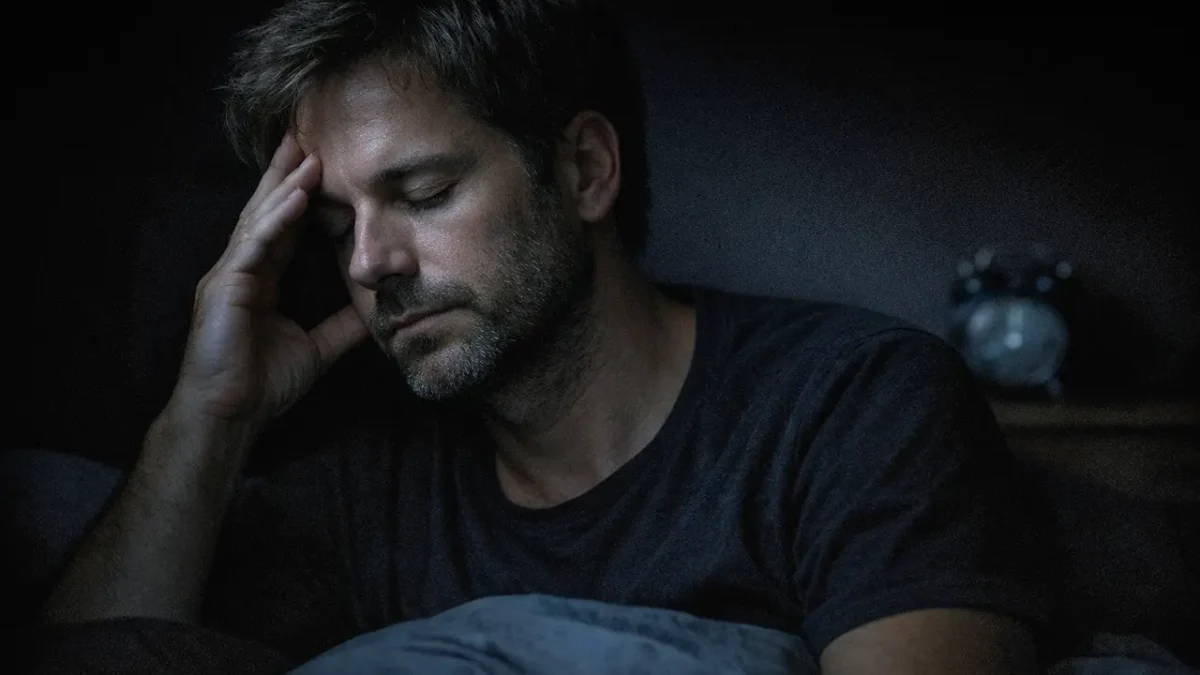
In a video posted on Instagram, Dr. Ygal Boujnah (@dr.boujnah.ophtalmo) asks a simple question: what would happen to our eyes after weeks in complete darkness? The answer is rather reassuring: in an adult with healthy eyes, darkness alone is not supposed to make you blind.
The most important change mainly affects biological markers: sleep, alertness, melatonin.
Your eyes adapt, but they can’t see in pitch black
In his video, the ophthalmologist recalls that the eye reacts very quickly when the light drops. The pupil dilates, then the photoreceptors in the retina adjust. The cones intervene first, before the rods, more sensitive to low light, take over.
This mechanism is well known: in the dark, the rods regenerate rhodopsin, a pigment essential for vision in low light. In order of magnitude,
maximum dark adaptation is reached after 30-40 minutes. After this time, staying longer in the dark does not give you superhero vision.
The key point is here: even a perfectly adapted eye cannot see in pitch black. To produce an image, the retina must capture photons. If there is none, there is simply no visual signal that the brain can use.
The expert also mentions the role of rhodopsin and vitamin A. This is an important nuance: a significant deficiency in vitamin Aand not “vitamins” in general, can disrupt adaptation to darkness and cause poor vision in dim light or at night, called night blindness. In the event of unusual difficulty seeing at night, the issue is not to self-supplement, but to speak to a healthcare professional.
To better understand the role of cones, rods and vitamin A in night vision, we must therefore distinguish two things: normal, reversible adaptation to darkness, and night vision disorders linked to a medical or nutritional cause.
The brain especially loses its time markers
The real upheaval, as the video highlights, does not concern a destruction of the eye, but the loss of light marks. The retina is not only used to form images. It also contains cells sensitive to light, including melanopsin cells, which transmit useful information to the brain to stall. the biological clock.
Without a regular alternation between day and night, this clock can “freewheel” and shift. This does not mean that the brain “is damaged” or loses all its bearings in the broad sense. The solid data above all allow us to speak of a possible disruption of circadian rhythms.
- Sleep may shiftbecause the brain receives the usual day/night signal less well;
- Alertness may fluctuatewith moments of wakefulness or drowsiness less well synchronized;
- Melatonin secretion may occur at a time less suited to the desired rhythm.
This is why daylight plays a central role in synchronizing the biological clock. Conversely, the absence of regular light cues can promote disruption of the circadian rhythm in the absence of day-night cues.
The example of the 33 Chilean miners, stuck underground for 69 days in 2010, illustrates another phenomenon mentioned by the Instagram account: when they returned to the light, they wore sunglasses. After a long period without daylight, the eyes can be very bothered by glare. The pupil constricts, the retina suddenly receives a lot more light, and this can cause tearing or transient pain. Fortunately,
adaptation to light is generally faster than adaptation to darkness.
In practice, weeks in the dark therefore produce neither automatic blindness nor exceptional night vision. In a person with healthy eyes, the expected effect is mainly a reversible visual adaptation, while the brain lacks reliable light signals to organize internal time.