
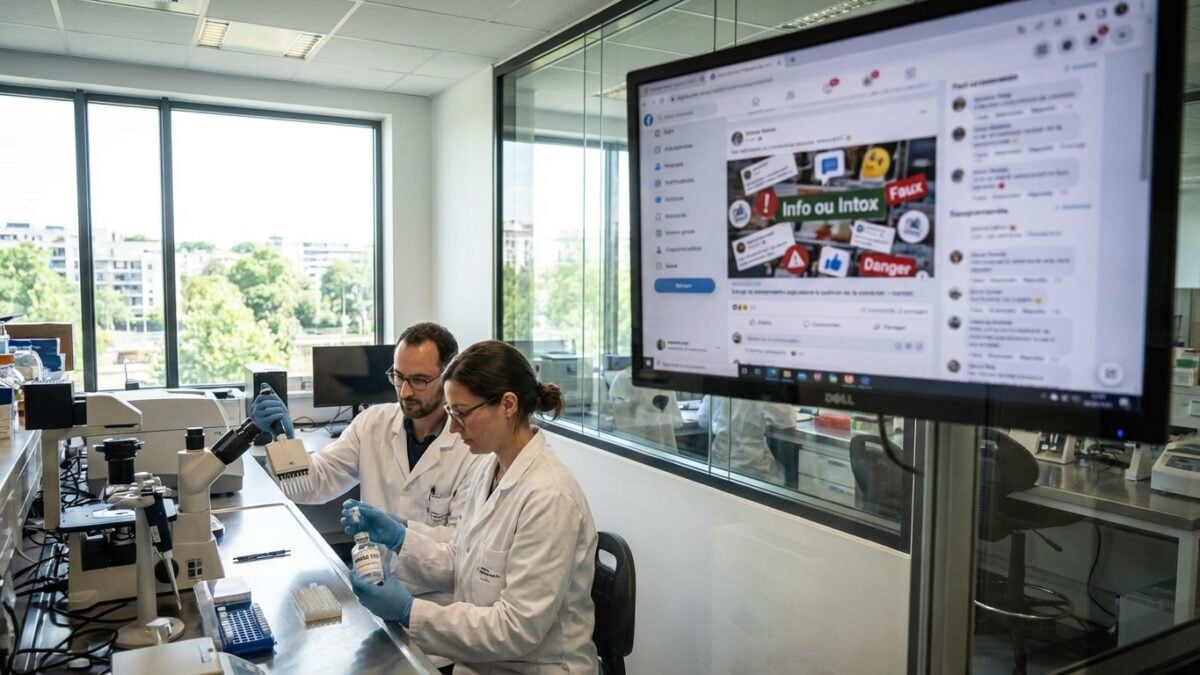
Promising clinical trials, biotechnology giants mobilized and increasingly finely targeted cancers: mRNA vaccines against cancer are no longer science fiction. In laboratories, this technology, tested since the early 2000s, is progressing much faster than most patients imagine.
At the same time, social networks are aflame around alarmist rumors about messenger RNA, carried by the term shock of
“turbocancer”. Between therapeutic promise and fear fueled by disinformationthe gap is widening, and this is where a decisive part is played out for the future of patients, according to Professor Dannell D. Boatman, assistant professor and researcher in health communication, at the University of West Virginia. She develops the dangers of these fake news in an article from The Conversation.
mRNA vaccines against cancer: a new highly targeted weapon
An mRNA vaccine provides the body with temporary “instructions for use”: messenger RNA molecules instruct cells to make a specific protein. The immune system then learns to recognize this protein and attack the cells that carry it. In oncology, researchers design personalized vaccines, based on tumor markers, to train T lymphocytes capable of destroying cancer cells while sparing healthy cells.
Since the early 2000s, more than 120 clinical trials have tested this approach on melanoma, brain, breast, lung and prostate cancers. In glioblastoma, a highly aggressive form of brain tumor, a tailor-made mRNA vaccine rapidly activated patients’ immunity and improved their survival. Other trials, for example with the mRNA-4157/V940 vaccine combined with the immunotherapy Keytruda, have shown a reduction of around 44% in the risk of recurrence or death in certain patients with melanoma, and manufacturers are aiming to make it available for several cancers before 2030.
“Turbo cancer” and infodemic: when rumors blur the message
The story of
turbo cancer claims mRNA COVID vaccines would cause raging cancers. However, large population studies find no increase in the risk of cancer after vaccination. Despite this, since the summer of 2023, the networks have been full of moving testimonies, bad readings of animal studies, misuse of pharmacovigilance bases and old myths according to which mRNA modifies DNA, even though it does not penetrate the nucleus of cells.
The repetition and emotional tone make these messages credible to many people, even educated people. Work already shows that erroneous information about cancer pushes some patients to abandon validated treatments in favor of unproven methods, with a significantly increased risk of death. Oncologists report having to devote part of their consultations to dismantling these preconceived ideas resulting from this
infodemic born during the pandemic.
Preserving the potential of mRNA vaccines against cancer in the face of misinformation
mRNA technology arrives at a pivotal moment: scientific results are accelerating, but public understanding is struggling to keep up. By being exposed to misleading stories, some people could refuse treatments or clinical trials based on mRNA tomorrow, limiting the potential benefits of these vaccines for cancers such as melanoma, lung or brain.
Communication research shows that proactive, transparent and convincing information can slow down this phenomenon, especially if it begins before the arrival of these routine vaccines. Monitoring rumor trends, responding early to concerns, giving caregivers tools to discuss with their patients and relying on trusted actors, such as associations and hospital teams, becomes an integral part of the scientific challenge. The future of the fight against cancer will also be played out in this discreet battle around the trust placed in
mRNA vaccines against cancer.