
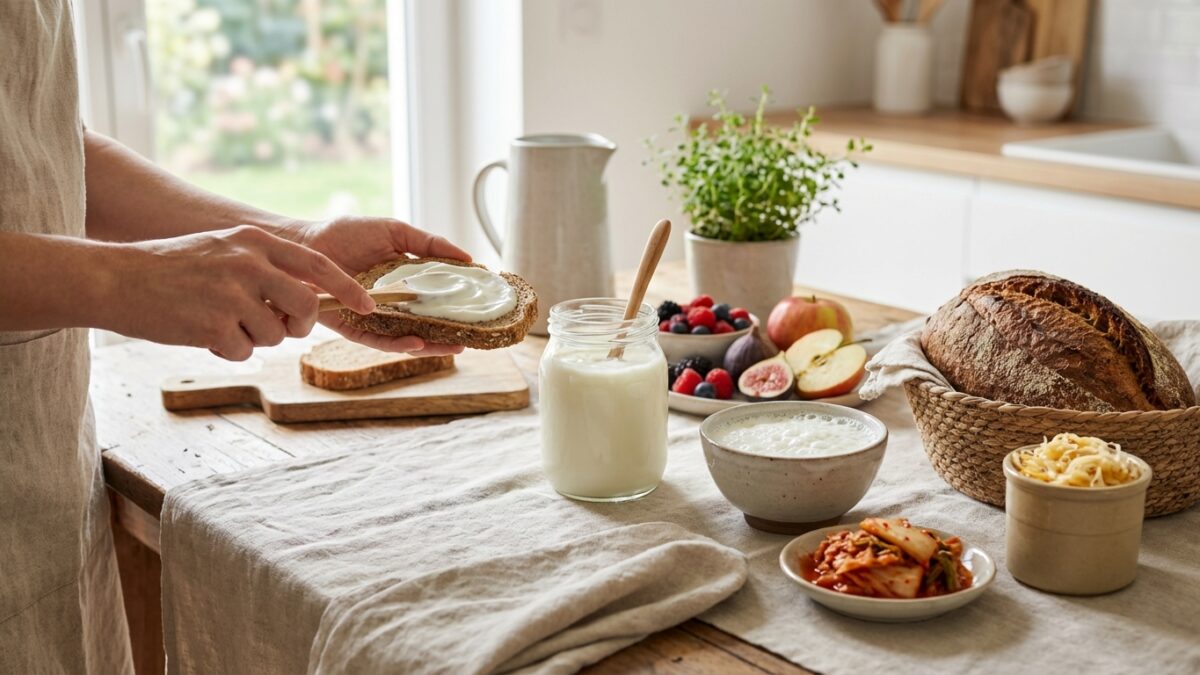
Plain yogurt, kefir, raw sauerkraut, kimchi… Fermented foods have found their way onto many tables, with a promise: to pamper the intestinal flora and support the body’s defenses. But among the conflicting advice, many wonder if there is a best time to consume these probiotic foods.
Experts point out that probiotics are live microorganisms which, in sufficient quantities, benefit health. The question “when to take probiotics” comes up often, however, while studies on the ideal schedule remain rare; enough to sow doubt about the routine to adopt.
Probiotics, microbiota and immunity: regularity before the clock
In Health.com, gastroenterologist Supriya Rao judges that the issue is not the precise time but consistency: “Generally“, regularity counts more than timing, then she specifies: “Probiotic-rich foods work by introducing beneficial bacteria into your gut on a regular basis, and this only happens when you eat them often, not every once in a while.“. She also advises: “Think of probiotic foods as something you incorporate into your daily routine, not something you try to optimize by the hour“.
In other words, the idea is to include at least one portion of fermented foods every day: natural yogurt, kefir, raw milk cheese, raw sauerkraut, miso, kimchi… Gastroenterologist Omar Khokhar recalls that the intestine houses around 70% of the immune system, which “camps” there, and summarizes this direct link: “a healthier gut means better nutrient absorption and fewer immune system failures“.
When to take probiotic foods: before, during or after a meal?
What really matters for the survival of good bacteria is the digestive environment. Specialists explain that absorbing probiotic foods at the same time as a meal, or just before, helps to “buffer” the acidity of the stomach: more micro-organisms then reach the small intestine, where they can act on the
gut health and immunity.
For probiotic supplements, it is better to follow the instructions and keep a fixed schedule each day. In the case of antibiotics or treatments that reduce gastric acidity, Omar Khokhar recommends spacing out the taking of probiotics by approximately three hours to limit interactions. Dietitian Bradee Rojas also recalls the benefit of combining these foods with prebiotic fibers such as asparagus, oats, apple or garlic, and warns: “Processing certain foods can also damage the microbes in foods typically rich in probiotics.“.
Building a probiotic routine that truly protects immunity
In practice, a single day is enough to nourish the microbiota. A breakfast with plain yogurt or skyr, oatmeal and fruit, a lunch supplemented with a spoonful of raw sauerkraut or kimchi, then a little miso or tempeh at dinner already provide a portion of fermented foods. Experts suggest aiming for at least one serving per day, choosing products that say “live ferments” or “unpasteurized,” a sign that microorganisms are still present.