
For people living with multiple sclerosis, the stakes are immense. The disease often occurs in young adults and can cause vision problems, loss of sensitivity, paralysis or severe fatigue. Current treatments reduce disease activity, but their principle is generally based on a more or less extensive suppression of the immune system, with an increased risk of infections and other adverse effects.
A team from the University of Zurich (UZH), University Hospital Zurich and the Karolinska Institute is trying to change strategy. Rather than muting immunity, she seeks to teach it what to stop attacking.
Red blood cells transformed into “messengers” of tolerance
Multiple sclerosis is an autoimmune disease: T lymphocytes, which should normally defend the body against infections and certain abnormal cells, mistakenly attack the
myelinthe protective sheath that surrounds the nerve fibers of the brain and spinal cord.
Researchers have imagined a sort of immune re-education.
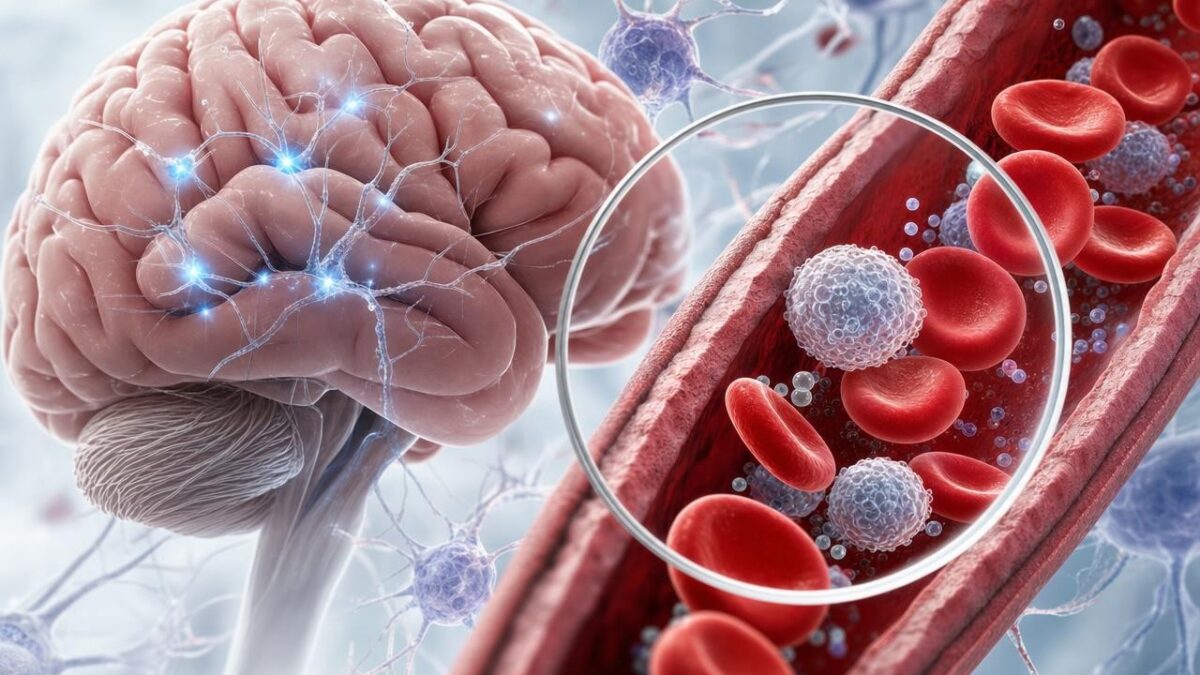
They take the patient’s red blood cells, then chemically fix them seven myelin peptidesthat is to say small fragments of proteins targeted by the immune system in multiple sclerosis. These modified cells are then reinjected.
Once in the body, they are eliminated naturally, mainly in the liver and spleen, as are aging red blood cells. The myelin fragments are then presented to the immune system in a context that does not signal danger.
The objective is subtle: make the immune system understand that these proteins belong to the body and should not be attacked.
The principle is therefore very different from general immunosuppression. Researchers hope to preserve defense capabilities against viruses, bacteria and tumors while specifically neutralizing the autoimmune reaction.
“This would make it possible to control this autoimmune disease in a very targeted manner and without major side effects. hopes Andreas Lutterotti, from the Department of Neurology at the University of Zurich.
In the first ten patients, the first signals are encouraging
However, this approach has only just been tested. The study corresponds to a phase Ib trial carried out in only 10 patients. Its primary goal was to evaluate safety and begin to understand the biological mechanisms of the therapy.
The results are encouraging: the treatment was
well toleratedthe patients remained clinically stable and several parameters observed by imaging did not show any worsening.
Even more intriguing, the blood level of neurofilament light chaina biomarker associated with nerve cell damage, decreased. This signal could reflect a reduction in inflammatory damage to the nervous system, but it must be confirmed in larger studies.
The researchers also analyzed the immune cells very closely using cell-by-cell RNA sequencing. Three months after the injection, they observed more
CD4+ T lymphocytes with regulatory profileas well as a reduction in certain pro-inflammatory populations.
An early increase inIL-10Tr1-type regulatory T cells, monocytes with a tolerance profile and plasmacytoid dendritic cells was also observed.
In simple terms: researchers see more “brakes” and fewer “accelerators” of autoimmunity.
After twenty years of research, the real test is still to come
For the team, this first step is important, but it does not yet constitute proof of clinical effectiveness.
“After more than two decades of development work, we have cleared the first clinical hurdle, allowing us to bring the therapy to patients.” says Roland Martin, last author of the study and researcher at the Institute for Experimental Immunology at the University of Zurich.
We will now have to know if this modification of the immune system really results in fewer relapses, fewer new brain injuries and slower progression of disability.
The next step must therefore be a larger trial dedicated to clinical effectiveness. To continue development, researchers created Cellerysa biotechnology company intended to finance and support the rest of the program.
The ambition already goes beyond multiple sclerosis. The researchers believe that the same principle could, ultimately, be adapted to other autoimmune diseases. “This approach can also be applied to many of the more than 100 autoimmune diseases.”
according to Andreas Lutterotti.
For the moment, this therapy remains experimental and is not available in routine practice. But it opens up a particularly interesting perspective: in certain autoimmune diseases, the future of treatments could perhaps no longer consist of weakening the body’s defenses, but of patiently re-teaching them what they must protect.