
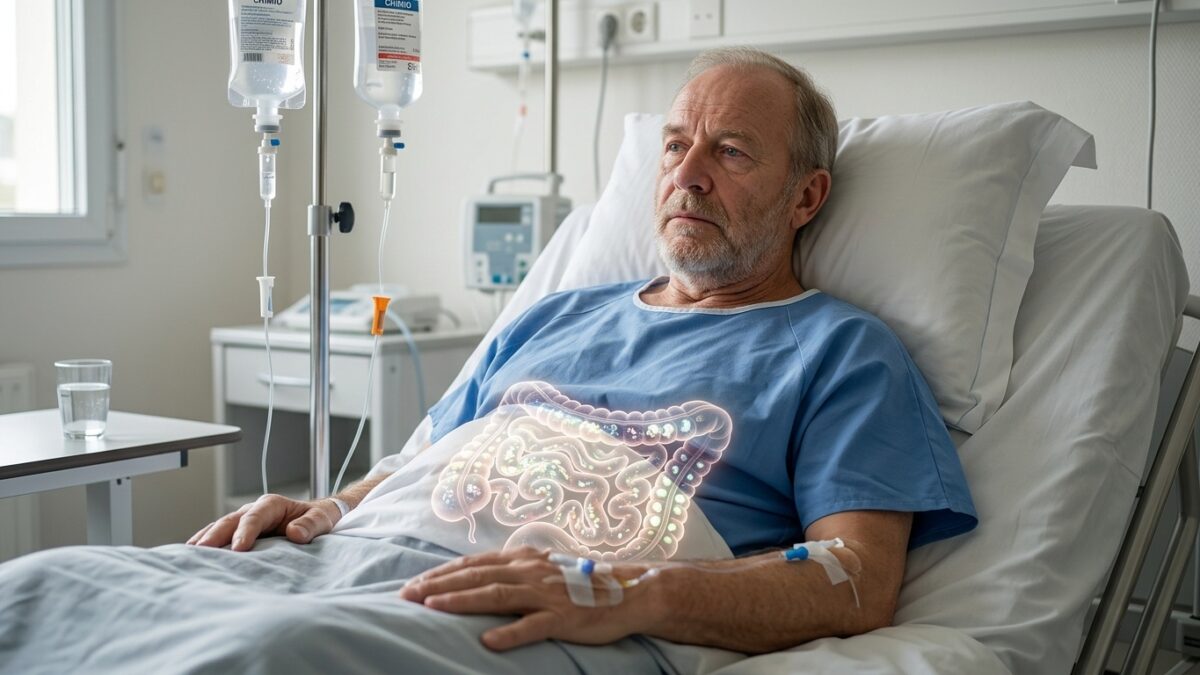
In France, shortened nights are increasing: Inserm and the National Institute of Sleep and Vigilance estimate that one in three French people suffer from sleep disorders and that we sleep less than 7 hours. Studies report that below 6 hours per night, the risk of cancer increases by 41%, with more than 50% additional risk for colorectal cancer. A new avenue links these short nights to the intestinal microbiota.
Researchers from the UF Health Cancer Institute at the University of Florida showed in mice how this lack of sleep could fuel the tumor. Their study, presented at the American Association for Cancer Research meeting, transplanted the microbiota from sleep-deprived mice into mice with colorectal cancer. Recipients developed larger tumors, weakened anti-tumor immunity, disrupted circadian rhythm genes, and less effective 5-FU (5-fluorouracil) chemotherapy.
Lack of sleep, night work and colorectal cancer
Sleep disorders increase the risk of colorectal cancer by at least 50%. The International Agency for Research on Cancer classifies night work with disruption of the circadian rhythm as a “probable carcinogen” for humans. This disruption affects melatonin and weakens NK cells, these anti-tumor immune cells that destroy abnormal cells.
The experience of the UF Health Cancer Institute suggests that this disruption also occurs through the microbiota. Researchers at the UF Health Cancer Institute summarize: “Lack of sleep modifies the composition of the microbiota and probably the behavior of bacteria. However, all of these changes have functional effects on cancer progression and therapies.“. By transferring a “tired” microbiota, they obtained larger tumors and a lesser response to 5-FU in mice that were sleeping normally, which places the intestinal microbiota at the center of the problem.
Intestinal microbiota and treatments: a new target in oncology
The intestinal microbiota brings together billions of bacteria that help with digestion, produce protective molecules and train our immune system. Several teams have already linked its composition to the success of immunotherapies against certain cancers. In their press release, researchers from the UF Health Cancer Institute emphasize that “Sleep deprivation is very common in cancer patients, but its effects are often overlooked“and that”We must consider the patient as a whole“.
Researchers from the UF Health Cancer Institute also discuss avenues for therapies targeting the microbiota: restoration of “good bacteria”, fecal transplants, molecules from the microbiome to improve response to treatments. Their message remains concrete: “we must take care of it: sleep well, eat well”, move, limit stress. Chronic lack of sleep would therefore not only be a risk factor, but also a possible obstacle to anti-cancer weapons.