
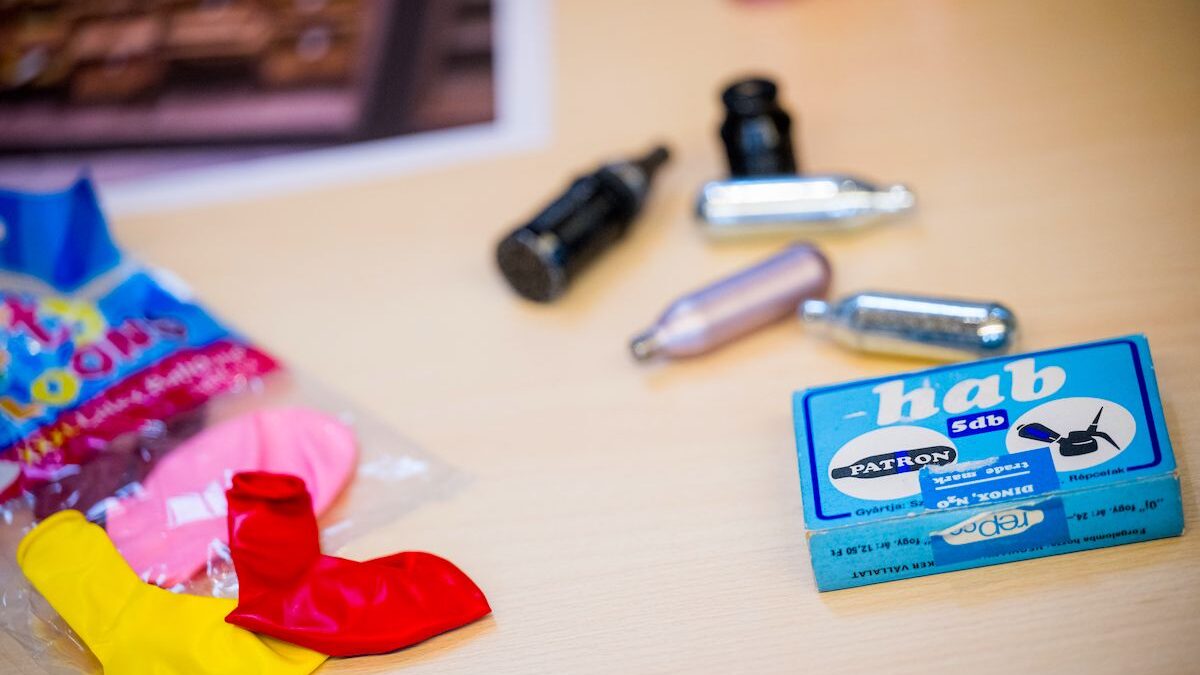
After the death of Mathis, 19, hit in Lille by a driver who allegedly inhaled nitrous oxide, the ban on nitrous oxide entered the public debate. Laetitia Polart, the young man’s mother, gave an interview to Le Parisien, in which she asked that “consuming and purchasing this product clearly becomes illegal“. She continues: “The law must change, not for us. For us, it’s too late. Mathis is no longer here“.
Ban on nitrous oxide: what the law says while driving
On the road, recreational consumption of this so-called laughing gas exposes people to risky behavior. “There are 50 deaths per year in road accidents caused by a driver who had consumed nitrous oxide.“, testifies Amandine Scattarreggia, departmental secretary of the League against road violence, to Figaro. Driving under a prototype faces a legal void.
Indeed, today, “No provision of the Highway Code currently allows for criminal sanctions for driving under the influence of this product.”declares Maître Antoine Régley, lawyer for Mathis’ parents to Le Parisien. The law that created road homicide was designed to include all victims, but its concrete application depends on the circumstances of the facts and the qualifications retained by the magistrates.
Another problem: The euphoric effects of nitrous oxide last only a few minutes, and it becomes undetectable in the body after half an hour. A solution similar to breathalyzers for alcohol and saliva tests for drugs has been under review and testing in Belgium and Denmark for several months, but is not yet approved in France.
Public health and local regulations: Villeurbanne tightens the ban
This gas is not considered a narcotic, and even in the event of a serious accident, no specific offense can be held if its consumption is the only cause. Currently available over the counter in the form of small cartridges used in pastry for whipped cream siphons, its status could nevertheless change in the coming months.
But faced with the devastation, cities are already tightening the screws. In Villeurbanne, the possession and carrying of cartridges of more than 8.6 g on public roads are now prohibited for any person without professional use, minors or adults. “In connection with the evolution of national regulations governing the sale of nitrous oxide, the City is strengthening its order in order to allow more effective intervention by police officers.“, announces Cédric Van Styvendael, mayor of Villeurbanne, in a press release. “The simple possession of canisters or cartridges outside of professional or culinary use now constitutes an offense, for minors and adults.“, again reminds the City. For minors, any detention in public spaces is prohibited, and the abandonment of cartridges remains “strictly prohibited“. Violators face a fine of 35 euros.
A blatant increase in the consumption of nitrous oxide
The subject is also health. According to the Vinci Autoroutes Foundation, “the number of nitrous oxide canisters thrown out of car windows and found at the side of the tracks or on rest areas is constantly increasing“Its survey of more than 2,200 people points to massive use among young people: one in 10 under 35s has already consumed it, and among them one in two while driving; 6% of those under 25 have taken it before driving, 6% while driving, 9% have already been passengers of a driver who has consumed it; 10% of 16 to 24 year olds believe that consuming while driving is not dangerous.”On the road, the consequences of this practice can be dramatic for the drivers themselves, their passengers and other users exposed to out-of-control vehicles.“, warns Bernadette Moreau, general delegate of the Foundation.
In Lyon, the Hospices Civils de Lyon have set up a dedicated teleconsultation and more than thirty patients have been hospitalized in 2024. For Guillaume Grzych, president of the Protoside network, this is “a largely underestimated public health problem“and he calls to”prevent better, detect earlier and deploy concrete actions“.