
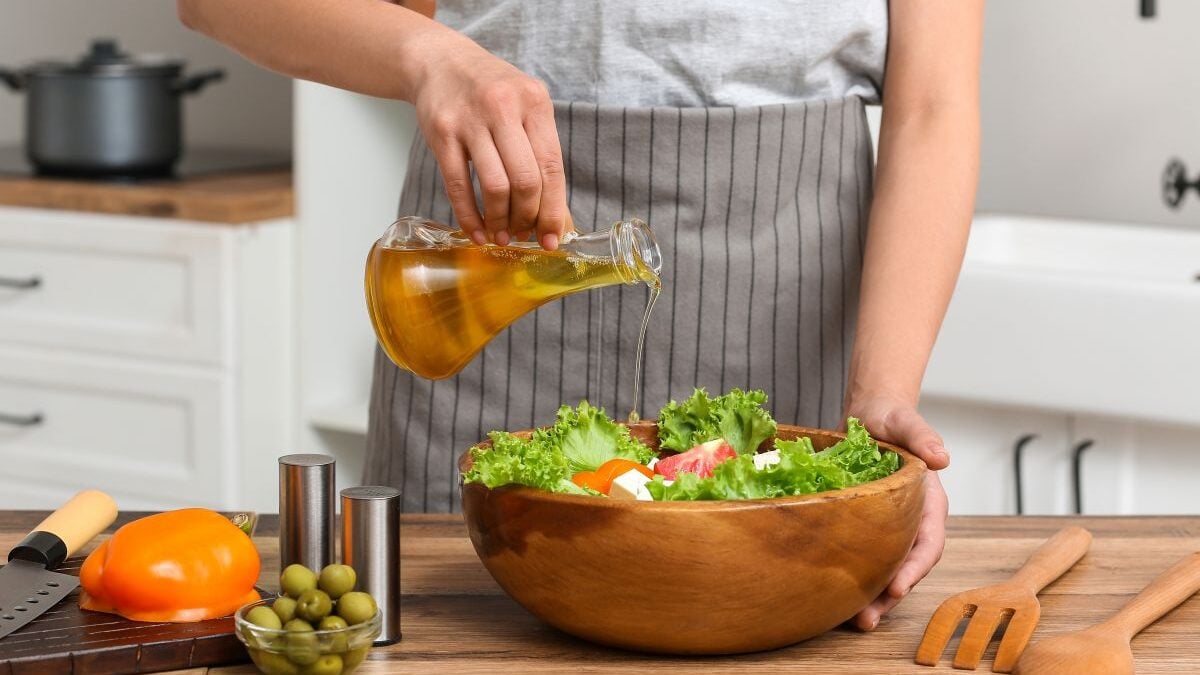
High cholesterol affects millions of people and remains one of the main risk factors for heart disease. Faced with this observation, changing your fat intake is often the first reflex adopted. If olive oil is a natural choice in our pans and salads, its handling nevertheless requires some precautions.
Omega-9, the protective secret of green gold
Olive oil draws its strength from its exceptional lipid composition. Unlike fats of animal origin, it stands out for its richness in monounsaturated fatty acids, particularly beneficial for the body.
“Olive oil is particularly rich in unsaturated fatty acids, and more specifically omega-9. These prove to be generally beneficial for cardiovascular health. However, they are part of a whole and cannot act alone” first of all recalls dietitian Claire Trommenschlager. “They must therefore be integrated into a varied and balanced diet. It will also provide the omega-3 essential to the body.
These omega-9s actively contribute to reducing the level of “bad” cholesterol (LDL) in the blood while preserving “good” cholesterol (HDL).
The cooking mistake: when overheating degrades the oil
It’s one of the most frequent debates in the kitchen: can you heat olive oil? If the answer is yes, there is a critical limit that must not be crossed. At the risk of losing part of its virtues.
“Olive oil has the advantage of being able to be used both cold and for cooking, because it tolerates heat relatively well. This remains true as long as it is used normally. Concretely, this means that you must avoid using it for frying, subjecting it to excessive temperature or letting it smoke. As a general rule, it is rare to let your oil smoke, unless you poorly control the intensity of the fire.” explains the expert.
The main pitfall therefore consists of exposing this oil to extreme temperatures. Because when the oil reaches its “smoke point”, the chemical structure of its fatty acids begins to alter. Which harms its nutritional quality.
What is the real impact of this awkwardness on the heart?
If smoking your olive oil is a regrettable culinary error, we must nevertheless put its immediate impact on our arteries into perspective. Thermal degradation first affects the taste qualities and richness of the food, but does not instantly destroy your health capital.
Claire Trommenschlager qualifies this point precisely. “If this error occurs, it is certainly regrettable because it degrades some of the omega-9 as well as the organoleptic qualities of the oil. However, we cannot say that such an incident is sufficient to impair cardiovascular health.”
Clearly, missing a meal from time to time is not going to clog your arteries overnight. The real danger for the cardiovascular system does not lie in an isolated kitchen accident, but rather in a set of bad dietary habits established over the long term.
The real pillars to preserve your arteries
To fight cholesterol effectively and protect your heart, you have to look at the plate as a whole. Focusing solely on olive oil would be simplistic, because cardiovascular health depends on a synergy of daily behaviors. The expert details the procedure to follow:
“What really harms the body is insufficient consumption of unsaturated fats from, for example, olive, rapeseed or nut oils. Conversely, it is necessary to limit excess saturated fatty acids by moderating your consumption of red meat, cream and butter. To best preserve your cardiovascular health, it is above all a matter of adopting a set of good reflexes, such as ensuring a sufficient intake of fiber and practicing regular physical activity.
The real anti-cholesterol action plan is therefore based on three major pillars:
- Prioritize vegetable unsaturated fats;
- Reduce excess saturated fats of animal origin (cold meats, fatty meats, excess rich dairy products);
- And enrich your meals with fiber (fruits, vegetables, legumes) which help capture cholesterol in the intestine. Everything must be inseparable from regular physical activity to sustainably maintain the heart muscle.
It’s this complete balance, not a single food, that will make all the difference to your arteries.