
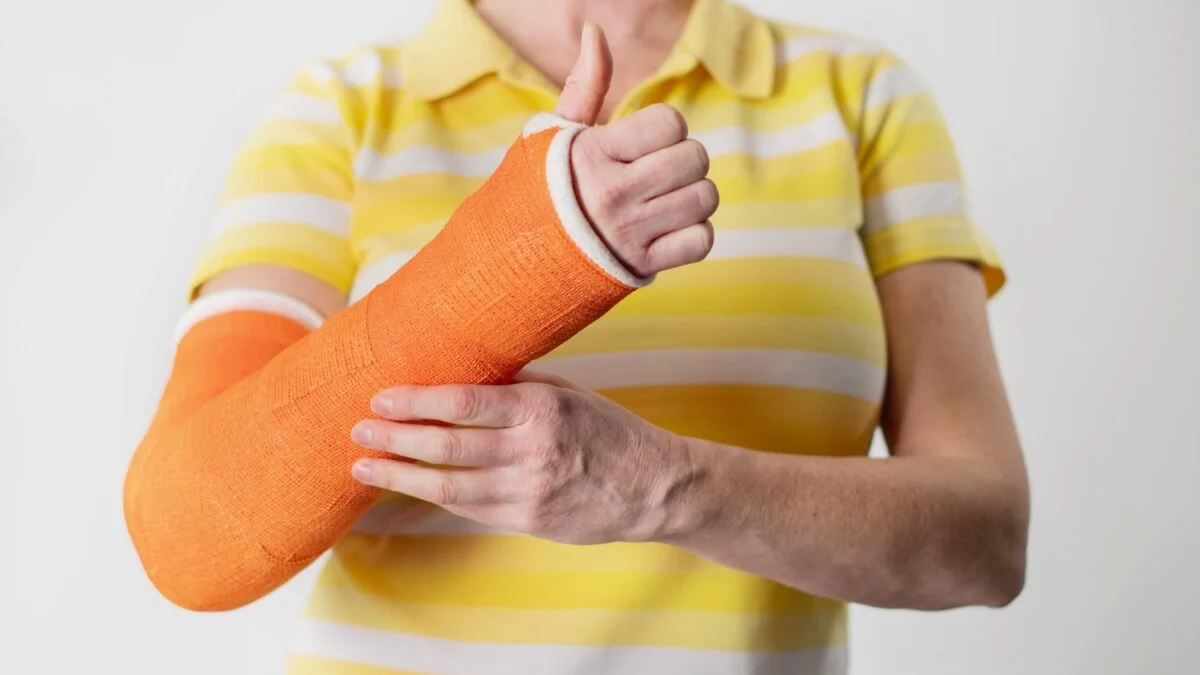
You fall from your height, you catch yourself badly, and the verdict falls: broken wrist. The cast is placed, the pain taken care of, daily life is organized. But another question is sometimes worth asking. Why did this bone break after such a moderate impact?
On the occasion of World Osteoporosis Day, October 20, a simple reflex is worth remembering: after a fracture occurred during a small fall, you should not only ask when the cast can be removed, but also if you need to assess your risk of breaking again. It is not an automatic diagnosis of osteoporosis. This is a discussion to have with your doctor.
A “fragility” fracture, what does that mean?
We often speak of a fragility fracture when a bone breaks after a low-energy trauma: for example a fall from a height, without a violent accident or major shock. The wrist, hip or vertebrae are among the locations that can attract attention, especially when the context lends itself to it.
A fracture after a small fall can reveal bone fragility. But it does not mean, in itself, that one necessarily suffers from osteoporosis. Other elements count: age, personal or family history, the exact circumstances of the fall, the existence of other fractures, certain treatments, general condition or even the level of physical activity.
Osteoporosis is a skeletal disease characterized by a reduction in bone strength. It can progress for a long time without pain or obvious signs. In some people, the first manifestation is precisely a fracture. This is why the moment of treatment of the broken bone can become an opportunity for prevention: to prevent the episode from repeating itself, sometimes at a more serious site.
The right reflex after the cast: what to tell the doctor?
After a fracture, we naturally think about consolidation, rehabilitation, returning to work or everyday activities. However, it is useful to clearly inform the doctor that the fracture occurred after an ordinary fall or a minor shock.
The doctor can then take the story in detail: how did you fall? Was there any discomfort, loss of balance, obstacle on the ground? Have you ever had a fracture before? Are you taking any medications? Corticosteroids taken over a long period of time are among the treatments that can weaken bones.and must be mentioned, like any chronic treatment.
This assessment does not only concern women after menopause, even if they are often affected by bone risk screening. Men can also have osteoporosis or fragility factors. The challenge is therefore to adapt the approach to the person, and not to apply the same assessment to everyone.
The question to ask is simple: “Should I assess my risk of re-fracturing?” It can be discussed with the treating physician, the specialist following the fracture, or during a follow-up consultation. The important thing is not to consider the fracture as an isolated event if it occurred in circumstances unusual in their low intensity.
Bone densitometry, calcium, vitamin D: what should we expect?
Depending on the situation, the doctor may suggest a bone densitometry. This test measures bone mineral density and helps assess skeletal strength. It is not automatic after any fracture: it depends in particular on the type of fracture, the context and the risk factors.
However, a history of fracture without violent impact is one of the situations which may justify this first examination, according to the management recommendations.
In the same way, you should not jump on food supplements alone. An appropriate intake of calcium and vitamin D can be part of the treatment when the doctor considers it necessary.but self-supplementation does not replace medical evaluation. Needs must be assessed based on each person’s situation.
Prevention also involves very concrete measures: limiting the risk of falls at home, correcting visual problems if necessary, reviewing certain treatments which promote dizziness, maintaining appropriate physical activity, preserving muscular strength and balance. Here again, the doctor can refer you to the right professionals if necessary.
If you have already had a fracture after a small fall, keep this detail in mind for your next consultation.
Treating the broken bone is essential; understanding why it broke can change the rest of the follow-up.