
Breast density is not a bad word, nor a defect. On the other hand, it is a condition of the breast tissue which can have consequences on your health, hence the importance of knowing if you are affected.
In the United States, breast density now revealed after each mammogram
In this area, it is in the United States that progress is most “palpable”. Starting this week, all mammogram reports and results letters sent to patients in the United States must include an assessment of breast density. A decision required by the Food and Drug Administration American, while in the country, half of women over 40 in the United States have dense breast tissue.
For what ? Because this density could portend a higher risk of cancer. These new notifications do not involve specific tests for patients with dense breasts, but they recommend that women speak with their healthcare providers.
How is breast density linked to cancer risk?
Breast density is a measure of the amount of fibroglandular tissue in a woman’s breast compared to fatty tissue. In short, the more fibroglandular tissue, the denser the breast. As Dr. Kimberly Feigin, chief of breast imaging at Memorial Sloan Kettering Cancer Center, explains on CNN, breast density can play a role in the occurrence of cancer.
- Not only can it make it more difficult to detect cancer on a mammogram because the dense breast tissue, the glandular elements and the supporting elements of connective tissue, appear white on a mammogram just like cancer does on a mammogram;
- The second reason breast density is important is that dense tissue increases the risk of developing a breast tumor four to six times. Breast cancer tends to develop in fibrous and glandular tissues, which are more abundant in dense breasts. On the other hand, experts point out that having dense breasts does not mean that you will one day get breast cancer, simply that the risk is higher.
How can breast density be measured?
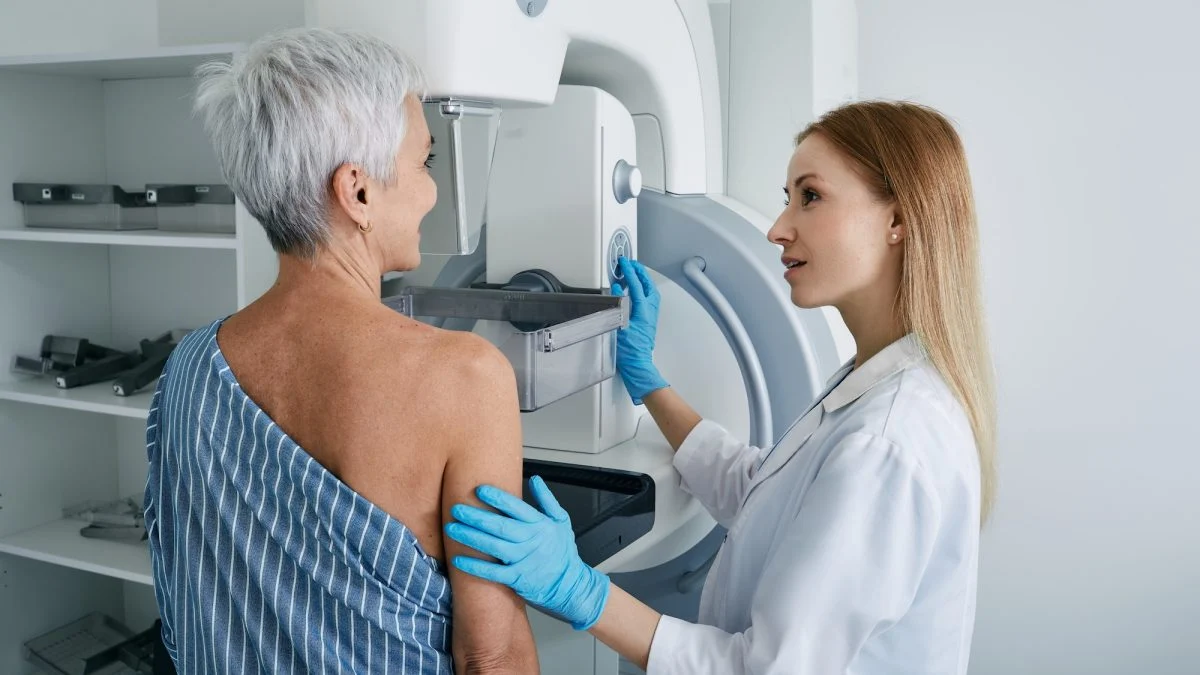
Breast density can only be observed with a mammogram and not with the naked eye or palpation. This is why encouraging women to participate in national screening and informing them after this examination seems necessary.
According to the National Cancer Institute (NCI), four categories of breast density can be noted on a woman’s imaging report:
- Fully fatty breast tissue (almost entirely made up of adipose tissue);
- Scattered fibroglandular breast tissue (made up of fatty tissue, with some small areas of fibroglandular tissue);
- Heterogeneous breast tissue (consisting of a mixture of adipose and fibroglandular tissue);
- Extremely dense breast tissue (almost entirely made up of fibroglandular tissue).
Should we panic at the news of dense breast tissue?
Medicine is clear: there is no need to panic if you are told that your breasts are dense. This is also extremely common. “But knowing your breast density is a factor that allows you to have an overview and make more informed decisions” according to doctors.
In France, organized breast cancer screening is also recommended for women aged 50 to 74. Women with increased breast density may therefore benefit from additional screening by breast ultrasound or breast MRI.
Do we keep the same breast density over time?
Breast density can change over time. Breasts generally become less dense with age and/or just after childbirth. Lower estrogen levels, for example, can make breasts more fatty and less dense. Thus, in younger women, the greater density of the breasts means that a breast ultrasound is more often recommended to obtain a quality mammogram, as specified the National Cancer Institute.
It is therefore recommended to monitor your breasts and their density at regular intervals and to discuss the subject of screening with your doctor.