
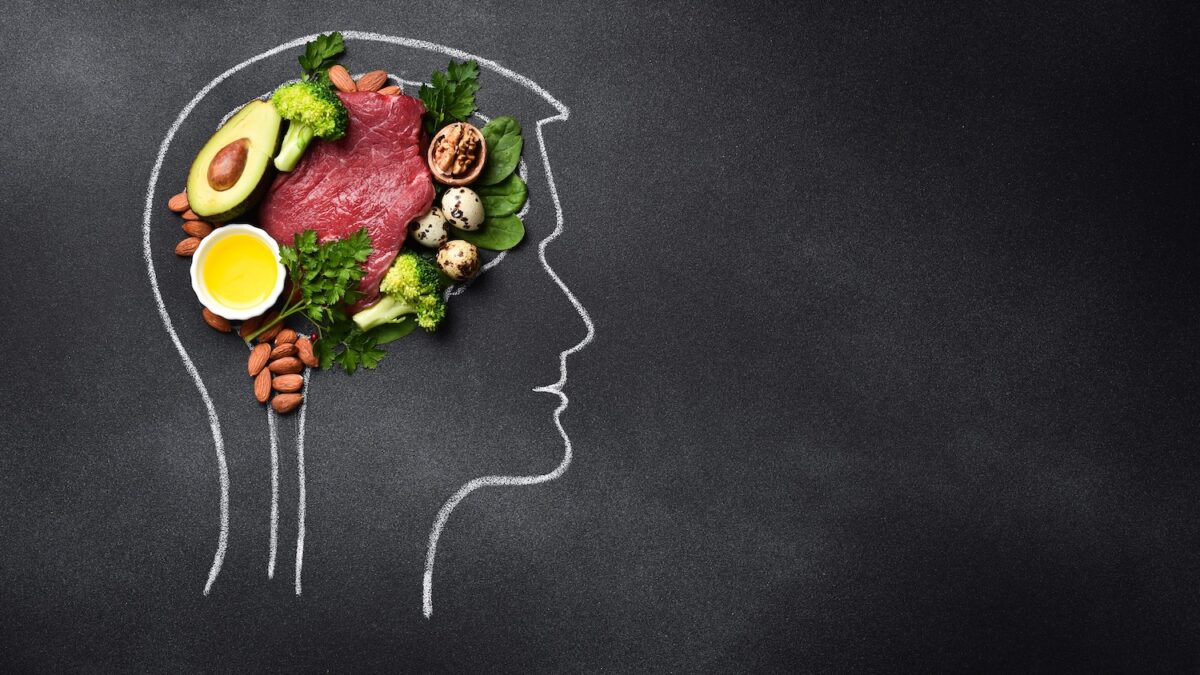
The brain represents only 2% of the body’s weight, but can mobilize up to a quarter of the energy provided by food. If certain diets seem to promote health, researchers point out that the effects build over time. And that memory deserves special attention from adolescence onwards.
Can what we eat weaken our memory?
An oversight, a missed first name, information impossible to find when you need it… These little hiccups are part of life. But behind the functioning of memory there are complex mechanics, closely linked to brain health. And food could play an important role in this.
The brain is a particularly energy-intensive organ. Although it represents only 2% of body weight, it mobilizes up to a quarter of energy intake from food. Along with sleep and physical activity, what we eat contributes to its proper functioning.
Clinical studies and experimental research in animals converge on one point: an unbalanced diet, rich in saturated fats and sugars, could harm memory. However, not all memory abilities seem to be affected in the same way.
Episodic memory, that which allows us to remember events experienced – a shared moment, a conversation, a personal memory – appears particularly sensitive. It depends in particular on the hippocampus, a region of the brain essential for the formation of memories.
One period deserves special attention: adolescence. The brain then continues to mature, particularly at the level of the hippocampus, which remains sensitive to its environment. For the B2V Memory Observatory, preserving one’s cognitive abilities begins well before the first memory disorders appear: It is from a very young age that a varied and balanced diet can help take care of your brain.
The Mediterranean diet, a more solid path than miracle foods
Faced with the promises of foods deemed beneficial for the brain, scientific data invites us to look more broadly at the contents of the plate. No single food has been shown to improve memory or slow brain aging. Rather, it is the combination of different nutrients, consumed regularly and over the long term, which could play a favorable role. In this area, the Mediterranean diet is among the most promising dietary models.
He favors whole grains, fruits and vegetables, fish, legumes, nuts and seeds. Olive oil constitutes the main fat. Dairy products, eggs and poultry find their place in moderate quantities, while red meat is rarely consumed. The whole thing is part of a varied diet, with energy intake adapted to needs.
Its interest is not limited to the brain: the benefits of this diet for the cardiovascular system have been established. However, the health of blood vessels also matters for that of the brain. The same eating habits could help limit certain brain vascular lesions and slow age-related memory decline.
A possible effect on the risk of Alzheimer’s disease is also mentioned. But we must remain cautious: these elements do not mean that the Mediterranean diet alone protects against this disease, nor that it guarantees keeping memory intact as we age.
The promise is less spectacular than a superfood, but more realistic: taking care of your brain starts with sustainable eating habits.
Dark chocolate: is one square really enough to do good for the brain?
Good news for cocoa lovers: dark chocolate contains flavanols, compounds studied for their potential effects on cognition, the immune system and learning abilities.
But be careful not to turn this lead into a prescription. The presence of flavanols in cocoa is not enough to demonstrate that a square of chocolate actually improves memory on a daily basis. The B2V Observatory of Memories highlights dark chocolate containing at least 70% cocoa, while recalling that the potential interest lies in the cocoa compounds, and not in the sugar.
In other words, chocolate can keep its place in a balanced diet, without becoming a treatment against forgetfulness. Eating pleasure also counts, but we must not confuse a property studied in the laboratory with a clinical benefit demonstrated in humans.
This nuance is essential: brain health does not depend on an isolated food, but on a set of factors that act over the years.
Turmeric and red fruits: why promises must be qualified
Rich in antioxidants, turmeric and red fruits are regularly presented as allies of memory. However, according to the B2V Observatory of Memories, no scientific study has demonstrated that these foods improve the encoding of information, that is to say the first step which allows the brain to transform information into a memory.
This does not mean that they have no nutritional value. Red fruits can perfectly contribute to a varied diet, just as spices can contribute to the pleasure and diversity of meals. But their reputation should not be confused with demonstrated effectiveness on memory performance.
Ultimately, the question is perhaps not knowing what food to add to your plate so that you don’t forget anything. Rather, it is to understand how our daily habits can help preserve our brain health.
Eating a varied diet, favoring minimally processed foods, getting enough sleep and practicing regular physical activity are complementary ways to take care of yourself. None guarantees escape from cognitive decline or neurodegenerative disease. But, on a lifetime scale, this global approach is more consistent with scientific knowledge than the search for a miracle food.
For memory, the best promise is not that of a remedy in a bar of chocolate or a handful of red fruits. It is that of daily attention paid to your brain, from childhood and throughout life.