
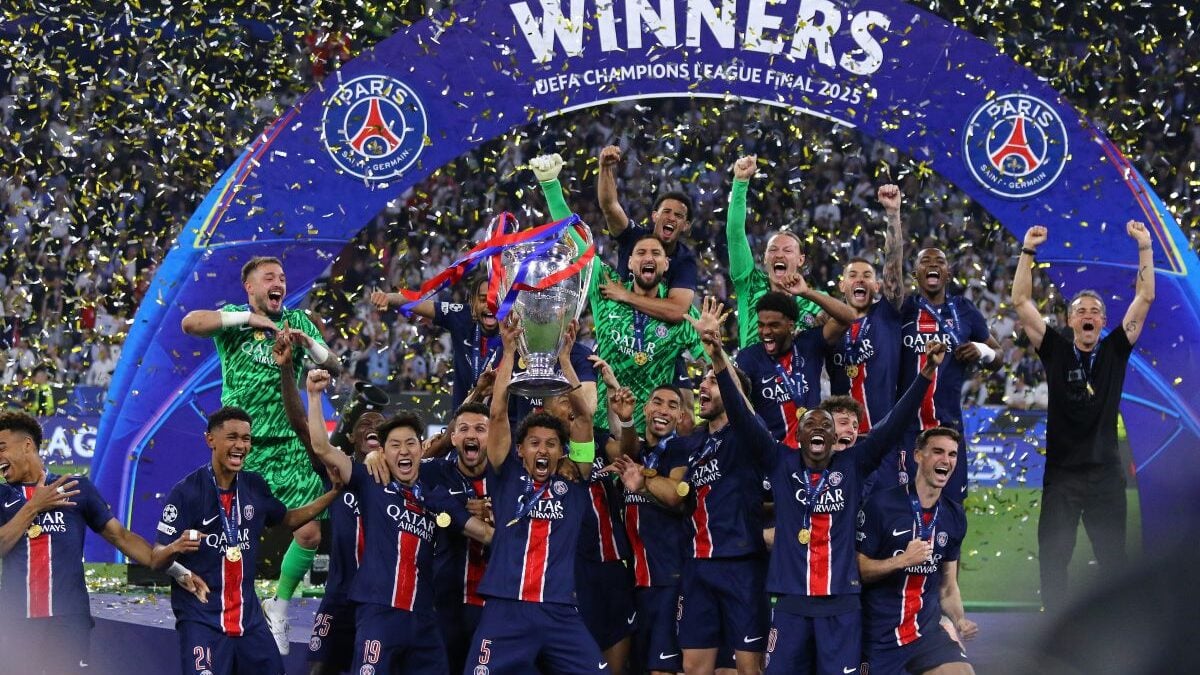
Paris is in troubled waters, and the timing couldn’t be worse. This Friday evening, at the opening of the 25th day of Ligue 1, PSG lost 1-3 on home soil against Monaco.
If last year the victories came one after the other with a form of evidence, today the contrast is striking. Despite a reduction in Bradley Barcola’s score, Luis Enrique’s men seemed without solutions. This difference in results between two exercises raises a fundamental question: how can a group lose its confidence so quickly?
The cycle of defeat: when doubt sets in
For Luis Enrique, the observation is technical but above all mental. After the match, he highlighted “unusual errors” and a lack of precision paid in cash. But beyond the field, it is the psychology of the champions which is put to the test.
As psychologist Amélie Boukhobza explains to us,
“when you are used to winning, defeat can be even harder. In any case less easy to accept… Because in success, everything is based on a kind of evidence: when you have a series of victories, you see yourself as stronger. Confidence is built on that.”
When this narrative of superiority cracks, failure is experienced much more violently by players.
Trust, “a product that cannot be bought at Monoprix“
Luis Enrique had this striking phrase at a press conference: trust is a daily construction, not a consumer good. It arises from the repetition of efforts in training, but it remains volatile.
The major risk identified by specialists is the transition from physical fatigue to psychological blockage. Amélie Boukhobza warns: “This can quickly become a mental process. That is, players may begin to anticipate defeat, to play with fear of doing wrong, to think more instead of playing. And that can start a new loop, a vicious circle of defeats.”
From the individual to the collective, the danger of withdrawing into oneself
In a team sport, trust is a fluid that must circulate. If it gets blocked, the collective becomes fragile. We then observe players who, for fear of making too many mistakes, take fewer risks and isolate themselves on the pitch.
“In a team sport, trust is not just individual. It doesn’t have to be. It has to circulate. We support each other, we play together” further specifies Amélie Boukhobza. If this link breaks, the group leaves room for eleven individuals who try to protect themselves. However, it is precisely this solidarity – the famous shared feeling that the group will be able to find solutions – which makes it possible to overturn poorly started matches.
The keys to bouncing back before major deadlines
How can PSG regain its glory before the Champions League? Luis Enrique focuses on a taste for difficulty and hard work. Psychologically, salvation comes through shared responsibility rather than the search for a scapegoat.
According to Amélie Boukhobza, reconstruction involves two major axes:
- Returning to the present: Moving away from the weight of past failures to focus on immediate action.
- Clarity of roles:When players know precisely what is expected of them, their mental stability is better.”
In summary, the crisis of confidence that PSG is going through reminds us that high-level sport is as much a matter of the legs as it is of the head. If the “gifts” given to the opponent are the symptom of a team in difficulty, the solution lies in the strength of the collective bond. Because as our expert reminds us, it is this union that makes the difference in decisive moments.