
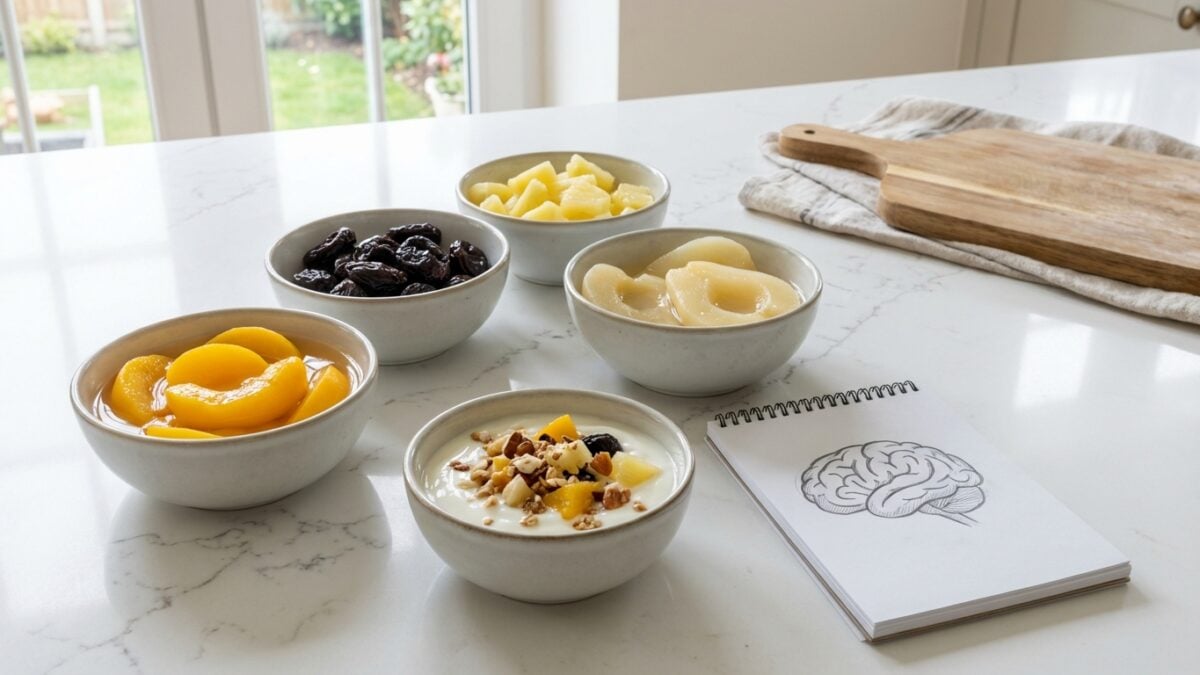
In many French kitchens, a can of pineapples, peaches or prunes lies dormant at the back of the cupboard, kept for emergency desserts. We are often wary of it: too sweet, not “natural” enough like the fresh section. There remains a real question: the
canned fruit can they be good for health and the brain?
For Emma Bardwell, British nutritionist, the key remains the portion. “An 80g serving of canned fruit counts as one of your five servings of fruit and vegetables per day, the same amount as recommended for fresh fruit, so it really shouldn’t be set aside that much“, she explains in the Telegraph. A cup of 80 to 100 g of canned fruit can therefore count towards the “5 a day” benchmark.
Canned fruit: what the can changes
Fruits intended for canning are picked when fully ripe, washed, sometimes peeled, then sterilized for a few minutes in an airtight box. This step reduces vitamin C, which is fragile when exposed to heat, but preserves vitamin A and vitamin E, useful for the skin, eyes and nerve cells. In the end, the values remain close to those of fresh, with a little less fiber and a little more sugar.
But the liquid changes everything. Fruit in heavy syrup concentrates a lot of added sugars, much more than fruit preserved in light syrup or juice.
To limit the impact on blood sugar levels, it is better to choose canned fruit over juice or water, drain them carefully and, if necessary, rinse them.
The best canned fruits for health
For digestion, transit and satiety, fiber remains key. However, 100 g of canned prunes provide approximately 3.8 g of fiber, compared to 1.9 g for peaches, 1.4 g for pears, 1.2 g for a fruit cocktail, 1 g for pineapple and 0.3 g for tangerines, especially rich in vitamin C.
Each fruit then has its specialty: Peaches concentrate beta-carotene, a precursor of vitamin A. Pears provide pectin which softens transit, pineapple provides bromelain and vitamin B6 for digestion. Prunes combine fiber and sorbitol with a mild laxative effect;
“Prunes are also particularly rich in insoluble fiber,” adds Emma Bardwell. The canned format finally provides a practical advantage: fruits already washed, peeled, cut, easy to store and little wasted.
Canned fruit and the brain: good reflexes
Very sweet fruits in syrup promote spikes in blood sugar levels and then a “slump”, which is not ideal for concentration. Conversely, fruits in juice or water, rich in fiber such as prunes, pears or peaches, nourish the intestinal microbiota and, with vitamins A, C, E and B6, help protect nerve cells. Served with natural yogurt or a handful of nuts, they become a blood sugar-friendly and brain-healthy snack. They should therefore not be excluded from your menus.