
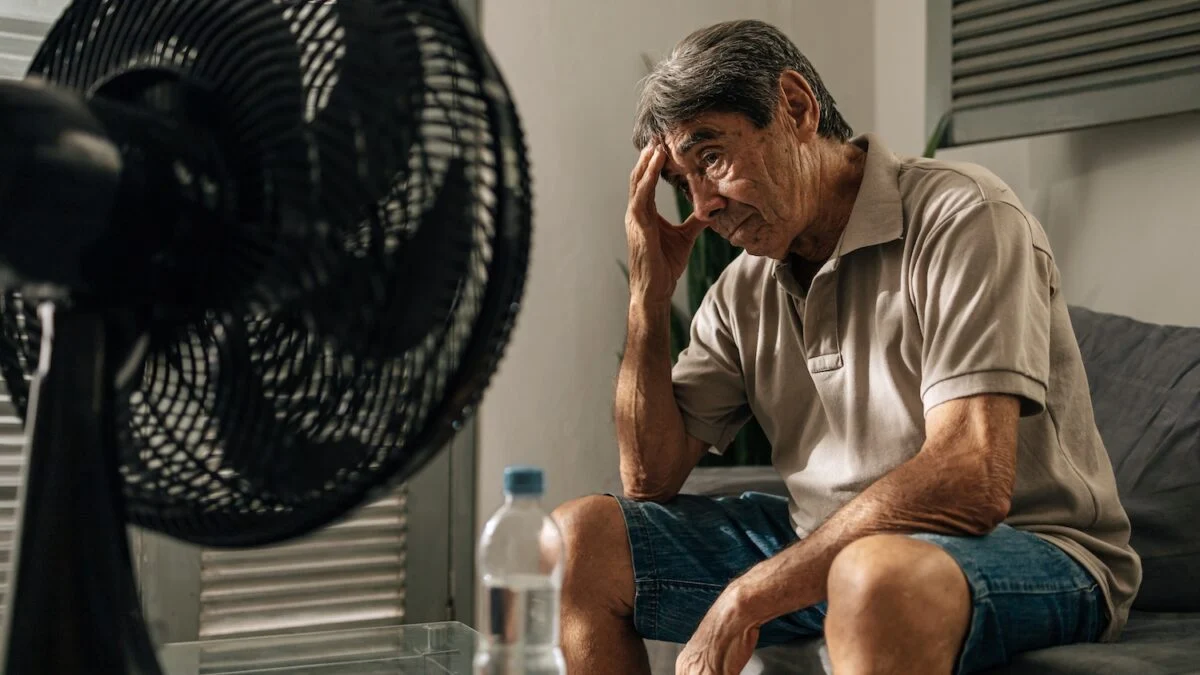
Beyond the immediate risk of dehydration or heat stroke, scientists are now wondering about quieter wear. The cardiovascular system, sleep, but also certain biological mechanisms associated with aging could be permanently affected, particularly in the elderly and the most fragile.
When the heat leaves its mark long after summer
At the end of a heatwave, many hope to quickly regain their energy. However, this feeling of exhaustion can sometimes persist for several days or even weeks. Unusual fatigue, more pronounced shortness of breath, restless nights… For many people, the return to warmer temperatures is not always enough to make these symptoms disappear.
For a long time, the health consequences of extreme heat episodes were mainly assessed through their immediate effects: heat stroke, dehydration or increased mortality during heat waves. But several researchers are now warning of a more discreet phenomenon: the accumulation of constraints that these episodes impose on the body.
During each period of extreme heat, the body mobilizes complex mechanisms to maintain its temperature around 37°C. Blood vessels dilate to carry more heat through the skin. The heart must then pump more intensely to maintain efficient blood circulation. This adaptation is essential to our survival, but it also represents a real physiological effort.
When these episodes become frequent, this repeated demand could contribute to progressive wear and tear on the body, particularly in people already suffering from cardiovascular or chronic diseases.
Tropical nights that prevent the body from repairing the damage
Hot days are only part of the problem. Scientists also draw attention to tropical nights, when the temperature remains high without allowing the body to truly recover.
However, deep sleep constitutes one of the main times when the body repairs its tissues, regulates its immune system and consolidates its metabolic functions. When heat disrupts this sleep architecture, this recovery becomes incomplete.
The consequences are well known: persistent fatigue, irritability, difficulty concentrating, reduced physical or intellectual performance. But in the elderly, these repeated nights without real rest can also lead to a loss of autonomy, a reduced appetite, a worsening of chronic illnesses or even an increased risk of falls.
In establishments welcoming the elderly, caregivers regularly observe that several days after a heatwave, some residents remain very weak. The effects therefore do not necessarily disappear with the end of the meteorological episode.
This reality illustrates a phenomenon still little known to the general public: extreme heat can leave a lasting imprint on the body.
Biological aging, an avenue that increasingly intrigues researchers
It is precisely this footprint that several recent studies now seek to measure.
Work published in 2025 suggests that prolonged exposure to heat waves could accelerate biological aging. Unlike the age written on our identity card, this biological age reflects the real state of our body.
Two people born in the same year can thus exhibit different biological aging depending on their state of health, their lifestyle or their exposure to different environmental factors, including heat.
To estimate it, researchers rely on different biomarkers, such as blood pressure, cholesterol or even certain genetic markers now associated with the risk of chronic diseases, disability or mortality.
The results observed are sufficiently consistent to arouse growing interest in the scientific community. However, they do not yet make it possible to establish a definitive cause and effect link. The researchers themselves point out that this work is based on population studies and that many factors can also influence biological aging.
In other words, it is not a question of asserting that each heatwave automatically “ages” our body, but of better understanding how the accumulation of heat episodes could accelerate certain processes already at work with age.
A reality that is already forcing us to rethink our way of protecting ourselves
As heatwaves become more frequent and more intense due to climate change, this issue goes far beyond simple summer discomfort.
Specialists emphasize the importance of limiting as much as possible the thermal stress to which our body is subjected. This begins with regular hydration, even when there is no feeling of thirst, but also with the daily search for cool spaces, particularly during the hottest hours.
At night, a few simple actions can also promote recovery: ventilate the home when the outside temperature drops, limit heat sources inside or use a fan when possible.
“It is mainly oxidative stress and cardiovascular stress that damage the body.” specifies Dr. Gérald Kierzek, emergency physician and medical director of True Medical. And adds “Hence the simple but effective advice such as hydrating regularly, avoiding direct exposure to hot weather, wearing light, covering clothing, using sunscreen, keeping the interior cool (curtains, ventilation, fan or air conditioning) and watching for signs of heatstroke (headaches, nausea, confusion, malaise).“
Finally, we must not trivialize certain signals that persist after a heatwave: unusual fatigue, long-term disturbed sleep, a drop in appetite or new shortness of breath deserve to be discussed with a health professional, especially in the elderly or those suffering from chronic illnesses.
Because if research continues to explore the links between heat and biological aging, one certainty is already clear: the effects of heatwaves go well beyond the few days when the thermometer soars. They remind us that global warming is no longer just an environmental issue, but also a major public health issue that affects each of us, often silently.