
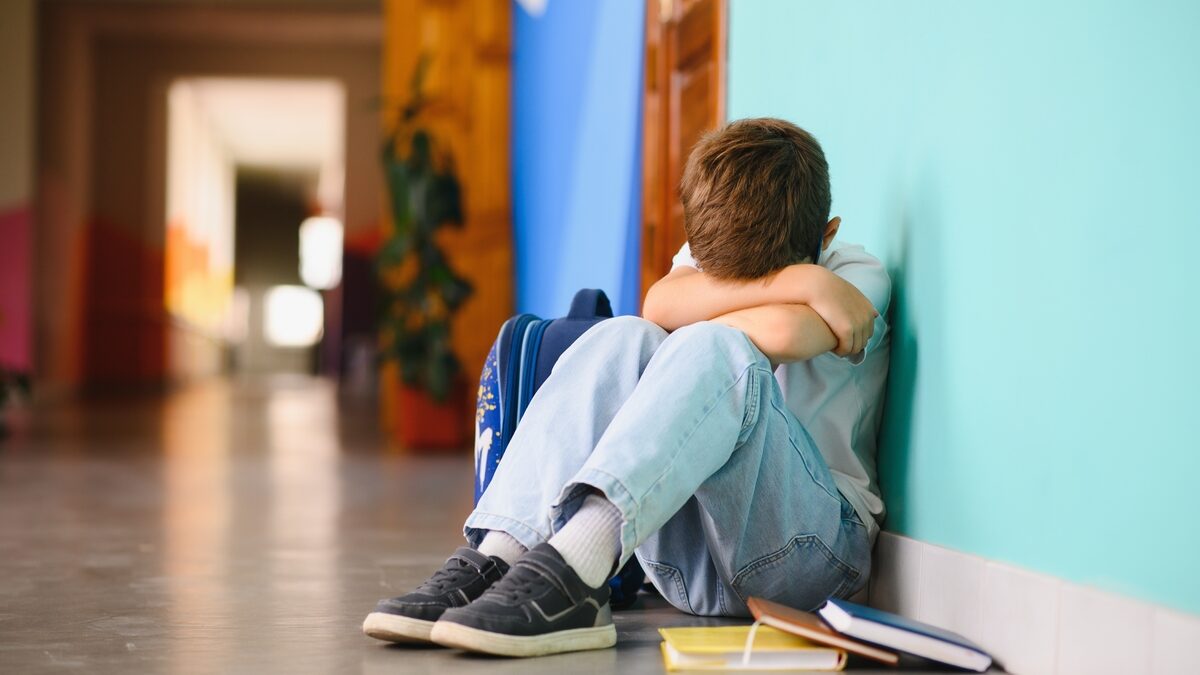
While on average, one child per class would be the victim of harassment, things do not seem to be changing. In Moselle, a 9-year-old girl, the victim of teasing about her weight, recently ended her life. On September 29, a 13-year-old student was also found hanging at home after having been harassed by a schoolboy… Sadly banal matters, which should push us all to be extra careful. How to recognize the first signs of bullying in a child? A specialist answers us.
School bullying, what is it? And how to recognize it?
In a school environment, harassment is the act, for a student or a group of students, of repeatedly subjecting a classmate to negative or even violent comments or behavior.
“A student is a victim of harassment when he or she repeatedly experiences negative acts from one or more students. Negative behavior can occur when a student, or a group of students, inflicts discomfort on another student, whether physically (hitting, pushing, stamping, pinching, restraining others) or verbally (threats, taunts, teasing and nicknames). Negative actions can also be manifested without words or physical contact (grimaces, obscene gestures, ostracism or refusal to accede to the wishes of others)“, says psychologist Dan Olweus.
Faced with insults or hits at school, the bullied child can react in different ways. Some isolate themselves, others become angrier. Bullied children may also have anxiety disorders or OCD.
“A bullied child can have several symptoms, including sleep problems, back pain, and school anxiety.” reveals Hélène Romano, doctor in psychopathology at CHU Henri Mondor (Créteil).
Very often, grades also drop. But the most convincing symptom is the fact that he isolates himself. “A bullied child is a scapegoat, and the group will gang up on him, ignoring his difficulty in a tacit agreement…“, continues the expert.
Of the “sleep disturbances, complaints, some agitation, tantrums, stomach aches and bedwetting” are also signs of an impact of bullying on health, according to the Ministry of National Education.
So many symptoms which should alert you… because the child rarely confides in this suffering.
“The problem is that a bullied child is not going to complain to his parents!“, recalls Dr Romano. Evoking this harassment is in fact making it exist: the child most often prefers to remain silent and hide what he endures.
My child is being harassed: what should I do?
When your child is the victim of harassment (or you have a feeling that something is going on at school), first talk to the person concerned, in a roundabout way: ” I learned, I heard that there were situations of harassment, and I was wondering if in your high school…“.
Share your doubts and hypotheses with him so that he can feel confident.
Then find support and solutions.
- Make an appointment with the school, middle or high school administration. Explain in detail what your child is going through. If the situation is proven, the school or educational establishment will implement, with you, appropriate solutions so that your child no longer experiences this violence;
- Find internal supportwith a student ambassador for the fight against bullying. In all schools, there is always a trusted adult that you and your child can turn to;
- You can finally contact your academy’s reporting line or the national number 3018, if the resolution of the problem seems slow to you;
- The family doctor or school doctor
can also help you; - Finally, spend time with your child and promote it within a “healthy group” (sports club, family meetings, etc.).