
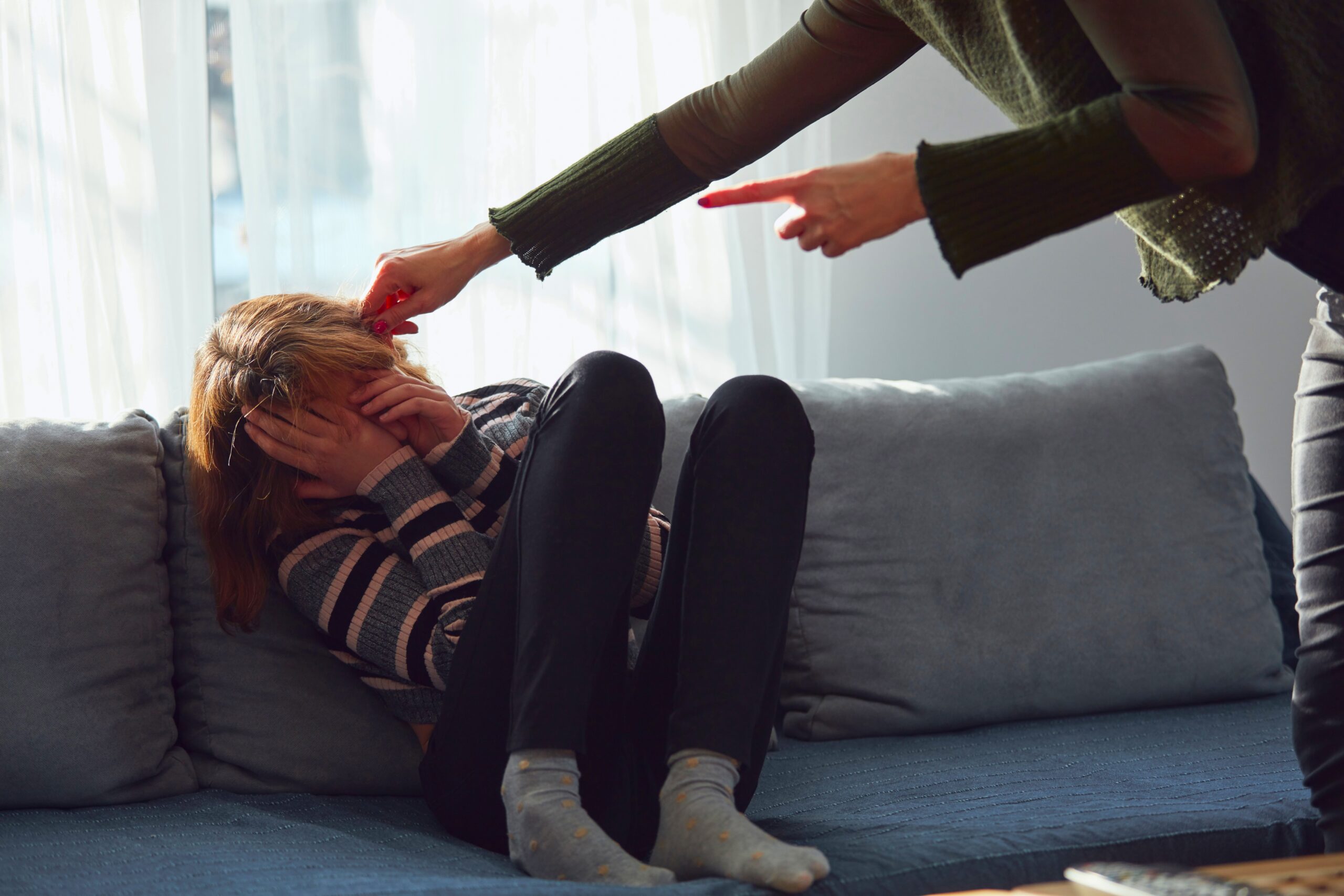
The news item, reported by The Parisianis chilling. Late Saturday afternoon, aboard a TGV connecting Lille to Nîmes, the violent attitude of a mother stunned the other passengers.
After her 6-year-old son spilled a drink, the forty-year-old allegedly exploded with anger. According to witnesses, she grabbed his head and banged his head against the seat shelf, before pulling his hair and trying to strangle him.
An angry outburst on the TGV leads to an arrest
Faced with this scene of violence against a minor, the reaction of travelers was immediate and exemplary. Several of them made a report to 31 17 (the number dedicated to violence in SNCF and RATP transport). Rail security agents were able to intervene at the next stop, at Marne-la-Vallée – Chessy station, where the suspect was arrested by the police.
Placed in police custody for “intentional violence by ascendant against a minor under 15 years old“, the 42-year-old mother, already known to the services, is now facing justice. The child, for his part, was immediately taken into the care of the Child Social Assistance (ASE) services, a crucial temporary protection measure to ensure his safety. The legal outcome can be serious for this woman: the penalty incurred for this type of violence can reach five years in prison and a €75,000 fine.
Witness to violence: the first reflex is to protect the child
This situation reminds us of the urgency to act when we witness abuse. But how to react, concretely, depending on the location? Isabelle Debré, president of the L’Enfant Bleu association, recalls that the priority is the protection of the child: “It all depends on where you are. But the first instinct is to protect the child if possible.”
In a transport context, as here for the TGV, witnesses can alert the staff (controller) or the SNCF police, via 31 17 (or 31 177 by SMS). It is also possible, “if there is a serious threat” to intervene if the situation allows it. On the other hand, if the threat is less (a parent who loses his temper and slaps his child, for example), trying to reason with the adult may be an option.
Violence at home: alert without fail
The most delicate situation is often that of violence against a child in a neighboring home. According to Isabelle Debré, the essential reflex is 119.If the events take place at home and we hear of violence being committed against a child by a neighbor, we can call 119, Allô Enfance en danger.”
she recalls. 119 is the national number dedicated to the prevention and protection of children in danger or at risk. It is free, open 24/7, and above all, it guarantees anonymity.
Other steps can be taken, including:
- Alert a specialized association like L’Enfant Bleu;
- Contact law enforcement directly (police or gendarmerie);
- Make a report to the Departmental Council’s Concerning Information Collection Unit (CRIP), a process which can also be done anonymously.
Failure to report: an offense severely punished by law
What we absolutely must remember is that inaction is a crime in France. The law is very clear on this subject.
“If we become aware of a situation of mistreatment and do not report it, it is punishable by law, this is article 434-3 of the Penal Code. And we risk a prison sentence of 3 to 5 years, depending on the age of the child.” warns Isabelle Debré.
This article represses the non-denunciation of “deprivation, mistreatment or sexual assault or abuse inflicted on a minor. Any person with knowledge of abuse must inform a judicial (police, prosecutor) or administrative (department social service) authority.
The good news, according to the president of L’Enfant Bleu, is that collective consciousness is progressing. “Since confinement, things have been better, neighbors are more aware of the role played by child protection and what they can do in the event of abuse.”
His final message is a call for caution and boldness. “We always repeat that the error is not dramatic. It is better to report wrongly than to let a case of real abuse go unnoticed, that of a child who could end up in the hospital, or worse, not survive it.”