
The Moulins district, west of Nice, was the scene of a war scene this Monday afternoon. According to the public prosecutor, Damien Martinelli, shots from a light vehicle targeted passers-by at Place des Amaryllis. Faced with such violence, panic is often the first reaction.
However, knowing how to perform emergency procedures can prove vital, reminds us Dr Gérald Kierzek, emergency doctor and medical director of True Medical. Compression, alert and application of a tourniquet, here is what you need to know.
The absolute priority: protect yourself and alert
Before providing assistance, it is crucial to analyze the environment so as not to become an additional victim. Dr Gérald Kierzek insists on this point.
“First of all, you must not put yourself in danger, especially if it is a shooting” he recalls first.
Once the area is secure, calling the emergency services (15, 17, 18 or 112) is the priority. For Dr Kierzek, it is necessary “alert quickly by giving the location, number of victims, type of injury and state of consciousness”.
Direct compression to stop bleeding
Then, the first reflex to stop a hemorrhage is to put pressure on the wound. If you have a clean cloth (t-shirt, handkerchief, compress), apply it firmly to the area.
“You must press directly on the wound with the palm or fingers, without removing the tissue if it is soaked: you simply add layers on top. explains the doctor. It also specifies that if the victim is conscious, “you have to ask her to compress her wound herself.”
The use of the tourniquet: a gesture of last resort
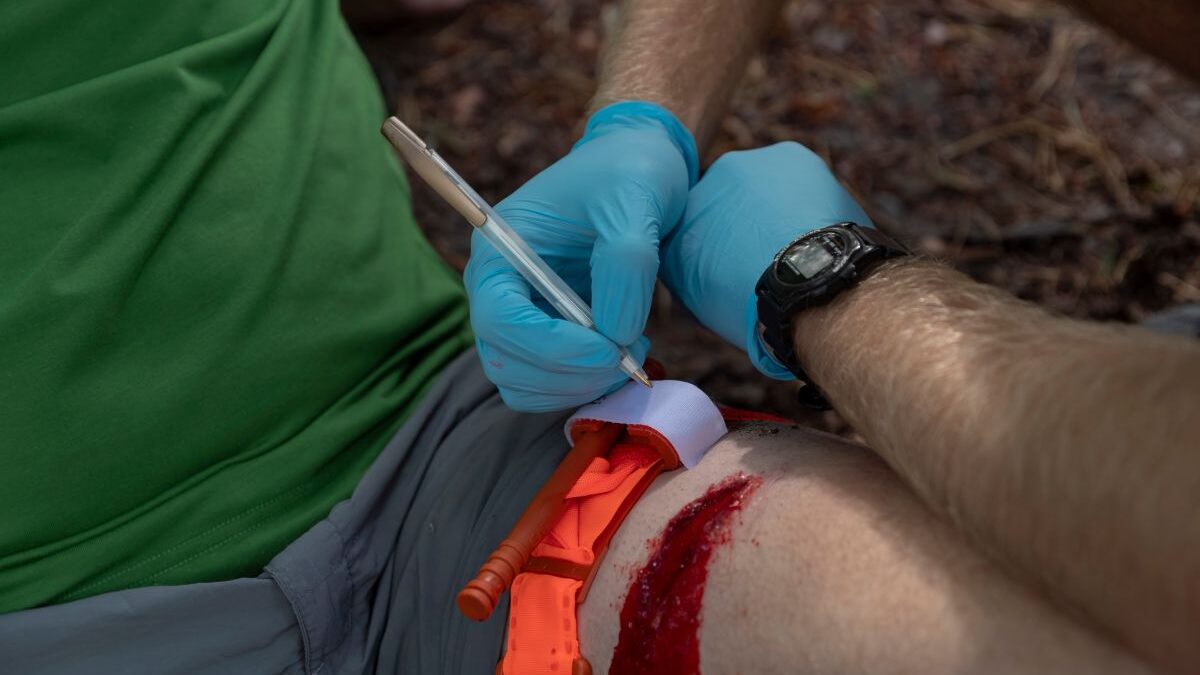
In “disaster medicine” situations or multiple limb injuries, a tourniquet may be necessary.
Dr. Kierzek recalls that he is “reserved for serious limb hemorrhages when direct compression is not sufficient or there are multiple victims in an unstable context.
To do this, use a wide tie (belt, scarf) placed a few centimeters above the wound. “It must be tightened until the flow is completely blocked, then the time of installation must be noted on the victim to inform the emergency services“, he emphasizes.
Monitor and reassure while waiting for SAMU
Finally, it is essential to remember that a victim who loses blood risks hemorrhagic shock. It is recommended to extend it horizontally to limit the voltage drop. Dr. Kierzek advises keeping the victim warm and monitoring their breathing, pallor and possible chills. Above all, vigilance is required regarding the ingestion of liquids. “Do not give food or drink if there is any doubt about internal bleeding or abdominal trauma”
he concludes.
This shooting also reminds us that no one is safe from an exceptional situation. Mastering the relief actions presented by Dr. Kierzek allows you to transform helplessness into saving action. While waiting for the intervention of professionals, your calm and responsiveness will be your best allies.