
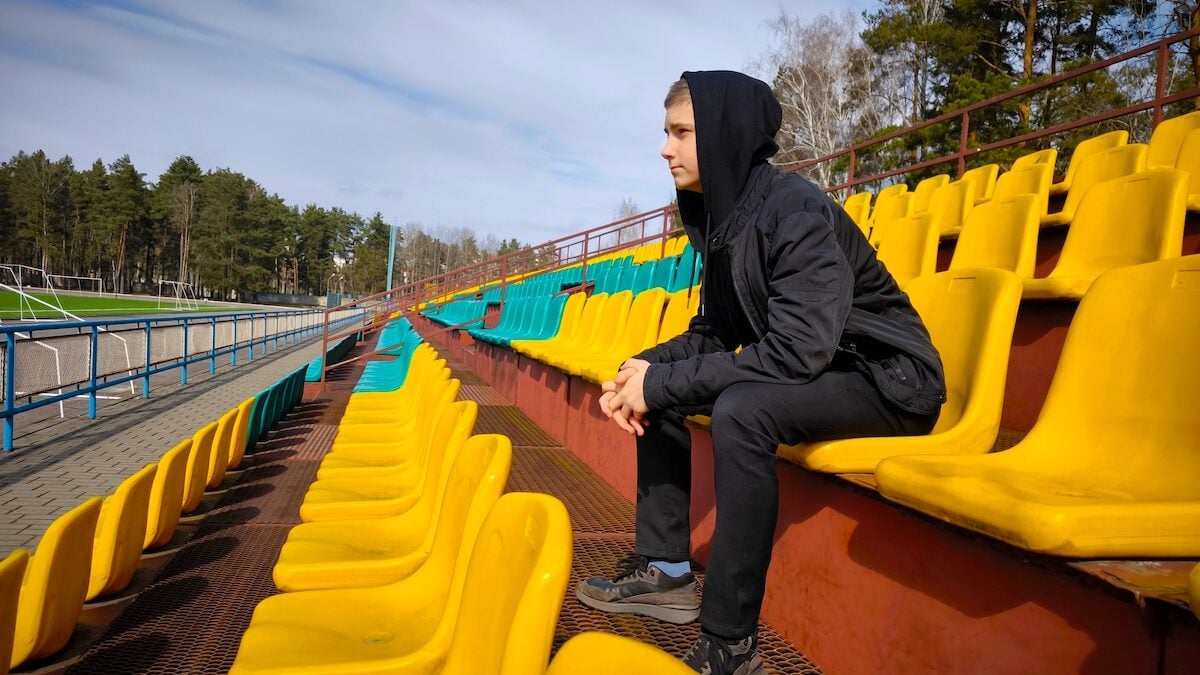
To understand this winter phenomenon that irritates parents so much, we must first look at physiology. “There are differences in thermoregulation in children and adolescents.recalls Dr. Gérald Kierzek. But be careful: this does not come down to simply saying that “they are naturally less cold”. The reality oscillates between biological particularities and typically adolescent behaviors.
A physiology that makes them (a little) more comfortable in the cold
Several mechanisms explain why some teenagers seem to defy the laws of the weather:
- A higher basal metabolism, which generates more heat. “For the same size, they produce more thermal energy than their parents”explains the doctor;
- A greater proportion of brown fat, particularly active at puberty. “This specialized fabric quickly creates heat when exposed to the cold: a real mini-internal boiler” ;
- Effective thermoregulation: studies also show that the skin of children and adolescents recovers its temperature and blood flow more quickly after cooling.
Consequences ? Yes, objectively, some teenagers are not overzealous, but actually feel less bothered by the cold.
…But not to the point of being invincible
“That doesn’t mean they don’t fear anything.” However, the doctor insists. Because their organism also has weak points.
First, children have a higher body surface area to mass ratio than adults, which, in theory, causes them to lose heat faster. “This vulnerability is partly compensated by their higher metabolism, but not always if exposure is prolonged or very cold”explains Dr. Kierzek.
In addition, thermal comfort strongly depends on clothing: work on the temperature ratings clothing shows that with equal insulation, the more age and activity increase, the more the comfort temperature decreases (you tolerate the cold better if you are tall and active). “But if the child or teenager is poorly covered, he or she can still cool down more quickly than a well-equipped adult”.
Finally, thermal comfort studies show that children may prefer cooler environments and report less discomfort. “Which does not mean that their body is not affected by the cold, but that they complain less about it or notice it differently.”
In other words: their system is efficient, different, but certainly not an anti-hypothermia shield. Wind, rain and prolonged exposure remain real risks. And the coat should never stay too far away.
Behavior, a far from negligible factor
If biology explains part of the mystery, the rest is clearly psychological and social.
Thus, we cannot answer this question without taking into account the typical opposition of the teenager. Refusing the coat is also asserting one’s autonomy, showing that one decides for oneself. Identity and the views of peers also count: a teenager sometimes prefers to shiver rather than arrive at school with a down jacket deemed “unstylish”. But a teenager is also more active. It often moves faster, moves more, which increases its heat production.
Finally, there is a simple question of habit: regularly exposed to the cold, adolescents activate their brown fat even more, while adults, accustomed to their overheated interiors, shiver as soon as they go out.
So why don’t they put on their coats?
Because they are a little less cold than us, because they feel thermal discomfort differently, and above all because the coat becomes a symbol of independence for them.
“Between physiology and self-affirmation, their response – “I’m not cold!” – is therefore not only a whim… but it is also not proof of immunity” concludes our expert.