
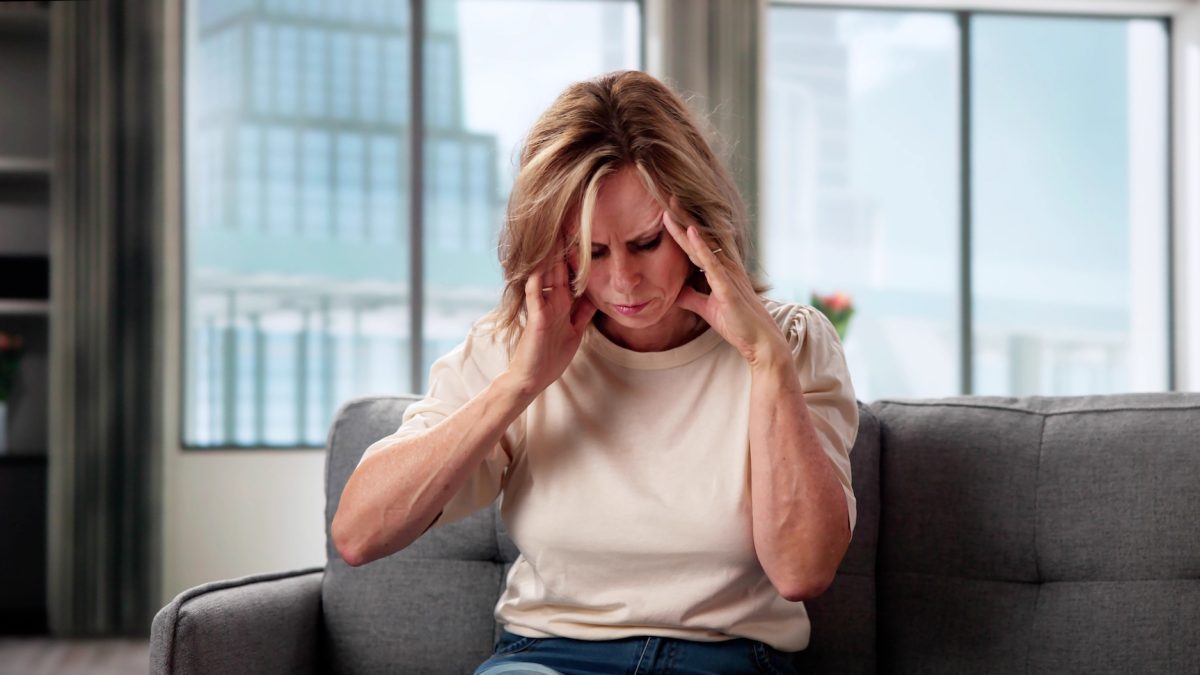
Third cause of death in France, stroke affects around 150,000 people per year. According to the Stroke Research Foundation, one in 5 people will experience it in their lifetime. But this is not inevitable; certain measures can reduce this risk. It is estimated that 80% of strokes can be prevented through lifestyle changes, such as exercise, diet and other measures. Discover the 7 habits to lose to avoid stroke.
Have a sedentary lifestyle
In the Huffington Post, Dr. Arthur Wang, director of endovascular neurosurgery, recalls that one of the main risks of stroke is a sedentary lifestyle. But what do we mean by sedentary? Overall, this means spending too much time sitting or lying down and not enough time exercising and moving. “Regular physical activity has been shown to help prevent blocked blood vessels. It prevents the accumulation of plaques in the arteries. said Dr. Wang. A 30-minute activity 5 times a week is therefore recommended.
Ignoring high blood pressure
Blood pressure is probably the factor that has the most impact on your vascular health and puts you most at risk for stroke. Reducing high blood pressure would reduce the risk of being affected by 60%. Problem is, hypertension often progresses masked, devoid of symptoms… The first thing to do is therefore to become aware of your own risk, to be examined, monitored and treated, if necessary.
Avoiding regular check-ups
Are visits to your doctor boring and time-consuming? However, they are essential: a patient will never know that their blood pressure is high, nor if they have too high cholesterol, unless they carry out regular tests or screenings. Don’t neglect these routine visits at different ages to screen for problems like high cholesterol and high blood pressure, or other risk factors related to your blood sugar or weight. Taking into account your overall state of health and your history, your doctor can provide you with personalized prevention advice.
Smoke again
As experts point out, smoking directly increases the risk of stroke and heart disease. “Smoking causes blood vessels to narrow over time, which can ultimately lead to blockages in blood flow to part of the brain, which is essentially what a stroke is,” he explained.
Drinking alcohol to excess
Logically associated with certain cancers or liver diseases, alcohol is also a risk factor for stroke. The consumption recommendations are not to exceed more than ten standard glasses per week and never more than to consume more than two glasses per day, not every day!
No longer follow a balanced diet
Of course, it is important to treat yourself sometimes, but a balanced diet remains the rule to limit your risk of stroke. This involves moderating the consumption of foods rich in saturated fats, sugar and salt, favoring fruits and vegetables, meat and processed products.
Neglecting necessary treatments
Preventive stroke treatments are all the more effective if they are implemented quickly. If you have certain risk factors, consult your doctor to perhaps put in place the treatment that will save you. And remember to follow your prescription carefully, even if you have no symptoms.
Stroke: symptoms that should alert
There are two main types of stroke: ischemic and hemorrhagic. In 80% of cases, it is an ischemic stroke, caused by a clot that blocks a cerebral artery. Conversely, in 20% of cases, it is a hemorrhagic stroke, due to the rupture of the wall of an artery causing a cerebral hemorrhage. But in both cases, you have to move quickly, as described by Professor Sonia Alamowitch, vice-president of the French Neuro-Vascular Society, in a previous interview.
“Every minute of interruption of blood circulation causes the death of 2 million neurons”. She also emphasized that “existing treatments are only effective a few hours after the onset of symptoms, as long as the lesions are not too extensive..
Stroke is manifested by “the sudden onset of a loss of neurological functions”. This loss may concern:
- Mobilitywith “paralysis that affects half of the body, or hemiplegia” (face, arm, leg), often accompanied by balance disorders;
- Sensitivitybecause “you no longer feel a significant part of your body.” ;
- The languagewith aphasia, that is to say “an inability to express oneself or to understand”;
- The visionwith “sudden loss of vision on one side”.
In cases of subarachnoid hemorrhage, a specific symptom should alert: “an extremely sudden, violent and unusual headache. This is truly a special presentation”specified the expert.
Finally Professor Alamowitch finally regretted that “far too many patients or relatives, faced with warning symptoms, do not react quickly enough”. She insisted: “The reaction in the first minutes, the first hours, is what allows us to treat patients as quickly as possible. You should not stay at home or think that it will pass: you must immediately contact the SAMU by dialing 15″.
React quickly in the event of a stroke
Preventing emergency services in the event of such an emergency is essential. Dr. Gérald Kierzek, emergency physician, reminds us of the signs that should alert you:
“Remember that if you are faced with a person who is having a stroke, the acronym to remember is FAST :
- Face, for paralysis which affects the face, sometimes simply the mouth;
- A for Arm or bras in English, because weakness of the arm is a sign of stroke;
- S for Speech in English, due to the speech disorders that can also occur during a stroke;
- And finally T for Time: you must act quickly, even if these signs do not accumulate, they are temporary and return to normal after a certain time“.