
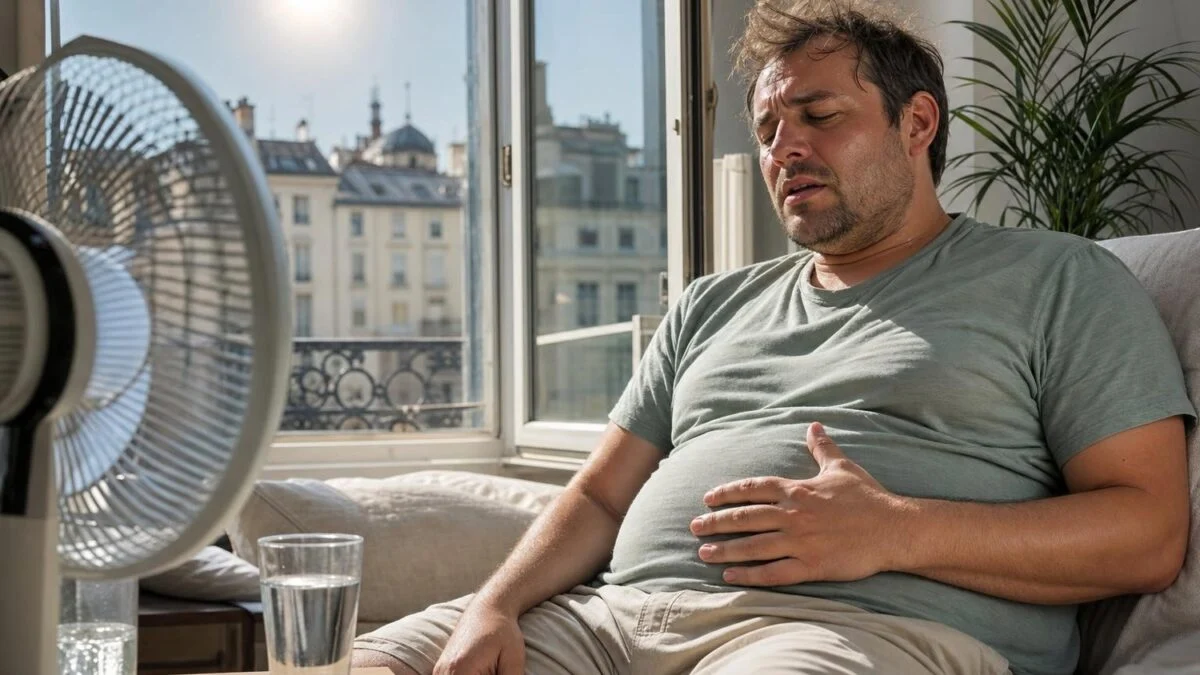
The episodes of heat wave come one after the other in France, with their procession of small ailments. Many describe a
swollen bellytense, even though they don’t feel like they’re eating more than usual. When the thermometer rises, the body fights to keep a stable temperature, and this internal battle can also play out in your digestion.
THE Dr Gérald Kierzek reminds that “heat constitutes a thermal attack on the body, and the digestive system, particularly sensitive, can suffer the consequences“. When the temperature is high, the body devotes a large part of its energy to cooling itself through perspiration, leaving digestion slower and more likely to produce gases. Specialists describe, after extreme heat, a “delayed effect” with consequences for the entire body.
Why a heatwave can make your stomach swell
When it’s very hot, the body relies on sweating to cool itself, which increases water loss. Insufficient hydration, richer meals than usual, a reduction in physical activity or
digestion naturally slower in some people promotes the production of gas and this feeling of a tense or bloated stomach.
Add to this the typical summer habits: barbecues, aperitifs, ice creams, soft drinks… Even if we eat “as usual”, these extras often make meals more copious or fatty, therefore more difficult to digest, especially when the
digestive system is already weakened by the heat.
Heatwave and swollen stomach: good daily reflexes
To limit bloating, the number one rule remains water. Dr. Gérald Kierzek recommends “around 1.5 to 2 liters of water per day, or even more if sweating is heavy.” Drinking in small sips throughout the day helps the body compensate for what it loses and restart slowed digestion.
On the plate side, lighter meals are valuable allies during a heat wavejust like fruits and vegetables rich in water, such as melon, watermelon or cucumber. A few minutes of walking during the cooler hours is often enough to stimulate intestinal transit.
Swollen stomach, heatwave and delayed effect: when to consult?
A
swollen belly isolated remains bothersome, but it is generally resolved by readjusting hydration, diet and movement. “On the other hand, if the bloating is accompanied by significant pain, vomiting, fever or persists for several days, it is recommended to consult a health professional to find the cause.“, warns the Dr Gérald Kierzek.
The “delay effect” described by doctors after a heatwave occurs several days later, between five and ten days. THE
Dr Mélanie Russellhead of the emergency department at Rouen University Hospital, explains on the microphone of France Inter : “This means that you will be dehydrated after this extreme heat, which will cause your kidneys to function less well. It could also have repercussions on the heart. Chronic illnesses risk becoming unbalanced and causing a cascade of complications.. The symptoms mentioned by experts range from headaches to dizziness, nausea and extreme fatigue; if they persist, it is important to contact emergency services.