
This phenomenon, documented for several years, was notably studied by a team of researchers in a work published on November 25, 2025 in the scientific journal PNAS. Their results raise an additional question: could the presence of these pigments modify certain immune responses, particularly after vaccination?
Tattoo: how can ink reach the lymph nodes?
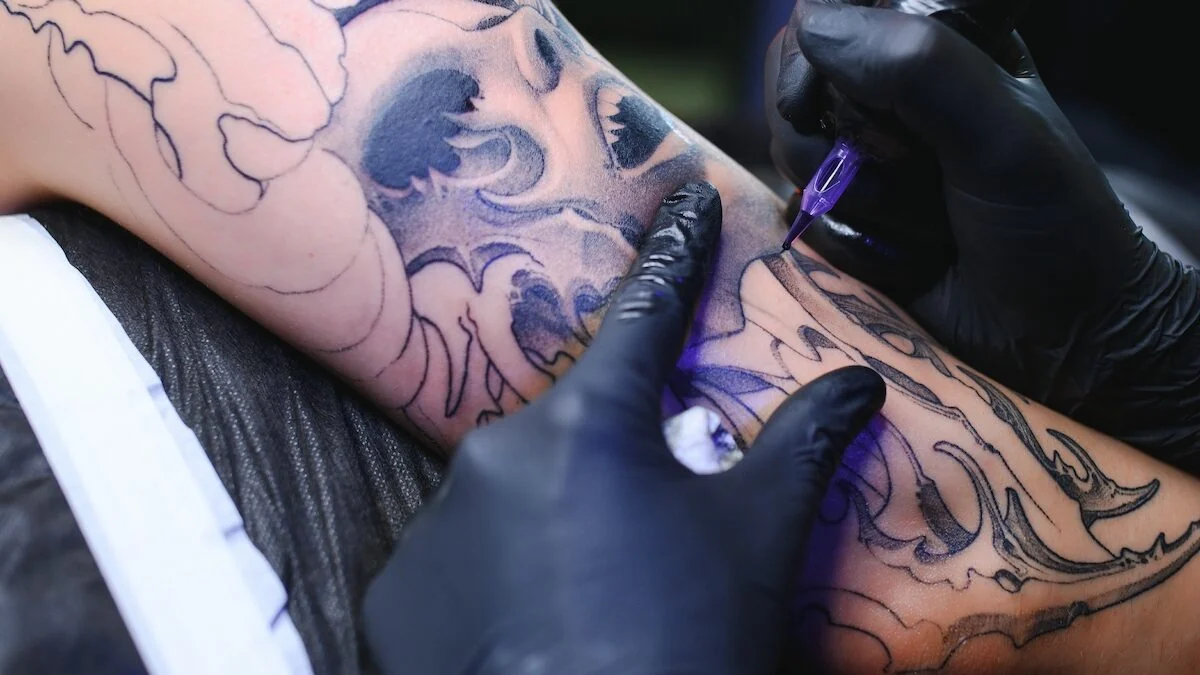
When a tattoo is made, the needles introduce pigments into the dermis, the deep layer of the skin. The body reacts to this intrusion by triggering a local inflammatory response. Certain immune cells, notably macrophages, then capture the foreign particles.
But not all pigments necessarily stay in the tattooed area. The smallest particles can be transported by lymph, a fluid that circulates in the tissues before reaching the lymph nodes. The latter play an essential role in immune defenses, since they participate in particular in the surveillance and response of the body to foreign agents.
This migration is not a simple hypothesis. In 2017, a study published in Scientific Reports had previously identified organic pigments, heavy metals and titanium dioxide in lymph nodes taken from deceased people with tattoos.
The researchers had thus demonstrated the transport of different components of inks from the skin to the regional lymph nodes. However, this does not mean that all pigments migrate in the same way, nor that this migration systematically leads to health consequences.
Can tattoo pigments modify the functioning of the immune system?
This is the question raised by a study published in
PNAS in November 2025. The researchers mainly worked on mouse models to observe the fate of pigments after a tattoo and their possible effects on immune responses.
Their observations show that ink particles can quickly reach the lymph nodes located near the tattooed area. They are captured in particular by macrophages, cells responsible for absorbing and processing foreign elements present in the body.
The scientists also observed a persistent inflammatory reaction in the lymph nodes studied, still detectable two months after the tattoo. The experiments also highlighted effects on the survival of certain immune cells exposed to pigments.
But the most notable results concern vaccination.
Tattoo and vaccines: potentially different effectiveness depending on the product
In their study, the researchers found that the presence of pigments could modify the immune response to two types of vaccines tested in mice: a messenger RNA vaccine against Covid-19 and an inactivated influenza vaccine.
In the first case, tattooed animals had lower antibody production than non-tattooed animals. Conversely, some immune responses to the flu vaccine were enhanced.
These results suggest that interactions between pigments and the immune system could vary depending on the composition of the inks and the functioning of the vaccine in question. It is therefore not a uniform effect of weakening immune defenses.
The researchers also carried out experiments on human cells in the laboratory. These notably made it possible to observe interactions between pigments and human macrophages. But these experiments cannot determine the consequences of a tattoo on a person’s vaccination response in real life.
Should we then fear less vaccination protection when we are tattooed? There is nothing to confirm this today. The study does not show that tattooed people respond less well to vaccines, nor that they are more exposed to infections.
Why should these results be interpreted with caution?
The study’s conclusions have been the subject of scientific debate. In a comment published in PNAS on August 11, 2026, dermatologist Nicolas Kluger notably highlighted the limits of the experimental model used.
The researchers had tattooed a relatively large area of the mice’s paw. According to this specialist, this exposure does not necessarily reproduce the usual conditions of an aesthetic tattoo in humans. He also notes that administering a vaccine only two days after tattooing does not correspond to a common situation.
Another important limitation: a reduction in antibody production in an experimental model does not necessarily mean a loss of protection against a disease.
In response to these observations, Santiago F. Gonzalez, corresponding author of the initial study, recalled that the experiments aimed above all to understand the biological mechanisms at play, and not to exactly reproduce usual tattooing practices.
At this stage, there is no clinical data to conclude that tattoos reduce the effectiveness of vaccines in humans. There is also no reason to change your vaccination schedule based on the presence of a tattoo.
After a tattoo, what signs should lead to consultation?
The migration of certain pigments towards the lymph nodes is a subject of research, but the best documented complications of tattooing remain notably skin infections and allergic reactions to inks.
Redness, swelling or mild pain may appear in the hours following the session. These manifestations must nevertheless be monitored during healing.
According to Health Insurance, if the redness spreads around the tattoo, if the pain increases or if a fever appears, it is important to consult a doctor. An infection may require appropriate treatment.
Allergic reactions can also occur later, sometimes several weeks or months after the tattoo is made. They can result in persistent itching, swelling or localized lesions on certain areas of the drawing. A dermatological opinion is then recommended.
The choice of a professional who respects hygiene rules, the quality of the inks used and compliance with care instructions therefore remains essential. As for the possible effects of pigments on long-term immunity, they still require research in humans before real health recommendations can be established.