
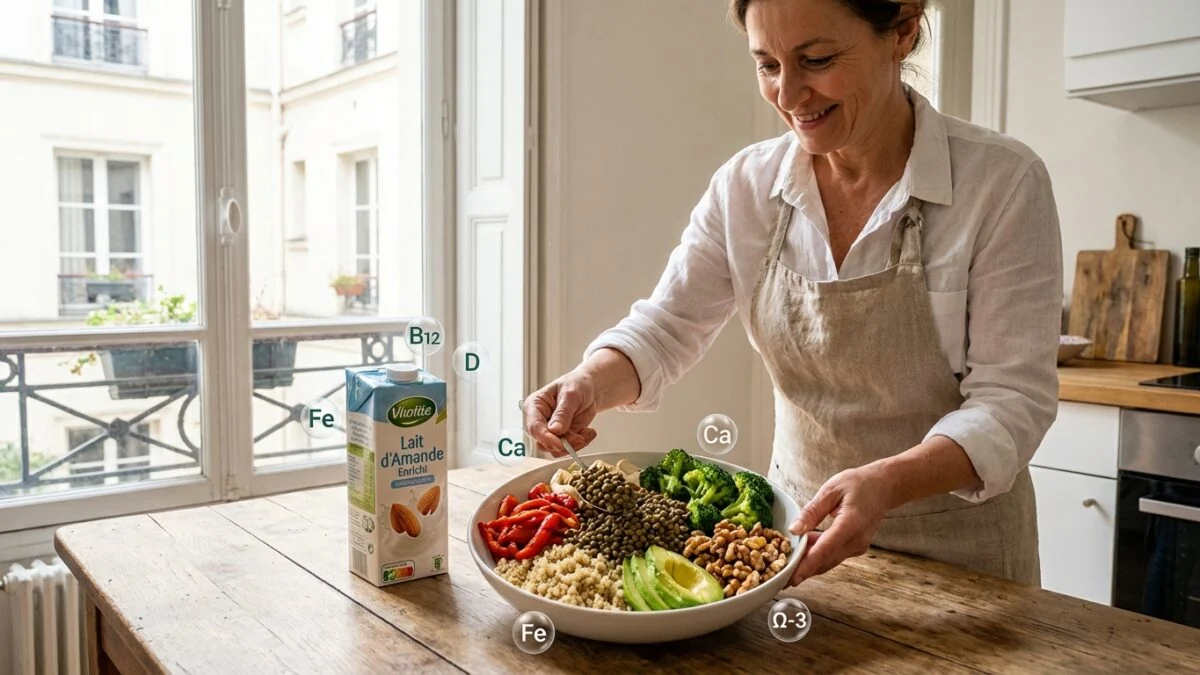
On Instagram, Dr Jean-Michel Cohen distinguishes the
vegetarian dietwhich removes meat, fish and seafood but can keep eggs and dairy products,
vegan dietwhich excludes all products of animal origin. The difference is simple; the balance then depends on which nutrients to monitor.
Vegetarian and vegan: what really changes
The essential point is there: vegetarian and vegan, it is not
not the same thing. The nutritionist presents the vegetarian diet as a diet that excludes animal flesh, that is to say meat, poultry, fish and, more broadly, seafood. He also specifies that it can keep eggs, cheese, milk, yogurt or cottage cheese.
This is the current definition of the lacto-ovovegetarian diet: it excludes animal flesh, but can store eggs and dairy products. This nuance matters, because these foods modify the possible intakes, particularly of certain micronutrients.
The vegan diet goes further. As the video reminds us, it also eliminates eggs, cheese, yogurt and other dairy products. Public Health France benchmarks add that excludes all foods of animal originincluding honey. To learn more about the vocabulary, especially the difference with veganism, you can consult our article on the differences between vegetarian, vegan and vegan.
The expert also points out that a vegetarian diet may be easier to follow for someone who doesn’t like meat, poultry or fish. This is true on a practical level: it leaves more food categories available than a vegan diet. But this alone is not enough to guarantee a good nutritional balance.
Proteins, B12, vitamin D: the real points of vigilance
Lack of vitamin B12 does not directly depend on the amount of protein consumed. It mainly depends on sources of B12 in the diet, which are mainly of animal origin, or on the use of enriched foods or supplementation when necessary.
In practice, a vegetarian diet can cover needs if it is well constructed, but it should not be reduced to proteins. The work cited by ANSES also calls for monitoring, in vegetarian adults, vitamin D, certain omega-3s and, depending on eating habits, the vitamin B12. The risk is greater if dairy products and eggs are little or absent.
For a diet veganthe rule is clearer: Public Health France indicates that vitamin B12 supplementation is necessary. This does not mean that you have to improvise your supplements on your own, but that a regular meeting with a doctor or a dietician-nutritionist allows you to assess your intake and possible needs.
To balance your diet without dramatizing or unnecessarily complicating your life, the following useful guidelines are:
- Identify precisely what you are excluding: meat and seafood only, or all products of animal origin;
- Ensure sufficient energy and protein intake, especially if meals are not very diversified;
- Monitor vitamin B12 separately, as it is not just about protein;
- Do not forget the other possible points of attention: vitamin D and certain omega-3;
- Seek appropriate advice in the event of pregnancy, breastfeeding, childhood, adolescence, advanced age or very intense physical activity.
If you want to go further on the composition of meals, our file on balancing a vegetarian diet details the main points of reference. And if B12 is your main question, our fact sheet on how to prevent vitamin B12 deficiency helps you better understand its role.
The right reflex is therefore not to choose a label then forget the rest, but to construct your meals according to what you really exclude. The wider the exclusions, the more support from a healthcare professional
becomes useful for securing contributions.