
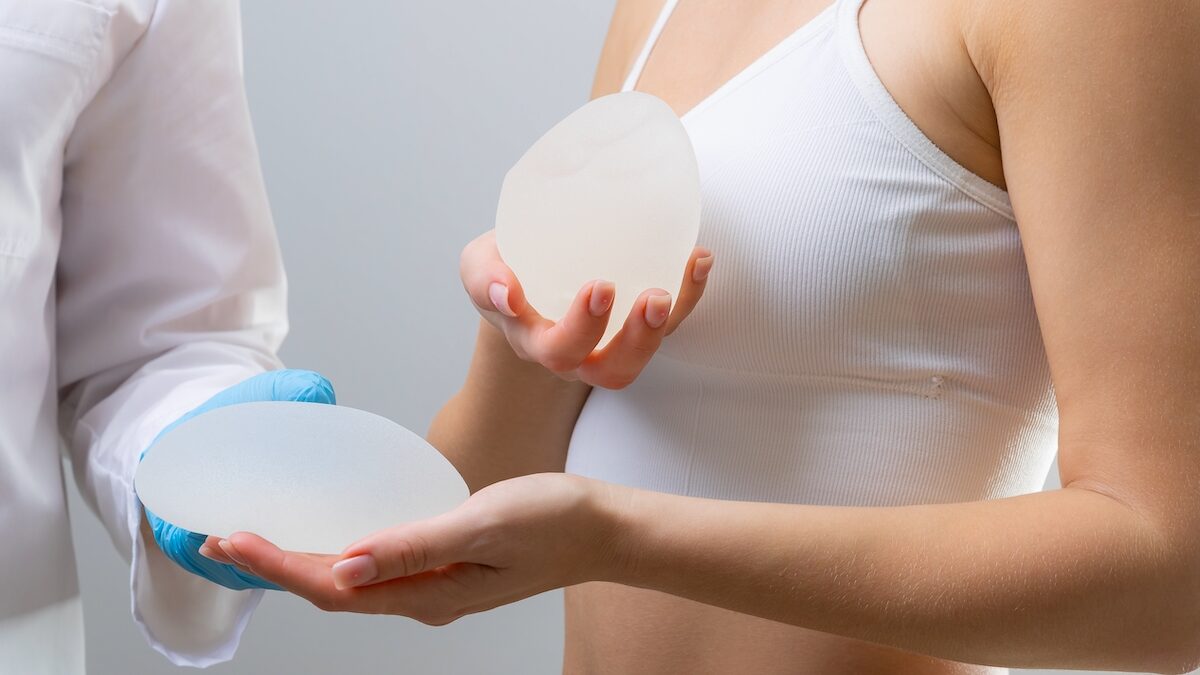
Reconstruction after breast cancer, volume increase, correction of asymmetry: silicone breast implants are now part of the medical landscape. For decades, health authorities have presented them as generally safe devices, despite some well-known complications such as cracks or ruptures.
However, a French team has just highlighted a much more discreet mechanism, which occurs through direct contact of silicone with tissues. Carried out at Besançon University Hospital with the Mulhouse Institute of Materials Science and the Institute of Genetics and Molecular and Cellular Biology, a study published in the journal Biomaterials shows that implants can stimulate the immune system and activate markers associated with
autoimmune diseasesin women with no clinical symptoms. Enough to seriously relaunch the debate on
silicone breast prostheses and autoimmune diseases.
Silicone breast prostheses: a study that changes the debate on autoimmunity
In France, approximately 400,000 women wear silicone breast implants after cosmetic or reconstructive surgery. Officially, large follow-up studies concluded that it had good overall tolerance, while recognizing a low rate of complications. At the same time, patients and certain specialists warned of diffuse symptoms (fatigue, joint pain, neurological disorders), grouped under the names of Breast Implant Illness or ASIA syndrome (autoimmune/inflammatory syndrome induced by adjuvants), without clear biological evidence to decide.
The study coordinated by Doctor Isabelle Pluvy and research engineer Florelle Gindraux provides this missing piece. The researchers analyzed the tissue surrounding the prostheses, the periprosthetic capsule, in 43 women who came to change implants at Besançon University Hospital. Their work shows that, even when the implant appears intact, exposure to silicone leads to measurable activation of the immune system and chronic local inflammation. Genetic analyzes find, in these tissues, a deregulation of genes usually involved in chronic inflammatory diseases such as lupus or rheumatoid arthritis.
How Silicone Triggers Chronic Inflammation in the Breast
As soon as a prosthesis is placed, the body reacts as it does to any foreign body: it produces a capsule of fibrous tissue to isolate it from the rest of the body. This capsule becomes the contact zone between the living tissues and the implant. However, the wall of silicone implants is not completely waterproof. Over time, several phenomena combine: mechanical wear of the surface which releases microparticles, slow diffusion of the silicone gel through the envelope (the famous “gel bleed”), even a complete rupture of the implant, sometimes silent.
In the capsule samples studied, the team observed an accumulation of immune cells, particularly macrophages, normally responsible for “cleaning up” debris. Around implants filled with silicone gel and especially macrotextured models, these macrophages can then form silicone granulomas and indicate well-established inflammation. Unable to degrade the silicone they have ingested, these cells end up dying and releasing particles again into the tissue, which maintains a vicious inflammatory cycle that can last for years.
What autoimmune risks for women with silicone implants?
Beyond the microscope images, the researchers sequenced the RNA of 21 capsules in order to map the genes activated around the implants. When they compared tissues in contact with physiological saline implants to those exposed to silicone gel, particularly in the event of rupture, they found the activation of thousands of genes involved in the innate and adaptive immune response. Among them are pathways characteristic of autoimmune diseases: rheumatoid arthritis, lupus, autoimmune thyroid diseases or even type 1 diabetes. Macrotextured or ruptured implants appear, in this model, more stimulating for the immune system than microtextured or serum-filled models.
However, the authors emphasize a crucial point for patients. “Having inflammation does not necessarily mean you are sick“, assured Doctor Isabelle Pluvy to franceinfo. She recalls that “All patients have a small level of inflammation which is more or less intense depending on the prosthesis model, for example, and depending on the condition of the prosthesis. It’s not necessarily something to worry about.“. On the other hand, the surgeon recommends “carry out regular monitoring of these implants to detect a possible evolution towards this type of disease“.
The team also calls for reexamining large clinical studies in light of this biological data and rethinking the design of implants, from filling to surface texture, to limit this long-term immune stimulation as much as possible.