
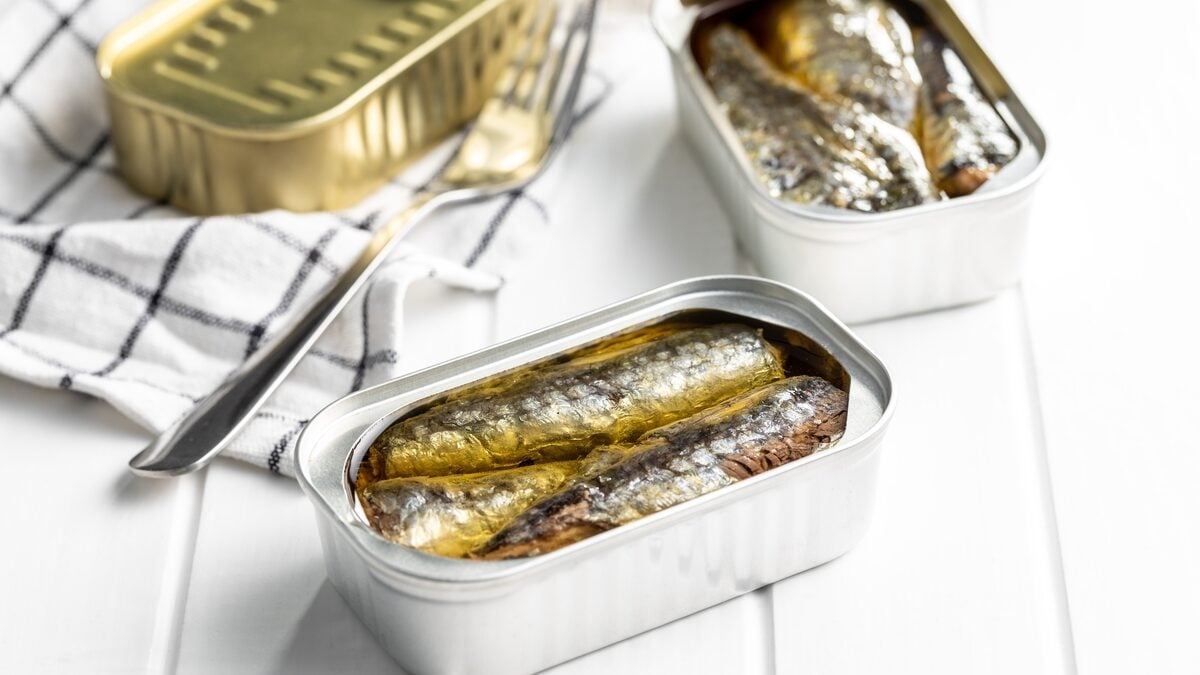
On the networks, sardines are establishing themselves as the new “food” obsession of the moment. To the point of being now classified among the fashionable slimming foods. But what to think of the “Sardine Diet”, which consists of only consuming this small canned fish for 3 to 5 days? Raphaël Gruman, dietician-nutritionist, answers us.
Sardine diet: what does it consist of?
Praised by many Internet users (and in particular by fans of the low-carb diet), the “sardine diet”, or sardine-based diet, consists of eating only canned sardines for a short period, generally 3 to 5 days.
The objective is simple: remove carbohydrates to push the body to draw on its fat reserves, a mechanism which is reminiscent of that of the ketogenic diet.
Some fans allow themselves a few meager additions — like olive oil, lemon, spices or coconut oil — to improve the taste of these little canned fish. But in all cases, carbohydrates remain completely excluded.
In terms of expected results, this diet promises to quickly revive metabolism, reduce cravings and lose weight quickly (in just a few days).
However, experts are keen to sound the alarm: the benefits of this diet are unlikely, while the risks linked to this restrictive diet are very real. “Sardines are an excellent food and have their place in a healthy diet. But human beings are not made to consume a single food exclusively, even for a few days.“, warns Hazel Shore, dietitian specializing in obesity, in the columns of the Daily Mail.
“From a nutritional point of view, this is neither a balanced nor beneficial approach. We are actually cutting out entire food groups, particularly carbohydrates and plant foods, depriving the body of fiber, many vitamins, antioxidants and the diversity needed for good gut health.“, she explains.
An opinion shared by our expert, Raphael Gruman.

“The deficiencies can be quite significant”
First warning from the dietitian: the deficiencies caused by the Sardine Diet “can be quite important“.
“For example, sardines do not contain fiber or vitamins. There is also a little calcium, but not in sufficient quantity,” he warns.
Then, these small fish provide very little water – an element that is nevertheless vital to the proper functioning of our body. “Fruits and vegetables contribute greatly to our hydration: in fact, approximately 1 liter of water (used daily by our body) comes from food. With this diet, it would therefore be crucial to ensure that you supplement your fluid intake… except that in practice, no one does so.“, he alerts.
Then, the consequences of this treatment are real: transit can be completely disrupted.
“Because of the lack of fiber and hydration, transit can be completely blocked. This diet is therefore not necessarily nutritionally interesting,” he assures.
But in all cases, any treatment or monodiet lasting more than one day is strongly discouraged, assures the nutritionist, whatever your profile.
“The most vulnerable populations such as adolescents and pregnant women, who present even greater risks of deficiencies, must be extra vigilant… and avoid this type of diet,” concludes Raphael Gruman.
Finally, before starting a diet (whatever it may be), always remember to consult a health professional.