
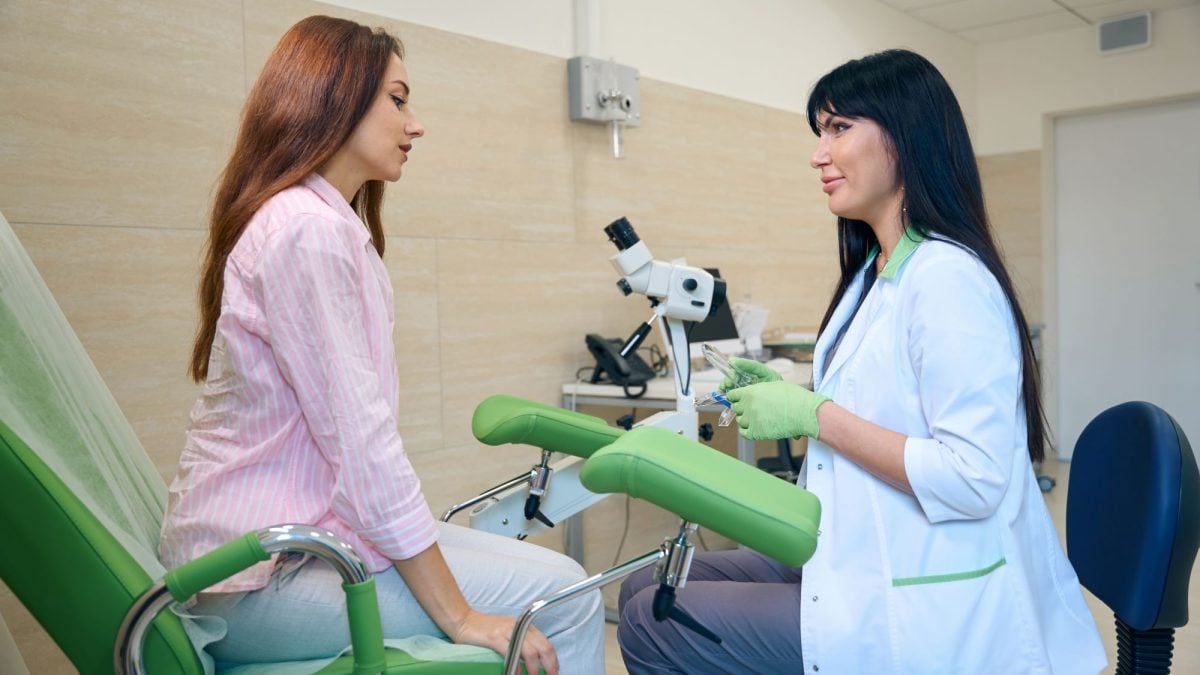
As Cervical Cancer Prevention Week approaches, which takes place in January, the National Cancer Institute recalls the importance of screening for the disease, using a smear.
More than 3,000 preventable cases each year
Why make this reminder? Quite simply because the figures for the disease are getting worse. In France each year, more than 3,100 cervical cancers are diagnosed and 770 women die from it. The 5-year survival of affected patients is also less good: from 66% in 1990 it fell to 63% in 2015.
However, these cancers are preventable in 90% of cases thanks to smear tests. This screening exam is offered to women aged 25 to 65. It makes it possible to identify precancerous lesions, or cancer at an early stage. Unfortunately, 40% of the women concerned do not carry out this screening (or not regularly).
Close follow-up or less heavy treatments
The smear is therefore the key test to avoid this cancer 9 times out of 10, when it is carried out regularly. “The objective of regular screening is to diagnose, before any symptoms, precancerous lesions or cancers at an early stage and thus increase the chances of cure” recalls the Cancer Institute.
“If precancerous lesions are detected, they will be monitored (some lesions may regress spontaneously) or treated before the appearance of cancer. If cancer is detected, it will often be at an earlier stage. In this case, it can be treated with less burdensome care to limit the after-effects of the disease and treatments, but also to further preserve fertility.”.
The smear, an examination accessible to all
Recommended from the age of 25, the smear is a cytological examination which looks for abnormal cells, in women, up to the age of 29. From the age of 30, it focuses instead on the presence or absence of human papillomavirus or HPV in the patient. It is recommended to carry it out every three years, between the ages of 25 and 29, then every 5 years, between the ages of 30 and 65.
Health Insurance sends women who have not had the test within the recommended interval an invitation to be screened. The exam is then covered 100% without any advance costs. As a reminder, know that in addition to the gynecologist, a general practitioner or a midwife can carry out the smear. The latter can also be done within a health center, a mutual center, a planning center or in hospitals and, on medical prescription, in certain medical biology laboratories. You can also make an appointment through the JeFaisMonDepistage.e-cancer.fr platform.
HPV vaccination to eradicate cancer
Finally, also know that a vaccine against human papillomavirus exists. According to Susanna Unsworth, gynecologist and medical expert from Intimina, it would be effective because “data indicates vaccine virtually eradicated cervical cancer in women born after 1995“.
In France, vaccination is offered free of charge to girls and boys from 5th grade, in middle school. The vaccine can also be given to young people aged 15 to 19, as a catch-up. It is also offered to men who have sex with other men up to the age of 26.
Dr Unsworth, however, recalls the importance of combining the two measures, because the vaccine does not offer complete protection.
“The human papillomavirus vaccine greatly reduces the risk of getting sick, but it does not cover all high-risk genotypes. Even vaccinated women will need to undergo periodic (smear) screening tests. By combining these two measures, we could eradicate cervical cancer”
Before concluding: “Cervical cancer can be prevented. Education, vaccination and frequent screening tests are enough to stop this disease. Women must know that they are not alone and that they benefit from all the support, education and advances in care to have the means to act”.