
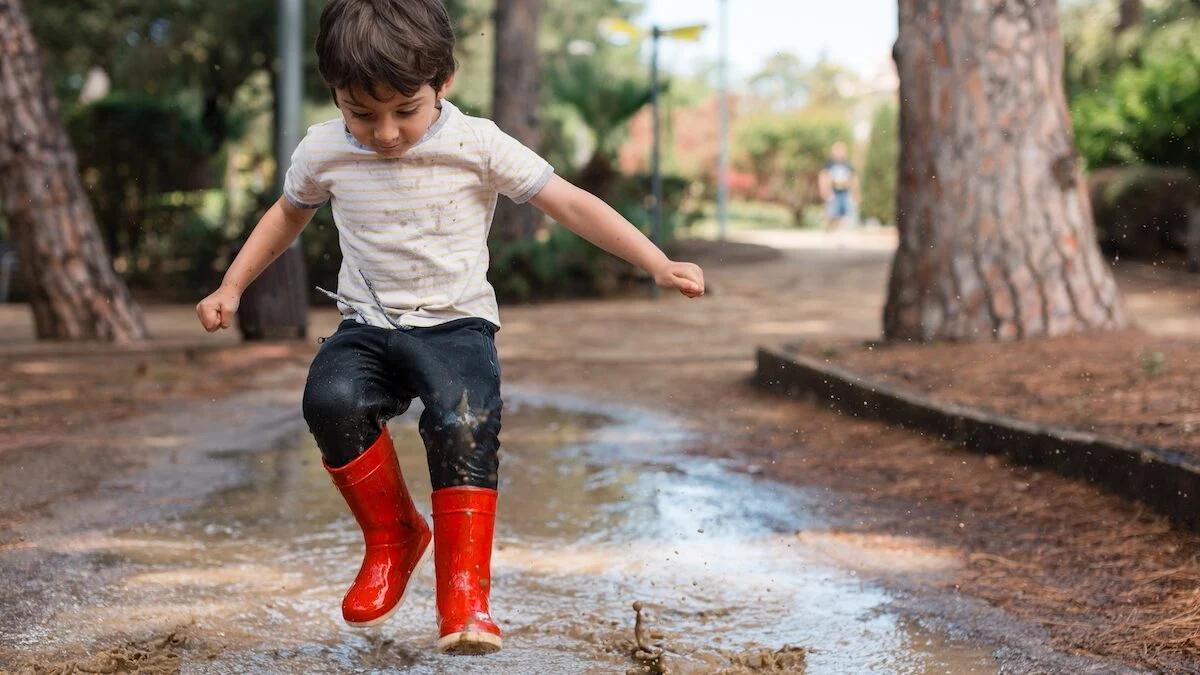
Spending time outside from a young age not only promotes physical activity. According to a new study, outdoor play between 2 and 4 years old could also help preserve children’s mental health for several years. A discovery that reinforces the importance of parks, play areas and green spaces in the daily lives of families.
A lasting effect on children’s emotional well-being
Outdoor play could have far more lasting benefits than previously thought. This is the conclusion of a study carried out by the University of Exeter and published in the Journal of Child Psychology and Psychiatrywhich looked at the impact of outdoor play on children’s mental health over time.
Researchers analyzed data from 4,151 children from the Growing Up in Scotland cohort. Their objective: to understand how play habits between 2 and 4 years old influence the emotional and behavioral difficulties observed later in childhood.
The results are clear. Children who play outside more often during their preschool years are more likely to maintain a mental health profile characterized by few emotional and behavioral symptoms until age 8.
This research also constitutes the first longitudinal audit to directly monitor the influence of outdoor play in kindergarten on the development of children’s mental health.
Every extra day counts
The study highlights a particularly interesting progressive effect. For each additional day of outdoor play per week between ages 2 and 4, the odds of maintaining good mental health through age 8 increase by 6% to 14%.
Researchers observed benefits on two main categories of symptoms:
- So-called internalized symptoms, such as anxiety or depression;
- Externalized symptoms, which include aggression, impulsivity and hyperactivity.
In other words, gaming habits developed very early seem associated with more favorable trajectories on an emotional and behavioral level.
A confirmed link despite differences between families
A question naturally arises: are the benefits observed really linked to outdoor play or simply to the family context?
To answer this question, the researchers took into account numerous factors likely to influence the results. In particular, they checked the sex of the child, their ethnic origin, the level of education of the household, the state of physical health of the child, the professional situation of the parents, as well as access to a private garden or a park close to the home.
Even after these adjustments, the association between outdoor play and better mental health remained observable.
Play spaces considered a public health issue
Professor Helen Dodd, who led the study at the University of Exeter, said providing more opportunities to play outside could be a simple, inexpensive measure to support children’s wellbeing.
She believes that these results should be taken into account in public health, education and land use planning policies. The authors call in particular to finance and maintain playgrounds, public parks and informal green spaces, which are particularly important for families who do not have a garden.
Same observation from Marguerite Hunter Blair OBE, president of the British Forum on Children’s Play Policies. According to her, these data show that young children would greatly benefit from better access to quality play spaces, thanks to the mobilization of public authorities and local communities.