
Beyond the particular case of the creator of the series
Hippocratesthis case recalls a fundamental rule of the French health system: medicine is not only scientific knowledge, it is also an ethical and legal commitment framed by precise obligations.
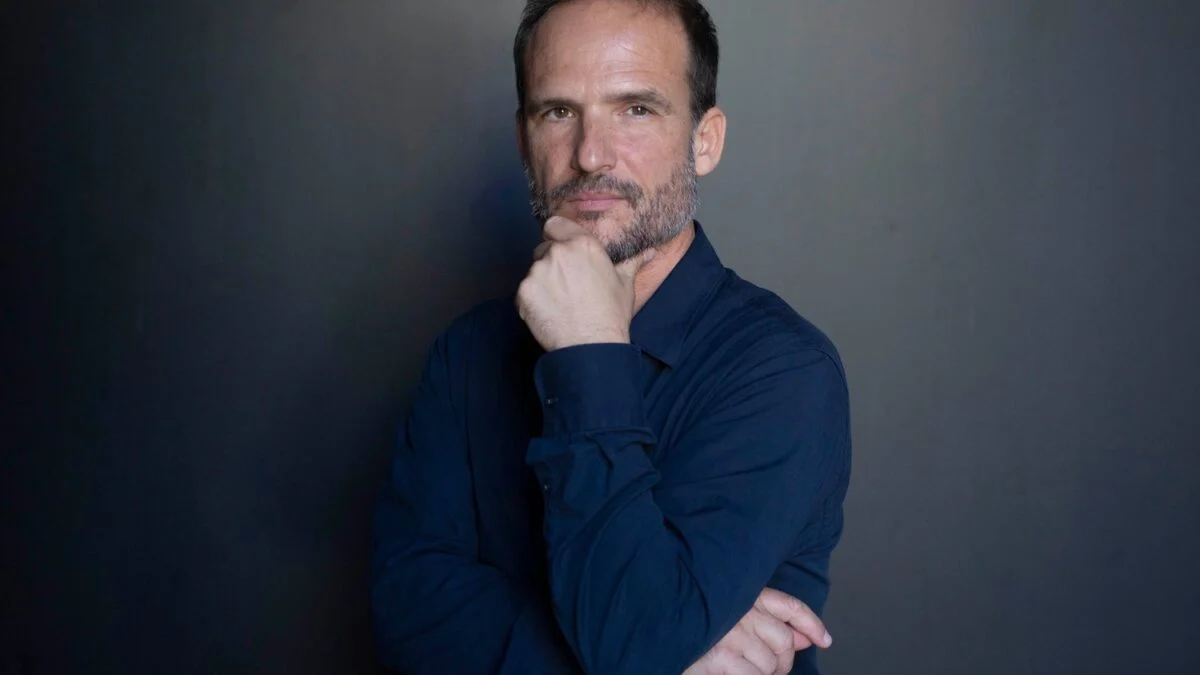
Thomas Lilti, from medical fiction to controversy: when the image of the humanist doctor is questioned
He made the hospital, its vulnerabilities and those who work there the heart of his work. With
Hippocratesa film released in 2014 and then a series broadcast on Canal+, Thomas Lilti has become one of the best-known faces of French medical fiction. A former general practitioner turned director, he told the story of a world he knew from the inside: the guards, the doubts of young interns, the tensions of a hospital system under pressure.
This proximity to the medical world largely contributed to his public image: that of a doctor who became a filmmaker, keen to defend the public hospital and those who keep it alive.
But a survey published by Mediapart today weakens this representation. According to the investigative media, Thomas Lilti would have continued to present himself as a doctor and to use certain professional attributes even though he had been removed from the Order of Physicians in April 2012. The removal was pronounced with the administrative reason of “left without leaving an address”.
The investigation also reports that he continued to write prescriptions for relatives using prescriptions in the name of his father, a gynecologist, and that he provided blank prescription documents. Thomas Lilti disputes this reading of the facts. Questioned by Mediapart, he claims to be the victim of people with whom he no longer works and who, according to him, seek to damage his reputation.
But beyond the accusations targeting a well-known personality, a central question arises: can one still be considered a doctor when one is no longer authorized to practice?
To understand it, we must return to this founding symbol of the profession: the Hippocratic oath.
The Hippocratic Oath: an ancient text that has become the symbol of medical commitment
Traditionally pronounced by doctors upon entering the profession, the Hippocratic Oath is often presented as the “promise” that accompanies the transition from student to practitioner status.
Its origin dates back to Greek Antiquity. The text attributed to Hippocrates, a Greek doctor from the 5th century BC considered one of the fathers of Western medicine, already laid down several fundamental principles: respect life, treat without harm, maintain medical confidentiality and act in the patient’s interest.
The modern version of the oath, adapted to developments in society and medicine, notably emphasizes several values: the independence of the doctor, respect for the person, the absence of discrimination, confidentiality and the need to place the patient’s health at the center of practice.
But there is a common confusion: the Hippocratic oath is not a legal authorization to practice.
Taking this oath does not automatically give you the right to practice medicine. In France, medical practice is based on a precise legal framework: in particular, you must hold the required diplomas and be registered with the Order of Physicians.
In other words, the oath represents a moral commitment. Registration with the Order represents a professional and legal obligation.
Doctors, surgeons, specialists: which professions are affected by these obligations?
Medicine is not limited to the general practitioner that we consult in the office. The same ethical framework concerns all doctors, whatever their specialty.
These include:
- General practitioners;
- Specialist doctors (cardiologists, oncologists, psychiatrists, gynecologists, pediatricians, etc.);
- Surgeons;
- Hospital doctors;
- Doctors in private practice;
- Replacement doctors.
Everyone must respect the rules set by the Public Health Code and the Medical Code of Ethics.
Other health professions also have their own professional rules and supervisory bodies, even if they do not all take the Hippocratic Oath in the same form.
Pharmacists, dental surgeons, midwives, nurses or physiotherapists are also subject to obligations: skills, training, respect for the patient, professional responsibility.
The reason is simple: in the field of health, the patient often finds himself in a vulnerable situation. He entrusts his body, his personal information, sometimes his life, to a professional who has particular knowledge and authority.
It is precisely to protect this relationship of trust that medical practice is strictly regulated.
Practicing medicine after radiation: what risks for the professional… and for the patients?
Being removed from the Order of Physicians is not a simple administrative formality. This means that the professional is no longer authorized to practice medicine under the conditions provided for by law.
Registration with the Order constitutes a mandatory condition for practicing. A doctor who practices despite radiation can therefore be prosecuted for illegal practice of medicine.
The consequences can be significant:
- Criminal proceedings;
- Financial sanctions;
- A ban on practicing;
- A challenge to professional responsibility.
But the risk does not only concern the practitioner. It also concerns patients.
When a person consults a doctor, he or she must be able to have the guarantee that this professional is recognized by the competent authorities, that he respects the rules of continuing education, that he can be controlled and that he meets the ethical obligations of the profession.
A diagnosis made, a prescription issued or a treatment prescribed by a person who no longer has the right to practice therefore raises major questions: updated competence, liability in the event of an error, possible recourse for the patient.
This case ultimately recalls a profound reality of the medical world: being a doctor is not based only on a diploma or scientific knowledge. It is a status which implies permanent responsibility.
Behind the Hippocratic Oath, there is a promise made to patients: that of medicine practiced in a framework of trust, competence and protection. A promise that goes far beyond a single person or a single controversy.