
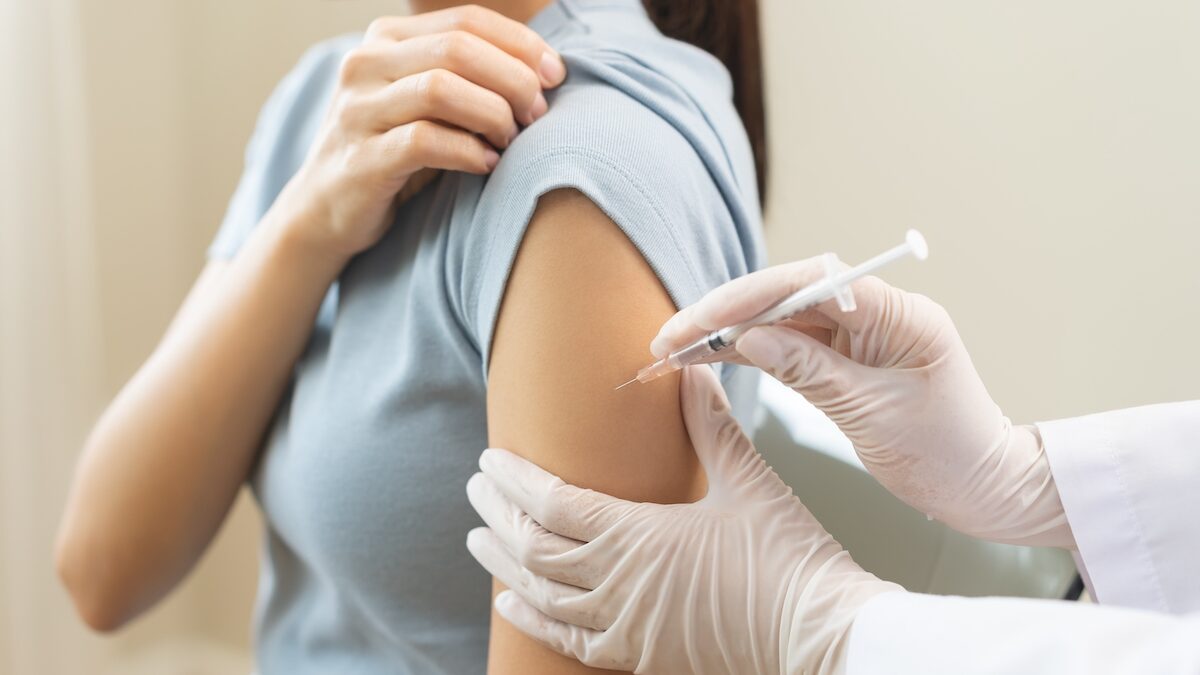
Why do some people develop a powerful immune response after a vaccine while others react much less? A team from Arizona State University looked for the answer in antibodies already present in the blood. More than 4,000 people were studied. Some of these antibodies could act as “sentinels” of immune system readiness.
Why doesn’t the same vaccine cause the same response?
Vaccination trains the immune system to recognize an infectious agent and defend itself more effectively against it. But this reaction varies greatly from person to person.
Age, sex, infectious history, certain genetic factors, chronic illnesses or even treatments that modify immunity may be involved. Immunocompromised people are particularly more likely to develop an insufficient response.
However, the diagnosis is not enough to predict this reaction. In the US study, some immunocompromised patients responded well to the Covid-19 vaccine, while a small proportion of healthy people had a weak response.
So the researchers asked a different question:
can we know before vaccination whether a person’s immune system is particularly well prepared to respond?
Antibodies present before the injection provide clues
To find out, scientists analyzed 8,687 samples from 4,089 participants. The cohort included healthy volunteers as well as people with different diseases or receiving treatments likely to weaken their immune system: HIV, multiple myeloma, autoimmune or inflammatory diseases, certain cancers or organ transplantation.
Before and after vaccination against Covid-19, researchers measured antibodies directed against 185 antigensparticularly from common viruses and bacteria. The objective: to establish a sort of individual immune “fingerprint”.
Several antibodies present before vaccination were associated with a better response to the vaccine. Among them were those directed against Staphylococcus aureusrespiratory syncytial virus (RSV) and human respirovirus 3.
These antibodies do not directly protect against SARS-CoV-2. Rather, they may reflect the general ability of the immune system to produce an effective response. Researchers describe them as “sentinel antibodies.
By comparing the best and lowest responders, the team identified 62 antibodies not directed against SARS-CoV-2 the levels of which differed markedly between the two groups.
Artificial intelligence was then used to analyze these complex signatures.
“Our study shows that certain biomarkers, analyzed with AI, can predict who is likely to respond well to a vaccine, even before receiving it.. says Joshua LaBaer, director of the Biodesign Institute and the Virginia G. Piper Center for Personalized Diagnostics at Arizona State University.
In healthy volunteers, the deep learning model, based in particular on 98 antibodies not linked to SARS-CoV-2 and certain demographic data, made it possible to identify people likely to present a weak response before a booster vaccination, with “good precision”.
In detail, thearea under the curve was 0.803 – the area under the curve (AUC) in medical statistics measures the overall performance of a diagnostic test or a predictive model represented by a ROC curve. Its value varies from 0.5 (null test) to 1.0 (perfect test). An encouraging result, but which does not yet make it possible to predict with certainty an individual’s reaction.
Towards truly personalized vaccination?
The benefit of such an approach is obvious for people for whom vaccination represents a particular challenge: immunocompromised patients, transplant recipients or patients receiving treatments likely to reduce their immune defenses.
Ultimately, a blood test could theoretically help identify people most likely to respond poorly to a vaccine. They could then benefit, where relevant, from reinforced monitoring, additional doses or other protective measures.
But this perspective remains experimental.
The study concerns the response to vaccination against Covid-19 and still needs to be replicated in other populations and with
other vaccines. Researchers will also need to determine whether these biological signatures can predict truly clinical outcomes, such as the occurrence of an infection or hospitalization, and not just the level of antibody response. This caution is essential. Producing more antibodies is an important indicator, but vaccine protection relies on a much broader set of immune mechanisms.
Vaccination could thus, tomorrow, no longer depend only on the vaccine chosen, but also on the immune state specific to each person. A perspective that is still distant, but which could be particularly valuable for those whose bodies respond unpredictably today.