
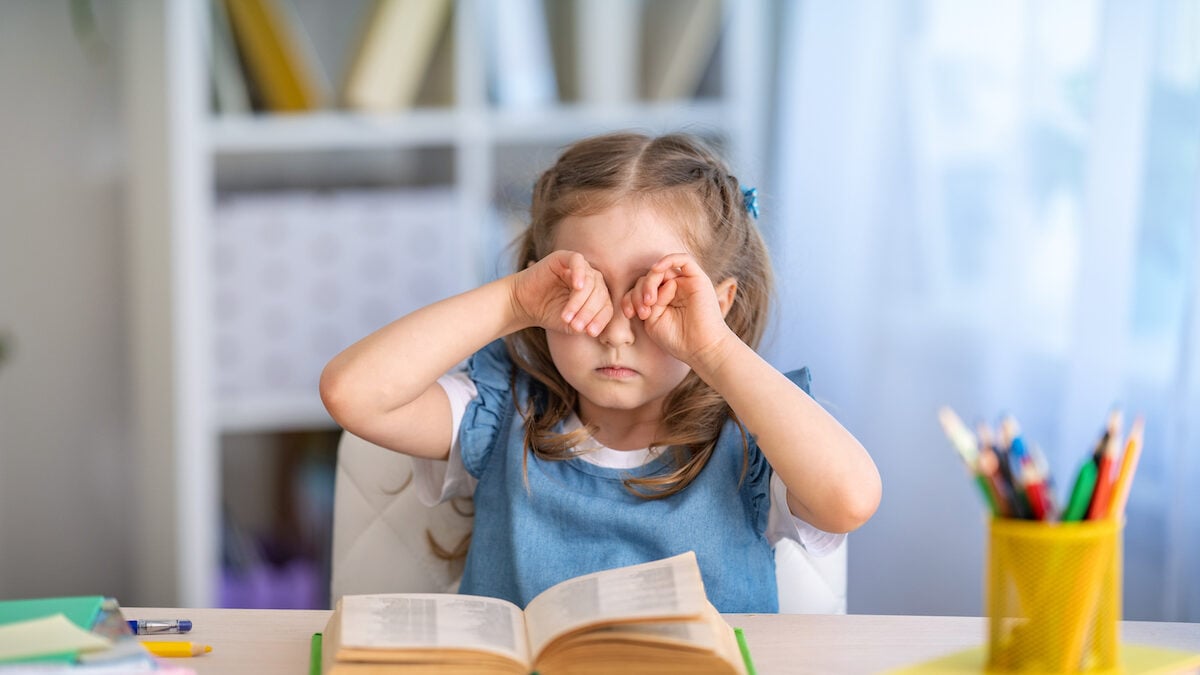
On this back -to -school day, the “National Association for the Improvement of View (ASNAV) sounds the alarm: more and more children take the courses without seeing the table correctly. The 2025 visual health barometer reveals that 27 % of parents have never made their children realize visual screening. Worse still, 16 % of the parents who had a positive screening did not consult an ophthalmologist, 8 points compared to the previous barometer.
The alarming drop in visual screening for children
The figures confirm a worrying trend. In the first half of 2025, the company Novacel, specializing in screening campaigns, observed that 46 % of the children tested presented insufficient visual acuity. In some classes, this rate rose to 75 %.
For ASNAV, the role of teachers is crucial. They must be attentive to signs as a drop in concentration, difficulties in reading, writing or following the table. School vigilance thus completes that of families, often deceived by the absence of complaints from the child. “”Parents may not suspect the situation because a child will never complain about vision problems, often because he is not aware of it“, Underlines Véronique Morin, educational and scientific manager of the association.
Consultations in decline despite the alerts
Beyond the figures, behaviors worry. The appointments listed in the health book are not respected, while the vision is growing strongly during growth. After 6 years, any development deficiency can become irreversible.
Since June 2023, orthoptists can detect without medical prescription. However, the figures remain derisory: in 2024, only 2 % of children from 9 to 15 months and 0.6 % of the 2.5 to 5 years benefited from screening. General practitioners, pediatricians and school health services can also intervene, but the campaigns remain local and very unequal depending on the territories.
How to choose good glasses for children
When the diagnosis is made, it remains to fit the children correctly. Opticians recall that glasses must:
- Respect morpho-physiological standards and cover the entire field of gaze;
- Present an adapted frame, higher and wider than those of adults, with a bridge deported down;
- Ensure safety, by favoring plastic frames and solid glasses, resistant to everyday shocks.
These precautions allow children to follow their learning in the best conditions and to protect their long -term vision.