
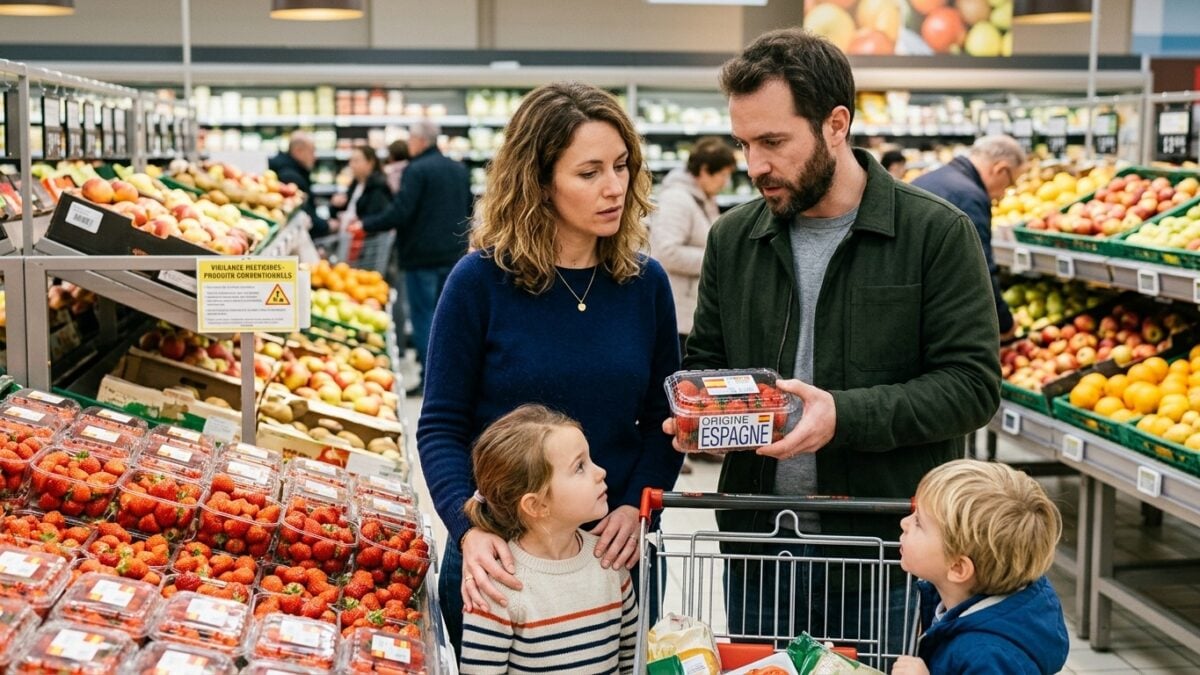
In the fruit section, few parents imagine that a simple punnet of strawberries can concentrate a real chemical cocktail. However, tests carried out in Europe have found up to seven residues of
pesticides different on some strawberries, and the British Pesticide Residues in Food program detected PFAS in 95% of the samples analyzed. Enough to wonder about the origin of these fruits that we trust to give to children.
This country is Spain, a major supplier of cheap strawberries to all of Europe. The German magazine Öko-Test analyzed 14 trays sold in 2023, 13 of which were of Spanish origin: 8 contained pesticide residues, sometimes banned in the European Union, and up to seven molecules on the same fruit. Surveys by Générations Futures and UFC-Que Choisir also show that spanish strawberries carry on average much more residue than French women. It remains to be seen how to react, very concretely, when going shopping.
Why Spanish strawberries raise fears of a cocktail of pesticides
According to Öko-Test, 8 trays out of 14 tested therefore displayed residues of pesticidesalmost all of Spanish origin. The analyzes found ethirimol, a fungicide banned in the European Union, cyflumetophene, an acaricide considered dangerous for biodiversity, and bupirimate, classified as a possible carcinogen. An organic tray also contained spinosad, an insecticide authorized in organic farming but toxic to pollinating insects.
The UK Pesticide Residues in Food program reports that 95% of strawberries checked contained PFAS, with peaks in contamination originating in Spain and the Huelva region. Studies by Générations Futures and UFC-Que Choisir indicate that 92% of the strawberries analyzed carry at least one pesticide, often an endocrine disruptor, and that Spanish strawberries have around 60% more residue than French ones.
Huelva and Doñana Park, the hidden side of Spanish strawberries
Around Huelva, near the Doñana National Park, 5,000 hectares of strawberries produce more than 330,000 tonnes per year according to park data. It takes 300 liters of water to grow 1 kg of strawberries, and up to 40% of crops rely on illegal wells that pump half the water from wetlands. The Court of Justice of the European Union condemned Spain in 2021 for these environmental failings.
This intensive model also relies on kilometers of plastic sheeting around Doñana, often burned or buried with chemical residues. In May 2025, the official RappelConso platform ordered the withdrawal of Spanish strawberries of the FRES ARTE brand, sold in France, due to exceeding the maximum residue limit for the acaricide etocazole. This was also the case last March in the Grand Frais and Fresh brands.
How families can limit risks in the strawberry aisle
To protect your family, the most effective way is to favor seasonal French strawberries, ideally organic, purchased locally, and to avoid cheap trays of Spanish origin out of season. Systematically check the label, rinse the fruit thoroughly and consult RappelConso if in doubt about a batch.