
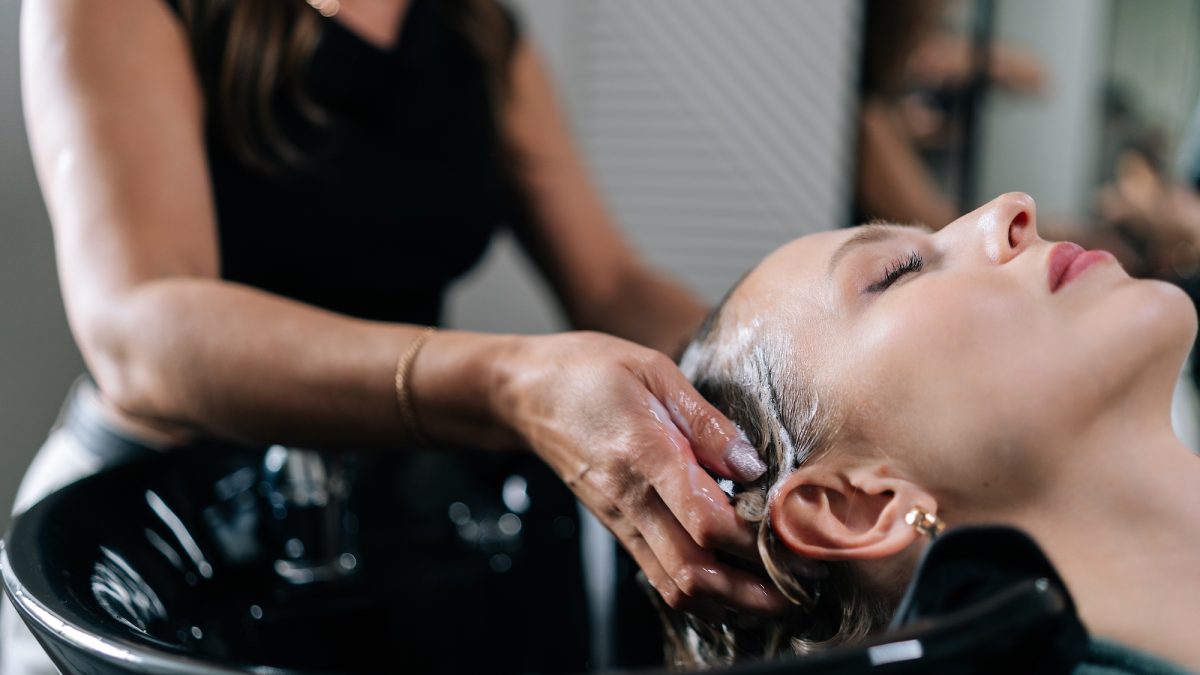
A recent study from the University of Portsmouth in the United Kingdom, highlights the unknown but potentially crucial role of hairdressers and barbers in early skin cancer screening. By observing areas that are difficult to visible such as scalp, neck or back of the ears, these professionals can sometimes notice signs that their customers ignore.
What the study conducted with hairdressers and barbers reveals
The survey was carried out with 37 hairdressing and hair care professionals in the city of Portsmouth. The objective was to understand how exposed they were to dermatological anomalies in their customers, and if they felt capable of participating in prevention campaigns.
The figures are final:
- Only 5 % of the hairdressers interviewed had followed a formal formation linked to screening for skin cancer;
- Almost a quarter (24 %) said they regularly inspect their customers’ skin to detect visible anomalies;
- A third party had already alerted a client about a suspicious beauty grain;
- In 39 % of cases, warned customers actually received a diagnosis of skin cancer afterwards.
Why the hairdressers are well placed to locate a melanoma
The hairdressers, but also the barbers, manipulate the head, face and neck of their customers daily. Areas that are not visible in a mirror, and even less often watched. This makes observers, often the only ones, to be able to notice a plague which evolves or an unusual beauty.
The researcher Helen Fleming, who directed the study, confirms it: “Hairdressers and barbers are particularly well placed to detect skin changes that most people do not notice“She explains.
“”Many of the participants in our study had already encouraged their customers to consult a doctor after having noticed an unusual phenomenon. With simple training, they could become ardent defenders of early screening“, She adds.
The scalp and the nape are high -risk areas, especially for melanomas, the most serious forms of skin cancer. Their evolution can be rapid, and a late diagnosis greatly reduces the chances of healing.
Towards systematic training in hairdressing salons?
The University of Portsmouth emphasizes the interest of light but targeted training, intended for these professionals. The idea is not to ask them for a medical opinion, but to give them the right reflexes to alert in case of doubt, without unnecessarily alarming.
“”Detecting a suspicious beauty grain and acting quickly can save lives“, insists the team of researchers. The simple fact of directing a customer to a dermatologist can, in some cases, make all the difference.