
Many French people experience the famous bout of afternoon fatigue, or those 4 p.m. cravings that make you head straight for the cookie machine. Behind this very banal scenario there is often a simple question: what time should you have lunch to avoid emptying the snack cupboard later.
Recent work in chrono-nutrition describes lunch as a real pivot for blood sugar, weight and energy until the evening. They show that the time matters almost as much as the contents of the plate, and that the ideal window for the midday meal is more precise than a vague slice “between noon and two”. A few minutes can really change everything.
Why lunchtime weighs so much on hunger and cravings
Lunch acts as a mid-day fuel fill: if it is too far from breakfast or dinner, the body ends up running on empty. Blood sugar rises after a meal, then falls again; when the fall is too sudden, the brain demands sugar and concentration collapses. Over the long term, this repeated roller coaster can disrupt insulin sensitivity and increase the risk of prediabetes or type 2 diabetes.
Studies on meal timing converge on one point: eating earlier in the day is associated with better blood sugar regulation. In the large NutriNet-Santé cohort, participants who ate their main meals earlier, particularly with a dinner before 8 p.m., had fewer cardiovascular diseases than those who pushed their schedules back a lot. Lunch therefore has an interest in remaining in the first half of the active day.
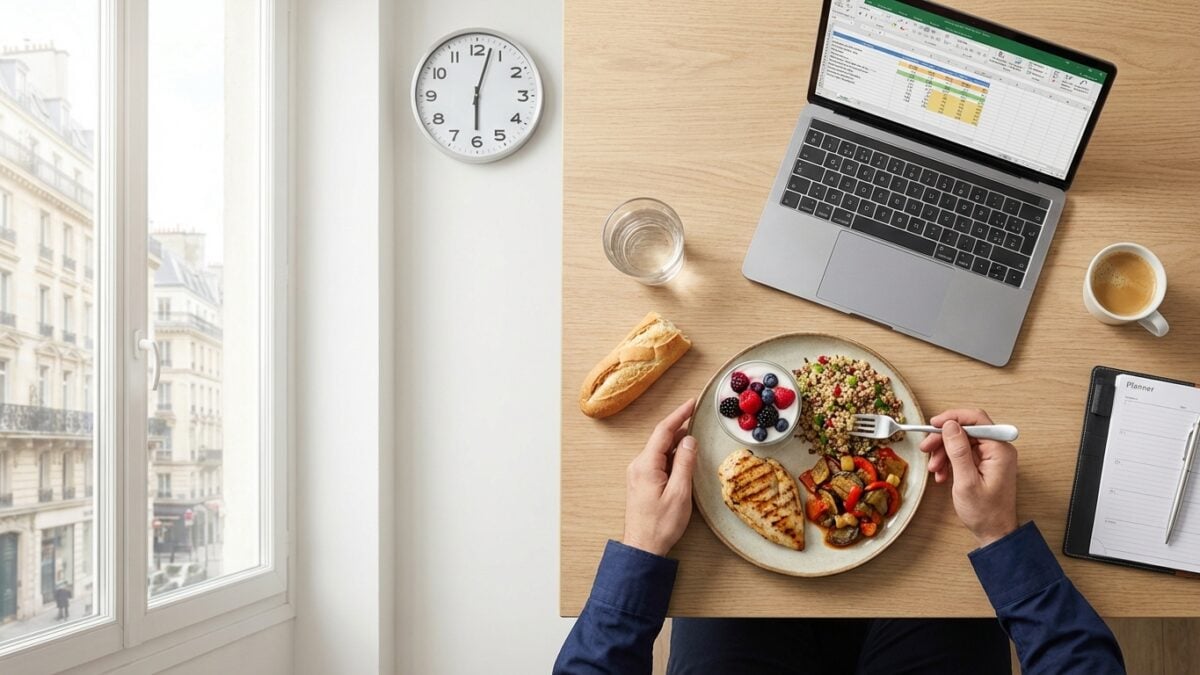
The winning time: lunch around 12:30 p.m., before 3 p.m.
For metabolism, several dietitians find the best time to lunch around 12:30 p.m.or approximately four hours after a breakfast eaten before 8:30 a.m. An article from Today.com describes that eating breakfast around 12:30 p.m. builds on work showing that an early meal improves glucose regulation and insulin sensitivity, while eating lunch late until around 2 p.m. results in higher glycemic peaks and greater sugar swings over the following 24 hours.
The question of weight goes in the same direction. A Spanish study carried out on 420 people on a slimming program showed that those who had breakfast before 3 p.m. lost around 25% more weight than those who had lunch after 3 p.m., for comparable caloric intakes. A trial on 80 overweight women also found that a main meal at midday led to a loss of 5.85 kg in 12 weeks, compared to 4.35 kg when the big meal was dinner, with better improvement in insulin resistance. In France, the classic “noon–2 p.m.” therefore falls in the right place.
What to do if you eat lunch too early, too late… or not always at the same time?
Eating lunch before 11 a.m., especially after a light breakfast, opens a very long window until evening. Hunger then returns violently around 4–5 p.m., which encourages snacking and a higher total caloric intake. When this early meal is unavoidable, planning a small structured snack in the middle of the afternoon, for example a fruit with a handful of nuts or a yogurt, helps you get through the day without craving sweets. A balanced breakfast, with vegetables, a source of protein, whole starches and a little fat, also stabilizes energy better.
Conversely, eating lunch after 3 p.m. increases the risk of overeating, slows weight loss and postpones dinner, which can interfere with sleep.
For busy schedules, the realistic goal remains a meal at a fixed time, if possible between 12 p.m. and 1:30 p.m., and no later than 3 p.m.
A simple rule is to place lunch approximately 3:30 to 4:30 hours after the first food intake, then advance this time in increments of 15 to 30 minutes until this time is reached. This regular rhythm also leaves time to eat dinner not too late and preserve a good night’s fast.